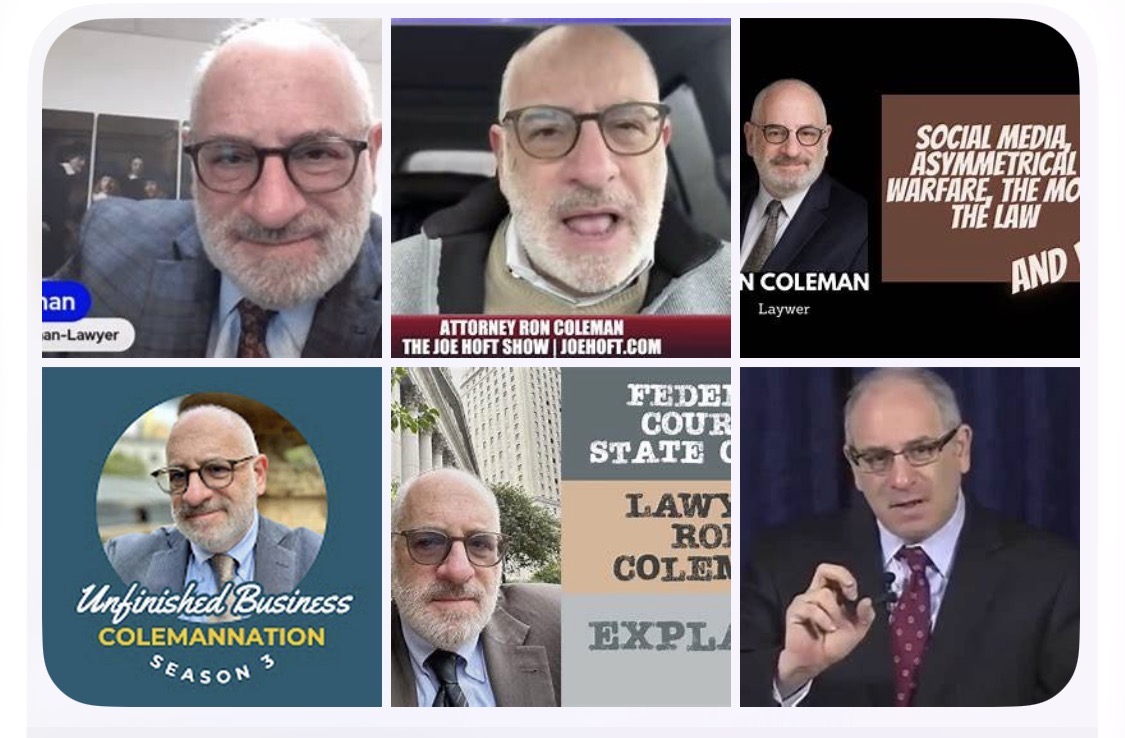
Ron Coleman
Ron Coleman
Role & method
• Practicing constitutional lawyer; operates inside modern courts.
• Uses briefs, motions, appeals, and media commentary.
• Emphasizes procedural due process, standing, and precedent.
Orientation
• Defends civil liberties (speech, religion, association).
• Skeptical of extra-judicial mechanisms; prefers remedies that survive appellate review.
Power base
• Courts, judges, statutes, precedent.
• Persuasion through legal argumentation.
Limits
• Dependent on judicial receptivity and gatekeeping.
• Slow timelines; constrained by standing and justiciability.
⸻
John Jay Committees
Committees for Detecting and Defeating Conspiracies
Role & method
• Investigatory and security committees (1770s) operating outside ordinary courts during emergency.
• Intelligence-gathering, loyalty investigations, preventive action.
• Public accountability blended with secrecy when necessary.
Orientation
• National survival first; law as a tool, not a bottleneck.
• Willing to act when courts are absent, compromised, or too slow.
Power base
• Popular legitimacy, emergency authority, executive coordination.
• Speed, deterrence, and information advantage.
Limits
• Vulnerable to abuse if not tightly bounded.
• Hard to reconcile with modern constitutional norms absent a declared emergency.
⸻
Core contrasts (quick hits)
Table:
Axis
Ron Coleman
John Jay Committees
Forum
Courtroom
Committee / executive-adjacent
Timing
Deliberate, appellate
Rapid, preventive
Legitimacy
Formal legal process
Emergency consent & necessity
Risk tolerance
Low
High
Best at
Rights defense, durable rulings
Crisis response, counter-subversion
⸻
How they could intersect (today)
• Sequencing: Committees surface facts → lawyers like Coleman translate them into admissible cases.
• Guardrails: Coleman-style due process limits committee overreach.
• Public trust: Committees provide urgency; courts provide durability.
Bottom line:
Ron Coleman represents rule-of-law maximalism in normal times. John Jay Committees represent emergency governance when normal channels fail. They clash if confused—but they complement if sequenced.
If you want, I can map this directly onto a modern “John Jay Committee” model that survives constitutional scrutiny (FOIA/FOIL intake → inspector-general style fact-finding → litigation handoff).