






I. INTRODUCTION
A. Art of the Week
A dream work space, atop a lighthouse, with wrap-around windows above the ocean’s roar and the tumult of the waves cresting and crashing against the rocks below, a wrap-around desk to match the window shape, a good hard wooden chair for support, and the necessary small heater with stove to keep it warm and refreshed. I love architectural spaces that marry the inner world to the outside, the natural external environment to the man-made inside. Makes me want to read, work, think, and dream.
B. Recommendation of the Week
The peculiar history of the Sixteenth Amendment. https://www.goodreads.com/book/show/22474138-the-law-that-never-was-vol-1-the-fraud-of-the-16th-amendment-and-pers
C. Wisdom of the Week
“When plunder becomes a way of life for a group of men in a society, over the course of time they create for themselves a legal system that authorizes it and a moral code that glorifies it.” Frederic Bastiat.
D. Appearances
- Barnes Brothers

- Betting w/ Barnes AMA https://sportspicks.locals.com/post/7619256/live-betting-w-barnes-wednesday-january-21-2026
- Tennessee Press Conference https://x.com/StacyCase_/status/2014088250185359451?s=20
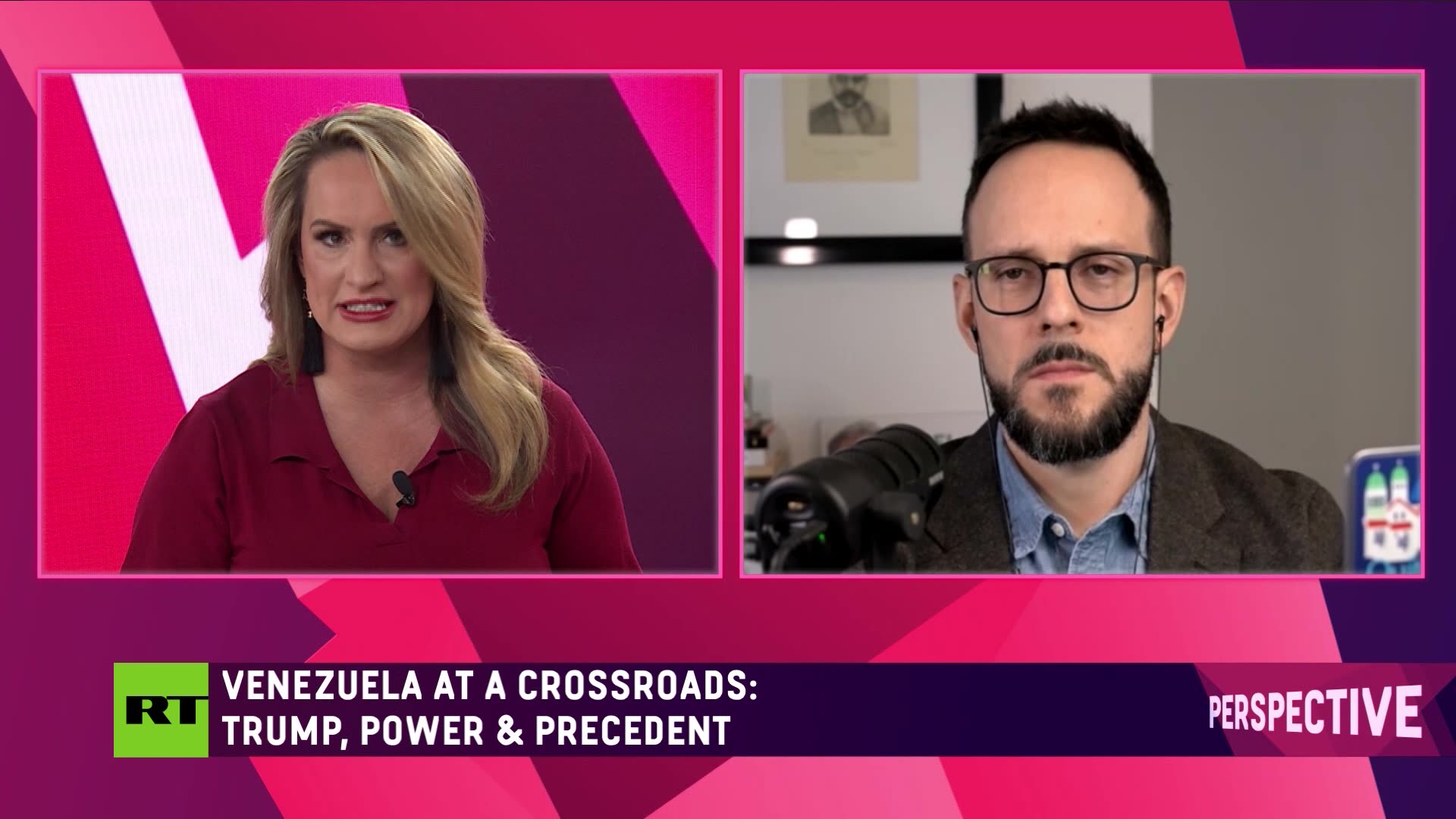
- RT Perspective Interview
II. THE EVIDENCE
A reminder: links are NOT endorsements of the authors or their interpretation of events, but intended to expand our library of understanding as well as expose ideas of distinct perspective to our own.
A. Barnes Library: Five of the Top Curated Weekly Articles
- Dems warn: losing cultural issues. https://www.liberalpatriot.com/p/democrats-and-the-siren-call-of-culture
- Replicating DOGE. https://www.city-journal.org/article/elon-musk-doge-states-waste-fraud?skip=1
- Cuba next for regime change. https://www.msn.com/en-us/news/world/is-cuba-next/ar-AA1UEeUA
- Trump 2024 coalition lost. https://www.nytimes.com/interactive/2026/01/22/polls/times-siena-national-poll-crosstabs.html
- Out of WHO! https://thehill.com/policy/international/5702306-us-officially-withdraws-from-who/
B. Homework: Dozen of the Top Cases of the Week for Sunday
- ICE Home Raids w/o a Warrant. https://www.lawfaremedia.org/article/can-ice-enter-a-home-to-make-an-arrest-with-only-an-administrative-warrant
- Don Lemon charges. https://www.politico.com/news/2026/01/22/don-lemon-prosecution-justice-department-00741629
- SCOTUS: state rules in Med Mal cases. https://www.supremecourt.gov/opinions/25pdf/24-440_1b82.pdf
- SCOTUS: Restitution is punishment. https://www.supremecourt.gov/opinions/25pdf/24-482_d1oe.pdf
- SCOTUS: Time deadlines for void cases. https://www.supremecourt.gov/opinions/25pdf/24-808_lkgn.pdf
- SCOTUS: Trump & the Fed. https://www.supremecourt.gov/oral_arguments/argument_transcripts/2025/25a312_c0nd.pdf
- SCOTUS: 2ndA. https://www.supremecourt.gov/oral_arguments/argument_transcripts/2025/24-1046_hejm.pdf
- 2A & property. https://courthousenews.com/appeals-court-weighs-challenge-to-texas-gun-signage-laws/
- Trump vs JP Morgan. https://www.courthousenews.com/wp-content/uploads/2026/01/trump-v-jp-morgan-miami-eleventh-judicial-circuit.pdf
- Games of chance. https://www.courthousenews.com/wp-content/uploads/2026/01/minnesota-tribe-loses-challenge-to-electronic-table-games.pdf
- Target cancer. https://www.courthousenews.com/wp-content/uploads/2026/01/dangerous-acne-treatment.pdf
- Bayer immunity. https://www.scotusblog.com/cases/case-files/monsanto-company-v-durnell/
*Bonus: Section 241 & 1A. https://www.scotusblog.com/cases/case-files/monsanto-company-v-durnell/
**Bonus: Section 241 in the 8th Circuit. https://law.justia.com/cases/federal/appellate-courts/F3/6/1297/576550/
***Bonus: Warrants. https://supreme.justia.com/cases/federal/us/403/443/
C. Best of the Board: Ten of the Top Posts
- Stay chill. https://vivabarneslaw.locals.com/post/7627349/title
- JD welcome. https://vivabarneslaw.locals.com/post/7627643/i-sure-hope-and-pray-that-jd-gets-a-chance-to-lead-our-country-after-this-trump-administration-he
- Peace Board thoughts. https://vivabarneslaw.locals.com/post/7627852/a-very-interesting-take-on-trumps-peace-board-is-trump-creating-a-new-organization-undermining-the
- Immigration data review. https://vivabarneslaw.locals.com/post/7627593/food-for-thought-are-the-claims-that-around-2-million-illegal-aliens-have-already-self-deported-too
- Fun satire. https://vivabarneslaw.locals.com/post/7627870/title
- Scott Adams memorial. https://vivabarneslaw.locals.com/post/7627060/livestream-in-honor-of-scott-adams-next-sunday-jan-25-i-hope-it-s-the-biggest-livestream-ever
- Brilliant photos. https://vivabarneslaw.locals.com/post/7626511/some-northern-lights
- CIA Insanity. https://vivabarneslaw.locals.com/post/7626494/robertbarnes-robert-barnes-has-repeatedly-referred-to-this-egregious-seymour-hersh-article-in-re
- Don Lemon Church videos. https://vivabarneslaw.locals.com/post/7627194/here-is-dons-full-live-stream-im-not-good-at-clipping-things-out-or-screen-recording-so-those-of
- Fun memes. https://vivabarneslaw.locals.com/post/7627227/title
*Bonus: Biblical wisdom. https://vivabarneslaw.locals.com/post/7626746/today-s-thought-11and-behold-there-was-a-woman-which-had-a-spirit-of-infirmity-eighteen-years
III. Closing Argument: Constitution Masterclass Series — Article I, Power to Tax
- As part of the enumerated legislative powers granted Congress by the Constitution, none is more potent, and potentially destructive, of liberty and property than the power to “raise revenue.” Under section 8 of Article I, this affords the “power to lay and collect taxes, duties, imposes and excises” to “pay the debts” or “provide for the common Defense” or provide for “the general Welfare of the United States.” Of note, the Constitution separately affords the legislative branch methods of revenue raising independent of taxes and tariffs — the power “to borrow money on the credit of the United States” and the power “to coin money” as well as “regulate the value thereof.”
- The limits on this power to tax derive from several other sections of Article I. Under Section 7 of Article I, all bills for raising revenue must originate in the House, not the Senate. The next limit is substantive rather than procedural: “all duties, imposts and excises” have to be “uniform throughout the United States.” The foremost, fundamental limit requires any “direct taxes” must be “apportioned among the several States which may be included within this Union.” Indeed, section 9 of Article 1 imposes the requirement that “no capitation, or other direct, tax shall be laid, unless in proportion to the census or enumeration herein.” Of note, no tax could be imposed on articles exported from a state.
- These two big requirements — Uniformity and Apportionment — are the key restraints on the power to tax, segregating taxes into two separate categories: Direct Taxes and Indirect Taxes. Indirect Taxes only require Uniformity.
- Uniformity requires indirect taxes operate with the same force and same effect in every state, precluding Congress from geographical favorites. Uniformity is solely a prohibition on the geographic impact of the tax, rather than classification based on some factor other than geography. Apportionment is the real hurdle. Apportionment req tires direct taxes be divided among the states based on that state’s population, a politically impossible barrier to cross in the modern era. This effectively neuters the power of Congress to impose any Direct Tax without Constitutional Amendment.
- What then is a Direct Tax? The first case to address this dates to the early years of our Constitutional Republic, when Supreme Court Justices wrote their own opinions, often without a shared majority. The law at issue as a carriage tax. Complaining about how apportionment would make any tax “absurd and inequitable” the early Court decided to water down the Direct Tax definition in order to escape the Apportionment Constitutional conditionality of such a tax. The split amongst the jurists left the question mostly undecided, with the dumbest argument being the Justice who claimed if a Direct Tax could not be easily apportioned, then it was magically no longer a Direct Tax. The latter would be invalidated and effectively mocked by the Court a century later, when it noted “such a tax, for more than one hundred years of national existence, has as yet remained undiscovered, notwithstanding the stress of particular circumstances has invited thorough investigation into sources of revenue.”
- The Court invalidated the income tax portions of the Tariff Act of 1894. That Act limited itself to a 2% tax on $4K+ of income, which 99% of Americans did not owe, as exempt from it. The tax imposed a tax on real estate rents, and Congress justified it as an excise tax and thus Indirect. The Court clarified the definition of Direct Tax in accord with originating principles: any tax whose liability “cannot be avoided” was a Direct Tax; only taxes that could “shift the burden upon someone else” with “no legal compulsion to pay them” were considered Indirect. The Court went further, and identified Direct Taxes as the kind commonly imposed by States at the time of the Founding, including taxes on real estate, personal property, or the rents or income thereof, like taxes on people. Taxes on franchises, privileges or use were seen as Indirect Taxes. The dissenting justices would have held a tax on revenues “severed from the source” of those revenues was an Indirect Tax. That dissent would matter decades later.
- The Sixteenth Amendment removed the apportionment clause for the tax power, providing: “Congress shall have power to lay and collect taxes on incomes, from whatever source derived, without apportionment among the several States” or in proportion to the census or enumeration herein. Why? Because the Supreme Court determined the 1893 federal tax on incomes was a “Direct Tax” that had not been apportioned. This removal of “incomes” from the apportionment requirement tempted Congress to never define the word income itself in the future hope they could escape and evade the apportionment requirement by just labeling a future new tax a tax “on incomes.”
- The understanding of how broadly Congress could label a tax as an “income” tax to escape apportionment for direct taxation took a turn in 1916, when dissenting Justices from the prior 1896 decision now held sway. They decided that the 16th Amendment merely codified their 1896 dissent, thus forever constraining Congress’ capacity to use the income tax exception from apportionment as its escape and evasion tool. Congress’ answer was to simply never define income ever again, except in manners self-referential and circular.
- A fully enforced Constitution would find any tax on property or people directly that make individual Americans liable must be apportioned unless within the limited definition of income the Court gave it — gain and profit severed from the source of that gain and property. Like much of our policy debates, a solution often sits in the text of the Constitution itself.