




VivaBarnesLaw
Politics • Culture • News
This is the VivaBarnesLaw Community.
Interested? Want to learn more about the community?

@robertbarnes
Oil
Guyana vs Venezuela

The Essequibo Dispute (Why it matters now)

1. What is Essequibo?
• Essequibo is a resource-rich region comprising ~70% of Guyana’s territory.
• Administered by Guyana since the 1899 Arbitral Award, which fixed the border.
• Venezuela claims the award was fraudulent and void.

2. Why it’s escalating now
• Massive offshore oil discoveries (post-2015) turned Guyana into a strategic energy state.
• Proven reserves rival major OPEC members on a per-capita basis.
• Venezuela’s renewed claims coincide with:
• Economic collapse at home
• Sanctions pressure
• Internal legitimacy crises

3. Legal posture
• Guyana:
• Treats the 1899 award as final and binding
• Brought the case to the International Court of Justice
• Venezuela:
• Rejects ICJ jurisdiction
• Prefers bilateral or political resolution

The ICJ has already ruled it has jurisdiction — a major win for Guyana.

4. Strategic implications
• Energy security: Exxon-led production makes Guyana a Western-aligned oil supplier.
• Regional stability: Any Venezuelan military move risks:
• CARICOM response
• U.S. security involvement
• Treaty violations (OAS, UN Charter)

5. Guyana’s quiet advantage

Guyana has:
• International law on its side
• Clear administrative control
• Western diplomatic backing
• A small, professional defense force supplemented by allies

Venezuela has rhetoric — but little lawful leverage.

Why this matters for governance & sovereignty

Guyana is now a test case for:
• Small states managing sudden oil wealth
• Sovereign territory defended by law, not force
• Whether resource windfalls strengthen constitutional order — or destabilize it

This leads directly into:
• Oil revenue control
• Sovereign wealth fund design
• Judicial independence vs executive pressure

Next — your choice

I can immediately continue with one of these (or combine them):
1. Guyana’s Sovereign Wealth Fund – safeguards, risks, comparisons
2. Comparison: Guyana vs Norway vs Alaska (oil governance models)
3. Guyana as a John Jay–style case study: small republic, courts, sovereignty
4. Military & treaty red lines — what actually triggers intervention

Just say the number (or say “combine”).

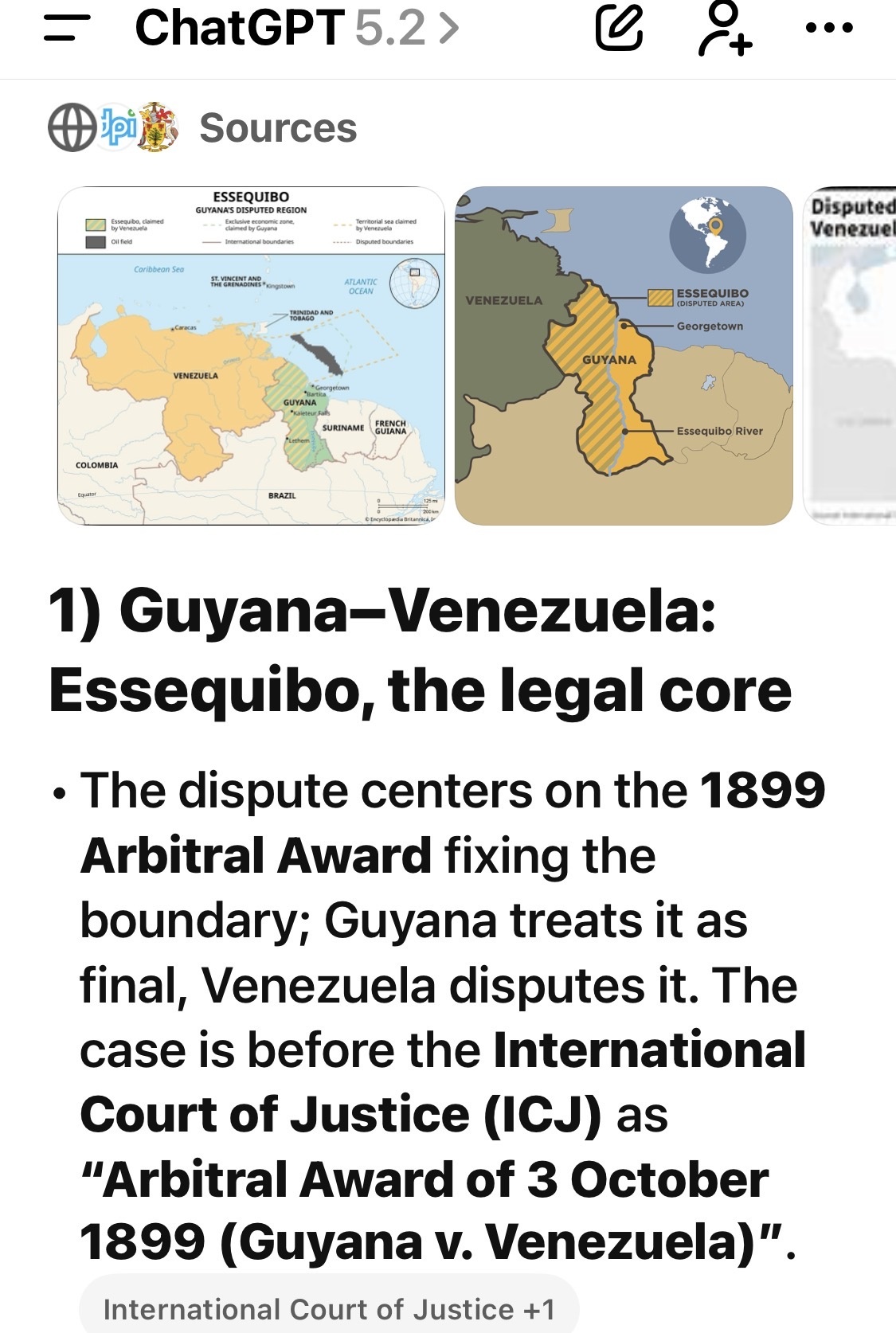
1) Guyana–Venezuela: Essequibo, the legal core
• The dispute centers on the 1899 Arbitral Award fixing the boundary; Guyana treats it as final, Venezuela disputes it. The case is before the International Court of Justice (ICJ) as “Arbitral Award of 3 October 1899 (Guyana v. Venezuela)”. 
• The process has moved through written pleadings; Guyana’s government has publicly tracked deadlines (including Venezuela’s Rejoinder filing). 
• The diplomatic “pressure valve” is the Joint Declaration of Argyle (Dec 14, 2023): both sides commit to no threat/use of force and to resolve controversies under international law / the 1966 Geneva Agreement. 

2) Military & treaty red lines: what triggers escalation

Practical “red line” buckets (not predictions—just how risk typically spikes):
• Force or threat of force against Guyana (explicitly renounced in the Argyle Declaration). 
• Moves that change facts on the ground (e.g., formal annexation steps / “new state” claims; regional actors have treated such steps as destabilizing). 
• Interference with offshore operations / maritime incidents: CARICOM has issued statements when Venezuela–Guyana maritime tensions flare. 
• External security alignment: Guyana has deepened defense cooperation with partners; e.g., U.S. Navy/SOUTHCOM-reported exercises signal deterrence and interoperability. 

3) Guyana’s Sovereign Wealth Fund: Natural Resource Fund (NRF)

Guyana’s NRF is designed to smooth volatility, save for future generations, and fund development priorities—while (on paper) building transparency/oversight. 
Key mechanics you can “audit” in practice:
• Withdrawals go to the Consolidated Fund and are restricted to national development priorities and major-disaster projects (per the Act’s framework as summarized by official and major local outlets). 
• A formula/ceiling governs how much can be withdrawn each year (including a structure that, as described publicly, becomes more restrictive as annual deposits grow). 
• Oversight architecture references arm’s-length governance and alignment with the Santiago Principles (global SWF governance standards). 

Practical “watch items” for any oil SWF
• Rule clarity (simple, hard to game) vs. constant amendments.
• Project-level reporting (can citizens trace dollars → outcomes?).
• Independent oversight that can survive political pressure.

4) Comparison: Guyana vs Norway vs Alaska (three workable models)

Norway (GPFG + fiscal rule)
• Norway’s political guardrail is the fiscal rule: over time, the government should spend only the expected real return of the fund (widely described as ~3%). 
What to copy: strict “don’t spend principal” culture + clear macro rule.

Alaska (Permanent Fund + POMV draw)
• Alaska uses a Percent of Market Value (POMV) draw (commonly 5%) based on multi-year average market value, providing a stabilizing revenue stream. 
What to copy: mechanical, formula-based draws + smoothing over time.

Guyana (NRF)
• Guyana’s model is closer to a rules-based revenue-transfer + budget process approach, with statutory purposes and oversight bodies. 
What to copy: explicit development + disaster purposes, and published transfer reporting—then strengthen project-level transparency.

5) “John Jay” style case study: sovereignty, courts, and legitimacy

If you frame Guyana as a John Jay–ish lesson in small-republic sovereignty, the through-line is:
• Territory defended by law (ICJ process; treaties/undertakings like Argyle) rather than conquest. 
• Credibility = institutions: the SWF is effectively a “constitutional” instrument for future stability; weak governance can turn an external border dispute into internal legitimacy stress. 
• Deterrence complements law: limited defense capability + credible partnerships reduces the temptation for faits accomplis while the case proceeds. 

A fast “do-this-next” checklist (if you’re building a Guyana memo)
1. ICJ docket timeline (key filings, upcoming procedural steps). 
2. Argyle Declaration compliance grid (incidents vs commitments). 
3. NRF governance scorecard mapped to Santiago Principles (24 points). 
4. Revenue rule comparison table: Norway “3%,” Alaska “POMV 5%,” Guyana ceiling formula. 

If you want, I can turn this into a one-page “Guyana: Sovereignty + SWF Governance” brief with (a) a timeline, (b) a risk matrix, and (c) a governance template you can reuse for other countries/states.

Here’s the one-page “Guyana: Sovereignty + SWF Governance” brief you asked for (timeline + risk matrix + reusable template).

Guyana: Sovereignty + Oil Wealth Governance (One-page brief)

Situation snapshot
• Core dispute: Venezuela claims Guyana’s Essequibo region; Guyana relies on the 1899 Arbitral Award and is pursuing settlement at the International Court of Justice (ICJ). 
• De-escalation pledge: The Joint Declaration of Argyle (Dec 14, 2023) commits both states to no threat/use of force and to resolve controversies under international law (incl. the 1966 Geneva Agreement). 
• Oil governance hinge: Guyana channels petroleum receipts via its Natural Resource Fund (NRF)—the rules around withdrawals and oversight are the “constitutional” backbone for stability. 

A) Timeline (anchor dates you can cite)
• Dec 1, 2023: ICJ indicates provisional measures (baseline for “don’t escalate while case proceeds”). 
• Dec 14, 2023: Argyle Declaration signed (no force; diplomacy + international law). 
• Mar 1, 2025: CARICOM statement after a reported maritime incident involving Venezuelan vessels and an FPSO in Guyana’s maritime area (explicitly links provocations to Argyle commitments). 
• May 1–2, 2025: ICJ issues an Order on Guyana’s request to modify the Dec 2023 provisional-measures order (procedural escalation control). 

B) Risk matrix (simple “red lines”)

High risk (fast escalation)
• Threat/use of force (explicitly renounced in Argyle). 
• New “facts on the ground” (annexation moves, coercive administrative acts). (Argyle’s “refrain from escalating” logic is aimed at preventing this.) 

Medium risk (gray-zone pressure)
• Maritime interference with offshore operations / FPSOs (investor + security shock). 
• Hardening security alignments (more exercises/partnering can deter, but also raises temperature). 

Lower risk (managed competition)
• Legal/diplomatic sparring while ICJ proceedings continue (still costly, but less kinetic). 

C) NRF (Guyana) — the governance “load-bearing beams”

Use-of-funds rule (bright line): Withdrawals must go into the Consolidated Fund and be used only for (a) national development priorities and (b) major-disaster response projects (per the Act’s framework and public explanations). 
Withdrawal control: The Act establishes a statutory withdrawal-amount determination concept (the “fiscally sustainable amount”)—i.e., a ceiling meant to preserve intergenerational value and smooth volatility. 
External benchmark: The NRF is assessed/linked against the Santiago Principles (SWF governance norms) in SWF community reporting. 

D) Model comparison (what to copy)

Norway (GPFG

  • fiscal rule): Spend only the fund’s expected real return (~3%) over time—don’t spend principal; counter-cyclical flexibility in downturns. 

Alaska (Permanent Fund + POMV draw): Statutory POMV framework—~5% draw based on multi-year average market value to stabilize payouts. 

Guyana (NRF): Rules-based transfers into the budget + statutory purposes; the “test” is whether reporting and oversight stay credible as oil receipts surge. 

E) Reusable “John Jay” sovereignty template (copy/paste for any country/state)
1. Territory & legitimacy: What instrument anchors borders/authority? (Treaty/award/constitution).
2. Forum choice: Where is adjudication happening (ICJ/courts/arbitration) and what provisional restraints exist?
3. Deterrence layer: What defensive capacity/alliances reduce faits accomplis?
4. Revenue constitution: What are the hard rules for resource rents (cap, formula, deposit/withdrawal gates)?
5. Audit trail: Can citizens trace $ in → fund → budget → project outcomes?
6. Institutional independence: Are oversight bodies insulated from political cycling?
7. Shock drills: How does the system behave under (a) price crash, (b) conflict incident, (c) corruption scandal?

If you want the next deliverable: I can turn this into a fillable 2-page memo (with headings, blanks, and a scoring rubric) so you can reuse it for Suriname, Trinidad, Venezuela, or any U.S. state “fund” analog.

post photo preview
Interested? Want to learn more about the community?
What else you may like…
Videos
Podcasts
Posts
Articles
January 06, 2026
My moment of greatness of the evening

It was pretty darn good.

00:00:20
January 04, 2026
Brian Cole Jr.

Another Jan. 6 injustice as Brian Cole Jr. ordered detained until trial.

you know the story. here's the vlawg.

00:11:58
January 03, 2026
ousting of Maduro

My thoughts post news-conference.

00:18:16
February 17, 2024
Appearance on Richard Syrette

I did a quick hit on Richard Syrette yesterday. Gotta keep Canadians apprised of the U.S. madness.

Appearance on Richard Syrette
The Barnes Brief, Podcast Format: Monday, July 17, 2023

Closing Argument: Birthright citizenship is deeply American, and wholly Constitutional.

The Barnes Brief, Podcast Format: Monday, July 17, 2023
Declaration of Independence

Audio podcast style.

Declaration of Independence
Daily thought

I am trying to determine the point at which good people doing bad things makes them a bad person.

Everyone has done a bad things. Even good people.

I consider myself to be a good person, and I have done / said things that I regret even 30 years later.

I imagine that even bad people, who are fundamentally bad and do bad things, still think that they are good people. Just to use the most bombastic analogy, I don’t think even bona fide Nazis thought they were evil.

I don’t think the most evil communists think they are evil.

Maybe serial killers or gangbangers acknowledge that they are evil, and just don’t care.

But I think the bulk of bad people still think they are good.

There is a point at which good people become bad. And there is a point at which even bad people can become good.

so what is it? A pattern of conduct? Judgment or lack there of?

Inherent weakness of character? Inherent strength of character?

Reliance on some underlying principles or faith in a higher power? Although I have ...

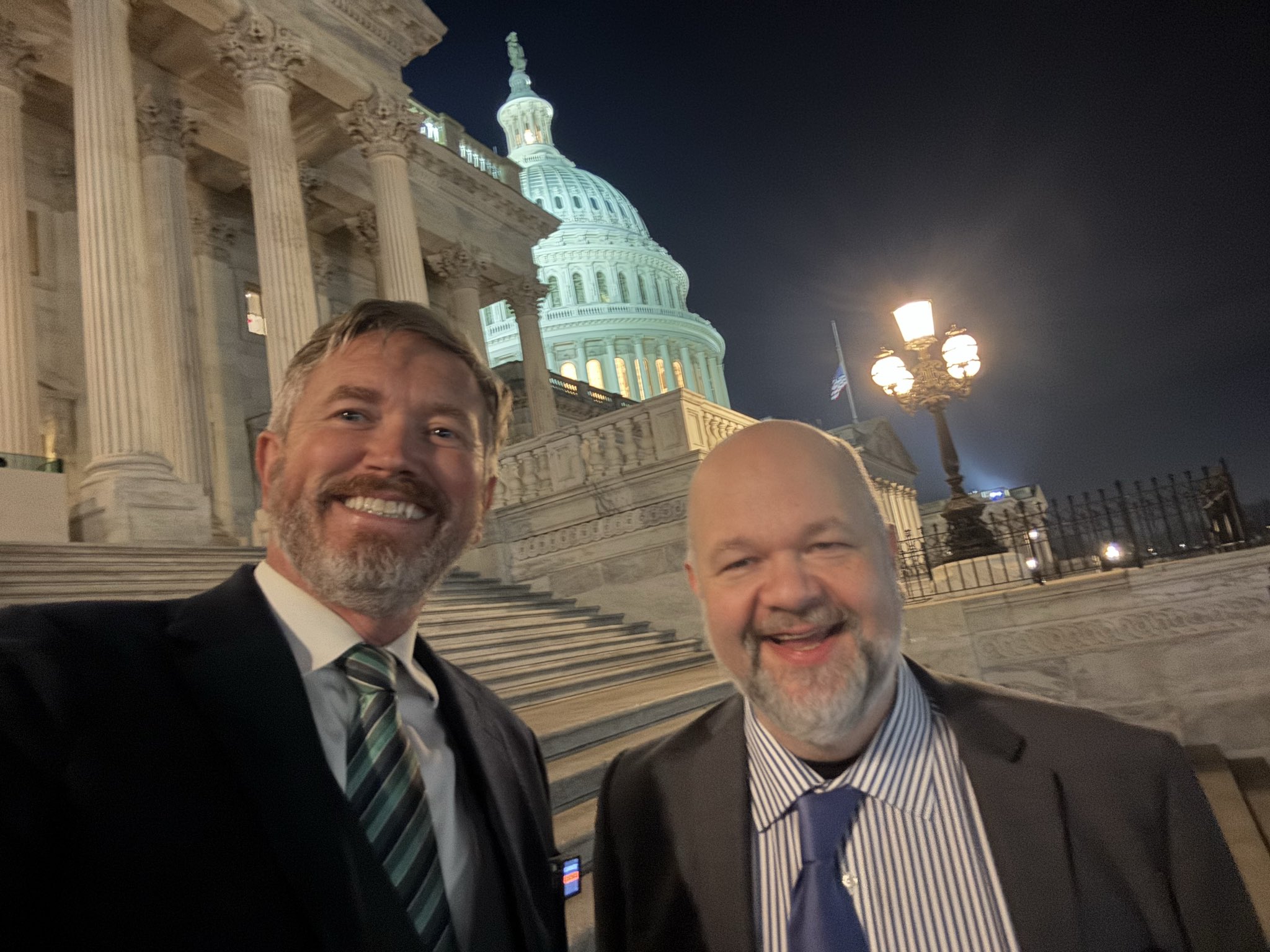
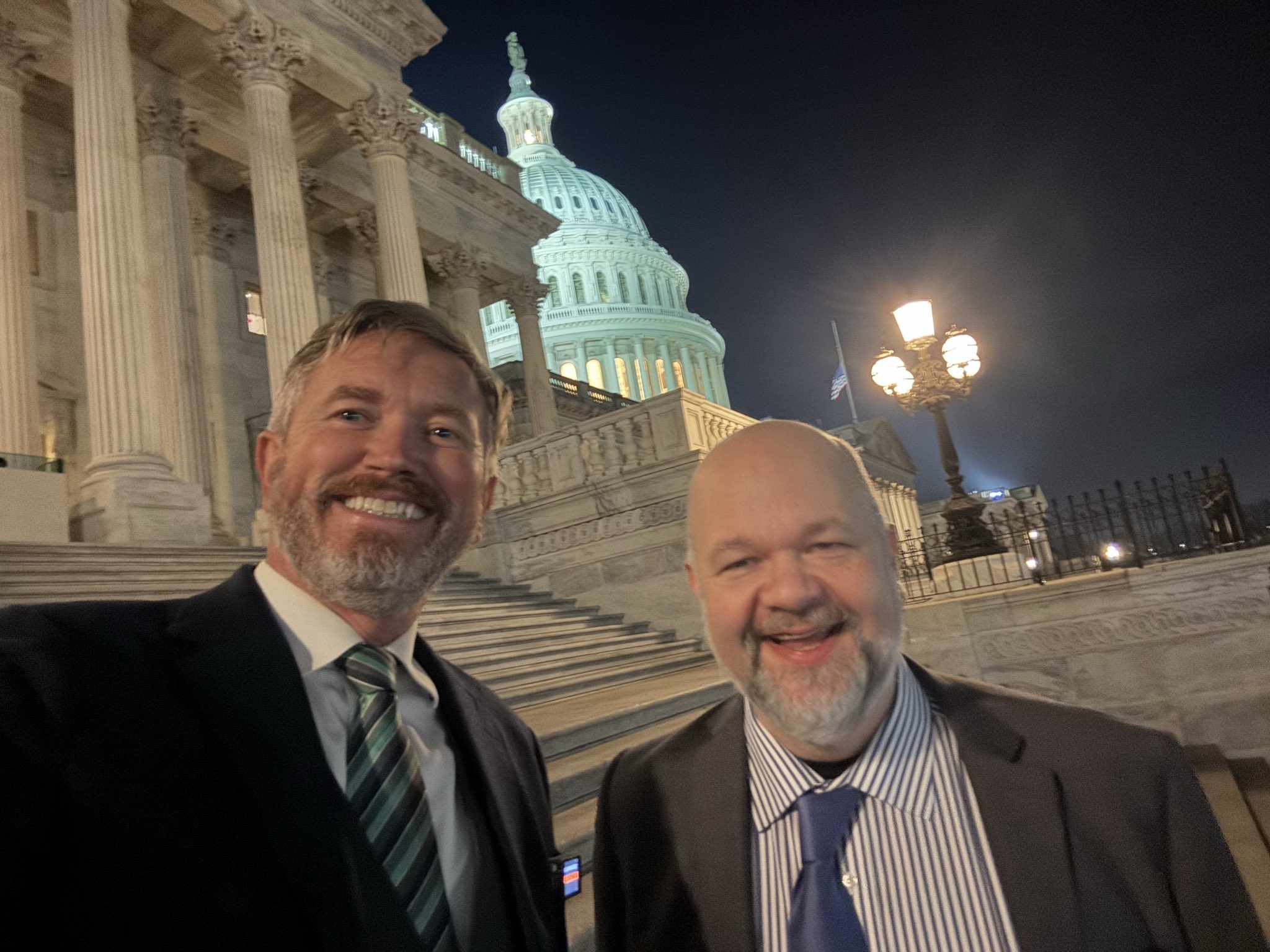
Barnes is in good company in DC

post photo preview
post photo preview
The Barnes Brief: Week of December 19, 2025

I.   INTRODUCTION

A. Art of the Day

Christmas music, my favorite season thanks to my father, by wondrous choirs, which also was my father’s favorite form of Holiday cheer. This particular album from the Vienna Boys Choir.

B. Wisdom of the Day

“Ignore them, and you get Fuentes, but worse.” Carl Benjamin on young men in the west.

C. Cultural Recommendation

Greatest Christmas movie ever. https://www.imdb.com/title/tt0097958/

D. Appearances

  • LIVE w/ Tom Woods
  • LIVE w/ Dr. Bowden & Brook Jackson

II.   THE EVIDENCE

 *Note: A reminder — links are NOT endorsements of the ideas contained therein. The Library is big, and it often consists of ideas I do not personally share, but whose ideas are worth further exploring.

A.  Daily News of Interest

  1. Erika Kirk announces support for Vance 2028. https://www.msn.com/en-us/news/politics/erika-kirk-endorses-jd-vance-for-president/ar-AA1SEd5F
  2. Left populism rebuild. https://www.liberalpatriot.com/p/the-future-of-the-left-in-the-21st-ef0
  3. Big MAHA wins on trans interventions. https://www.themahareport.com/p/breaking-kennedy-signs-medical-declaration
  4. Somali fraud. https://archive.is/lMATr
  5. Georgia comes clean on 2020, in part. https://thefederalist.com/2025/12/17/fulton-county-we-dont-dispute-315000-votes-lacking-poll-workers-signatures-were-counted-in-2020/

*Bonus: Kimchi heals. https://www.sciencedaily.com/releases/2025/12/251216081945.htm

B. Daily Deep Dive: Zoomer Men Rebel

  1. Zoomer men missing relationships. https://isaiahmccall.substack.com/p/gen-z-men-have-given-up-on-dating
  2. Condemned for their gender. https://yougov.co.uk/society/articles/52863-young-men-masculinity-and-misogyny
  3. No good jobs. https://fortune.com/2025/08/25/gen-zers-neets-jobless-men-unemployed-higher-rates-women-healthcare-coding-ai/
  4. No home. https://fortune.com/2025/12/12/gen-z-giving-up-on-owning-home-spending-more-saving-less-working-less-risky-investments/
  5. Carl Benjamin explains.

*Bonus: Hollywood attacks young men. https://slate.com/culture/2024/11/entertainment-hollywood-masculinity-male-role-models-movies-tv-social-media.html

C. Cases of Consequence

  1. Brown University murder case. https://www.the-independent.com/news/world/americas/crime/claudio-neves-valente-reddit-brown-shooting-b2887811.html
  2. Epstein Files release.
  3. Bongino retires. https://x.com/barnes_law/status/2001725595022160288?s=20
  4. Judge convicted. https://www.npr.org/2025/12/18/nx-s1-5648584/judge-hannah-dugan-guilty-obstruction-ice
  5. 1stA & immigration judges. https://www.courthousenews.com/wp-content/uploads/2025/06/opinion-immigration-judges-free-speech-trump.pdf
  6. Maryland reparations legislation. https://apnews.com/article/slavery-reparations-wes-moore-veto-maryland-9c134edbf0410228035743a8dc546171
  7. Luigi. https://courthousenews.com/luigi-mangione-faces-uphill-battle-after-marathon-evidence-hearing/
  8. 1A & new antisemitism laws. https://www.courthousenews.com/wp-content/uploads/2025/11/antisemitism-lawsuit.pdf
  9. Minnesota whistleblower suit: bogus child abuse grant scam. https://www.courthousenews.com/wp-content/uploads/2025/12/sharon-vs-harper-complaint.pdf
  10. Walmart sexual assault. https://www.courthousenews.com/wp-content/uploads/2025/12/walmart-could-have-foreseen-sexual-assault.pdf

*Bonus: Baby Shark suit. https://ww3.ca2.uscourts.gov/decisions/isysquery/892398f9-ac03-458a-8ba1-dce37861e63c/1/doc/24-313_opn.pdf#xml=https://ww3.ca2.uscourts.gov/decisions/isysquery/892398f9-ac03-458a-8ba1-dce37861e63c/1/hilite/

III.     Best of the Board: Trump Admin Grade

On the 1st year of the 2nd term of the Trump administration

  • UncleBugbite: I'm a young man with decades ahead of me to suffer under our bullshit kleptocracy. Sure, Kamala Harris isn't president right now. But Trump's absolute failure to address the structural problems is laying the groundwork for something much worse and better prepared than stupid Kamala Harris, with a desperate population willing to risk more extreme measures for any sort of relief. Trump's weakness is wasting the tiny opportunity we had to fix things, and frankly I'm terrified.
  • JoeKD: This Country was a FUCKING MESS. You just don't clean up a Mess like that in 9 months. Give the man some time. It'll get there. As far as Foreign Affairs goes, he needed to spend alot of time on that to get our Allies back in line.
  • TJefferson: Positives: Immigration/border; JD vance/RFK jr/Tulsi; Multiple pardons; A single month of DOGE. Negatives: Everything else
  • Iceni2103: what are we comparing it to? compared to the alternative, it is B+ to A range. Kamala or Biden 2 would have been an utter disaster. compared to the promises: D+? some good things (mostly border, hard changes to trade, and some executive reforms), but he is falling down way too much (hyping up 'peace deals' that don't last, warmongering Venezuela, dragging out Ukraine, unforced errors on staffing and by extension big issues like Epstein, DOGE/BBB, and MAHA, listening to neo-cons like he needs to please them, focus on donors not voters).
  • Bdmichael09: The only thing hes actually done that truly matters is stop the insane flow of mass migration. That is great, but he hasn't delivered really on anything else. Russia/Ukraine is still a shit show. He bends over and takes it up thr ass for Israel daily rather than put them in their place as the welfare recipients of the US that they are. This nonsense with Venezuela needs to stop, now. He hasn't handled any of the corruption in the bureaucratic state. His push to lower interest rates is a recipe for disaster. We need more restrictive monetary policy after the covid insanity, not easy money policy. Its going to take at least a decade to recover from those awful Congressional decisions in 2020 and 2021. He hasn't actually held the DEI bureaucracy to account in Universities. Many universities kept all of the DEI people but renamed the departments/roles and there has been 0 follow up on actually stomping that out.
  • Ktrimbach: I go back and forth between B- and C+. He’s still the best President of my life (starting with Nixon), but Oh so much less than he could be!

IV.    Closing Argument: The Constitution, Article 1, The Power of Impeachment

  • Aside from the power of the purse, the other principal power afforded the legislative branch is the power to remove executive officers, including the President and Judges, in the power of Impeachment.
  • As always, we start, first and foremost, with the text. Section 3 of Article 1 provides the House
    shall have the sole Power of impeachment” while ascribing to the Senate “the sole Power to try all Impeachments.” The Constitution requires “no person shall be convicted without the concurrence of two thirds of the Members present.” The constitution constricts the impact of impeachment to “not extend further than to removal from Office and disqualification to hold and enjoy any Office of honor, Trust or Profit under the United States.” Further, “the Party convicted shall nevertheless be liable and subject to Indictment, Trial, Judgment and Punishment according to Law” by authorities other than the legislative branch.
  • Of note, Article 1 otherwise remains mute on the issue of impeachment. The other Articles answer who can be impeached and the legal predicates for cause to issue such impeachments. Section 4 of Article 2 provides impeachment for the President, Vice President “and all civil Officers of the United States.” The cause permitted for their impeachment is limited to “treason, bribery or other high crimes and misdemeanors.” The power to impeach judges is only indirectly referenced, as section 1 of Article 3 provides judges can only hold their offices “during good behaviour.” The only other reference to cause for removal is the obligation for all judicial officers to be “bound by oath or affirmation to support this Constitution” in Article 6. The rules of impeachment permit “each house may determine the rules of its proceedings” in section 5 of Article 1. The “civil officers” subject to impeachment parallel the “principal officers” the Senate must be “advised” and “consented” to the appointment of under Article 2.
  • While executive officers can only be impeached for “treason, bribery or high crimes and misdemeanors”, judges can be impeached simply for not holding office during “good behaviour.” Some scholars argue the ‘good behaviour” phrase was just a limitation on at-will firing, and not an independent grounds for impeachment and removal, but early American practice and ancient English practice belies that construction. The contrast evidences that good behavior is a broader provision than treason, bribery or high crimes and misdemeanors. A judge can be impeached for non-criminal conduct. The phrase derives from the Latin – as long as they shall behave themselves well. The legacy of the phrase derives from old English practice dating to the 12th century, intended to protect against arbitrary removal or removal without any limits on discretion, comparable to the principle difference between “at will” employment and “for cause” limits on firing.
  • What constitutes such cause for judicial removal? Consider early American practice: merely being drink on the bench was sufficient for impeachment. The principal and paramount precedent of impeachment of judicial officers is the impeachment of Supreme Court Justice Samuel Chase in 1804. What grounds did the House recite: “arbitrary, oppressive and unjust” handling of a trial, including partisan prejudice especially, as reflected in the application of the law, exclusions of evidence, and inaccurate recitations of the law to grand juries. Two examples include the failure to remove biased jurors, excluding defense witnesses, and generally “tending to prostitute the high judicial character with which he was invested, to the low purpose of an electioneering partizan.”
  • Sound like any Judges you know? 

Read full Article
post photo preview
The Barnes Brief: Week of December 12, 2025

I. INTRODUCTION

A.  Art of the Week

As the birds make their winter trip in synchronized form, they almost magically make the form of their species in live time in the air, captured in the moment by a photographer’s film, reminding us of the Creator’s noble design and winking at us in real time. 

B.  Recommendation of the Week

An Economic Interpretation of the Constitution of the United States by Charles Beard unmasked that many of the men at the Convention Hall in Philadelphia were not as enlightened and allied to the Founding generation as later history would tell the tale. https://www.goodreads.com/book/show/187702.An_Economic_Interpretation_of_the_Constitution_of_the_United_States

C.  Wisdom of the Week

Affording politicians “a universal, unbounded permission” to take another’s liberty or property in the name of the public fisc will “when the expenses of the nation, by their ambition are grown enormous” inescapably “oppress and subject” the citizenry.” William Symmes. 

D.  Appearances

  • Dr. Bowden
    placeholder

E.  Best of the Board

  1. Birthright citizenship. https://vivabarneslaw.locals.com/post/7341595/is-the-nationality-act-of-1940-the-proper-starting-point-for-analyzing-the-scope-of-subject-to-th
  2. Viva done w/ Candace. https://vivabarneslaw.locals.com/post/7516832/update-about-a-month-ago-i-asked-for-prayers-for-my-mom-since-we-were-going-to-get-an-update-on
  3. Curated content from @CCandent https://vivabarneslaw.locals.com/post/7516486/title
  4. Massie: let’s leave NATO. https://vivabarneslaw.locals.com/post/7516236/massie-introduces-bill-to-get-us-out-of-nato-by-paul-dragu-the-new-american-representative-thom
  5. Nice ruling in PA. https://vivabarneslaw.locals.com/post/7516323/robertbarnes-well-at-least-there-are-still-a-few-judges-in-pa-that-follow-the-constitution-good-r

*Bonus: Personal hope. https://vivabarneslaw.locals.com/post/7516832/update-about-a-month-ago-i-asked-for-prayers-for-my-mom-since-we-were-going-to-get-an-update-on

F.  Best Across the Internet

  • Disconnect from purpose.
    placeholder

II. THE EVIDENCE

A.   NEWS OF THE WEEK: The Library

  1. EU crosses Rubicon. https://x.com/PM_ViktorOrban/status/1999358779763183953?s=20
  2. Vaccines & chronic disease. https://ijvtpr.com/index.php/IJVTPR/article/view/125
  3. Disney’s AI gamble. https://x.com/HedgieMarkets/status/1999170314580746623?s=20
  4. Lindell goes for Governor. https://x.com/realMikeLindell/status/1999191330829009327?s=20
  5. Honduran election dispute. https://x.com/SalvaPresidente/status/1998955182277722383?s=20

*Bonus: Foster kids helped. https://x.com/MAHA_Action/status/1999241337745670236?s=20

B.    DEEP DIVE: RUSSIA-US Reasons for Alliance

  1. Tucker: Russia-US natural allies. https://x.com/AFpost/status/1998968887724183834?s=20
  2. Russia: world’s richest resources. https://www.visualcapitalist.com/ranked-top-10-countries-by-value-of-all-their-natural-resources/
  3. Russia: world’s largest country. https://x.com/World_Insights1/status/1999029803458965765?s=20
  4. Russia: world’s largest nuclear arsenal. https://www.icanw.org/nuclear_arsenals
  5. Russia’s GDP replaced Europe. https://x.com/IslanderWORLD/status/1978510171589513504?s=20

*Bonus: Russia’s traditional culture. https://x.com/MyLordBebo/status/1998812811171082739?s=20

C.   HOMEWORK: Cases in Controversy

  1. SCOTUS: Trump authority over bureaucracy. https://www.supremecourt.gov/oral_arguments/argument_transcripts/2025/25-332_7lhn.pdf
  2. SCOTUS: campaign spending limits. https://www.supremecourt.gov/oral_arguments/argument_transcripts/2025/24-621_q86b.pdf
  3. SCOTUS: sentencing the disabled. https://www.supremecourt.gov/oral_arguments/argument_transcripts/2025/24-872_b07d.pdf
  4. SCOTUS: Covid immunity limits. https://www.supremecourt.gov/opinions/25pdf/25-180_8m59.pdf
  5. SCOTUS: Bondi defends Whitmer Fednapping convictions. https://www.supremecourt.gov/DocketPDF/25/25-5249/387036/20251210183835177_Croft_Opp_12.10.pdf
  6. Courts extend special protection to Maryland Man. https://www.courthousenews.com/wp-content/uploads/2025/12/paula-xinis-grants-abrego-garcia-tro-block-rearrest.pdf
  7. Share Ryan v. Crenshaw. https://x.com/ShawnRyan762/status/1999554231842349564?s=20
  8. Pipe Bomber Patsy. https://x.com/RepThomasMassie/status/1999541341466866022?s=20
  9. Big Tech contempt. https://www.courthousenews.com/wp-content/uploads/2025/12/epic-games-vs-apple-ninth-circuit-opinion.pdf
  10. Pentagon wins trans ban. https://www.courthousenews.com/wp-content/uploads/2025/12/dc-circuit-trans-soldier-ban-opinion.pdf
  11. Russia Euroclear Arbitration possibilities. https://share.google/FdKIPKgvLfEeJXsUz & https://investmentpolicy.unctad.org/international-investment-agreements/treaties/bit/3645/belgium-luxembourg---russian-federation-bit-1989-
  12. Doctor liability for patient’s drugs. https://www.courthousenews.com/wp-content/uploads/2025/12/oregon-supreme-court-cyclist-doctor-liability.pdf

*Bonus: Ferrari Tennessee tax case up in flames. https://www.roadandtrack.com/news/a69556804/whistlindiesel-tennessee-allegations-ferrari-tax-evasion/

**Bonus: Class Action AI in Healthcare. https://www.fisherphillips.com/en/news-insights/new-class-action-targets-healthcare-ai-recordings.html

***Bonus: What does AI own? https://www.commonplace.org/p/matthew-b-crawford-ownership-of-the

III.  CLOSING ARGUMENT: Masterclass -- The Constitution Article I, The Power of the Purse

  • The first power of the purse the Constitution affords the legislative branch of government in Article I is the power to pay themselves, as section 6 of Article 1 provides: “The Senators and Representatives shall receive a Compensation for their Services, to be ascertained by Law, and paid out of the Treasury of the United States.” 
  • The second power of the purse is Article I's most controversial and most consequential: the power to tax and the power to borrow, or, colloquially, the power to “raise Revenue” in section 7. The mechanism for “raising revenue” shall be by legislation that “shall originate in the House” and then be concurred with by the Senate. The power finds explicit enumeration in Section 8: lay taxes; collect taxes; lay duties; collect duties; lay imposts; collect imposts; law excises; collect excises; pay debts; borrow money on credit of the US; coin Money; regulate the value of Money; regulate the value of foreign Coin; fix weights and measures; appropriate money to support Armies (capped at 2 years); provide and maintain a Navy; provide for arming the Militia; and the broad “necessary and proper” catchall in Section 8. The power of the purse finds further enumerated restrictions within Section 1 itself, though subsequent Constitutional provisions could further constrain and restrain the power of the Purse: section 8’s requirement that all “duties, imposts and excises” must be “uniform”; section 9’s prohibiting a tax on importation of people capped at $10 per person; prohibiting any tax that constitutes a bill of attainder or ex post facto law; no direct tax unless apportioned amongst the states; no tax on exports; no port-preferential tax; and no money spent that is not “in consequence of appropriations made by law”. 
  • The Sixteenth Amendment clarified one key aspect of the power of the Purse: enumerating Congress “power to tax” including the power to “law and collect taxes on incomes” regardless of “whatever source derived” without requiring apportionment. This removal-of-the-source rule was later interpreted to be a Congressional reversal by Constitutional Amendment of the Pollock decision of 1896, and enshrining the dissenting opinion as the authoritative interpretation of the power of the Purse in the court’s Brushaber decision by the dissenting Pollock Judge turned Brushaber Chief Judge White. White would treat any tax on income as an indirect tax, and decided that’s all that the 16th Amendment authorized, codifying his 1896 dissent into the Constitution in 1913.  White used the 1794 Carriage Tax Act to claim a direct tax was a tax on an object whereas an indirect tax was a tax on use, effectively affording a broad power to tax “incomes” as long as the subject of the tax was the gain severed from the source rather than a tax on existing or ownership.  The absent clarity from the court enabled Congress to evade ever defining income itself subject to tax since 1916. 
  • This power of the purse exceeded that intended by many in the founding generation, as the Articles of Confederation did not authorize such centralized, federalized power to begin with, and the anti-federalists proved prescient in their warning against the bond-holding elite that packed the text-writing segments of the Constitutional Convention, as well detailed in Charles Beard’s Economic History of the Constitution. https://cdn.mises.org/11_1_6_0.pdf#:~:text=The%20Antifederalists'%20fundamental%20and%20most%20enduring%20objection,in%20nearly%20all%20of%20the%20Antifederalist%20writings.
  • As one of that generation, known only as Federal Farmer, forewarned: “The only semblance of a check is the negative power of not re-electing them. This, sir, is but a feeble barrier, when their personal interest, their ambition and avarice, come to be put in contrast with the happiness of the people. All checks founded on anything but self-love, will not avail.” 
Read full Article
post photo preview
The Barnes Brief

I.  Schedule

      A.  Interview on World Apart RT https://vivabarneslaw.locals.com/post/7495641/interview-w-rt

      B.  Interview w/ Michael Malice https://vivabarneslaw.locals.com/post/7495633/michael-malice-interview

      C.   Interview on Duran https://vivabarneslaw.locals.com/post/7477013/live-w-duran 

II. The Evidence


Only for Supporters
To read the rest of this article and access other paid content, you must be a supporter
Read full Article
See More
Available on mobile and TV devices
google store google store app store app store
google store google store app tv store app tv store amazon store amazon store roku store roku store
Powered by Locals