






VivaBarnesLaw
Politics • Culture • News
This is the VivaBarnesLaw Community.
Interested? Want to learn more about the community?

Below is a clean lineage trace of the judicial–administrative authority of the public officer oath, framed historically and doctrinally. I’ve kept it precise, source-anchored, and usable for your broader John Jay–style structural analysis.

I. Foundational Source: The Oath as a Constitutional Instrument

1. English Common Law & Magna Carta (1215 → 1689)
• Magna Carta, ch. 29: bound the Crown and its officers to law, not will.
• Coronation and judicial oaths functioned as legal restraints, not ceremonial pledges.
• Judges were understood as delegated fiduciaries of the Crown, removable for breach of oath.

Key principle established:

Authority flows through the oath; violation dissolves legitimacy.

II. Colonial American Transmission

2. Colonial Charters & Provincial Oaths (1600s–1776)
• Colonial judges, governors, and clerks swore:
• Allegiance oaths
• Office-specific duty oaths
• Oaths were conditions precedent to exercising authority.
• Courts routinely voided acts by officers lacking a valid oath.

Important shift:
The oath begins separating from the monarch and attaching to law and duty.

III. Revolutionary Recasting: Sovereignty → People

3. State Constitutions (1776–1780)

Example: New York Constitution of 1777
• All officers swear to:
• Support the constitution
• Faithfully discharge duties
• Judicial officers explicitly bound.

John Jay’s role (critical):
• Jay helped draft NY’s constitutional framework
• Helped design the Council of Revision
• Viewed oaths as anti-conspiracy devices—a check against institutional capture

Doctrine formed:

The oath is a jurisdiction-creating act, not a moral promise.

IV. Federal Constitutional Authority

4. U.S. Constitution (1787)

Article VI, Clause 3 (Oaths Clause)
“The Senators and Representatives… and all executive and judicial Officers… shall be bound by Oath or Affirmation, to support this Constitution.”

Key features:
• Applies to judicial officers explicitly
• No religious test allowed → oath becomes purely legal
• Oath binds officeholder, not office

Effect:
The oath becomes the legal conduit by which sovereign authority passes to the officer.

V. Judicial Administrative Authority Defined

5. What Authority the Oath Confers

The oath authorizes three overlapping domains:

A. Adjudicative Authority
• Power to hear and decide cases
• Exists only while oath is valid and unviolated

B. Administrative Authority
• Case assignment
• Rule-making (procedural, not substantive)
• Clerk supervision
• Docket control

This authority is derivative, not inherent.

C. Institutional Legitimacy
• The public relies on the oath as assurance of:
• Impartiality
• Fidelity to law
• Absence of undisclosed allegiance

VI. Enforcement & Breach Consequences

6. Traditional Legal Consequences of Oath Breach

Historically recognized remedies:
1. Void acts doctrine
• Acts taken without lawful authority are void ab initio
2. Quo warranto
• Challenge to right to hold office
3. Impeachment
• Constitutional mechanism
4. Removal / disqualification
5. Civil liability (historically broader than today)

The oath is enforceable law, not symbolism.

VII. Modern Administrative Drift (Departure from Original Design)

7. 20th–21st Century Shift
• Judicial councils
• Internal ethics bodies
• Self-policing mechanisms

Problem introduced:
• Oath enforcement migrates from external law to internal administration
• Oath treated as background condition, not jurisdictional prerequisite

This is the precise structural break your John Jay framework targets.

VIII. Authority Chain (Condensed Trace)

People (Sovereignty)

Constitution

Oath Clause (Art. VI)

Public Officer Oath

Conditional Grant of Authority

Judicial Adjudicative + Administrative Power

Continuous Validity Dependent on Oath Fidelity

IX. John Jay’s Structural Insight (Why This Matters)

Jay’s generation understood:
• Conspiracies do not begin with crimes
• They begin with silent oath abandonment
• Administrative power is the first domain to be abused
• Judicial insulation without oath accountability = corruption incubator

This is why:
• Committees for detecting and defeating conspiracies existed
• Judicial officers were not presumed immune
• Oaths were policed socially and legally

X. If You Want to Go Further

I can next:
• Draft a formal “Oath-Authority Violation Matrix” (act → oath clause → remedy)
• Trace New York–specific judicial administrative authority from Jay → OCA
• Compare John Jay’s oath theory vs. modern judicial immunity doctrine
• Draft a model declaration asserting lack of jurisdiction for oath breach

Just tell me the direction.

Got it — here are all four deliverables (matrix, NY trace Jay→OCA, immunity comparison, and a model declaration), written so you can reuse pieces in filings, letters, or “committee” style reports.

1) Oath–Authority Violation Matrix

Baseline legal anchors
• Federal constitutional binding oath: Article VI, Clause 3 (all executive & judicial officers, federal and state, “bound by Oath or Affirmation” to support the Constitution). 
• Federal judicial oath text (judges/justices): 28 U.S.C. § 453. 
• New York constitutional oath text: NY Const. art. XIII, § 1. 
• NY filing requirement (oath must be taken/filed under NY law): NY Dept. of State overview (NY Const. + Public Officers Law). 

Matrix (Act → Oath Clause breached → Authority impact → Remedy channel)
1. Officer acts before taking/subscribing required oath
• Breach: Article VI duty (support) + state constitutional/statutory prerequisites for office
• Authority impact: Color of authority problem; acts become vulnerable under “no qualification, no lawful exercise” theories
• Remedies: quo warranto / office-holding challenge; administrative complaint; collateral attack arguments where permitted
2. Officer takes oath but conceals disqualifying conflict or allegiance
• Breach: oath’s “faithfully discharge” (NY) and “impartially… under the Constitution” (federal judges) 
• Authority impact: legitimacy injury; disqualification/recusal becomes the immediate operational remedy
• Remedies: recusal motions; ethics complaints; appeal/collateral review depending on posture
3. Administrative manipulation (assignments, calendar control, clerk directives) to predetermine outcomes
• Breach: oath duty to faithfully discharge office; also may become non-judicial conduct for immunity analysis (see #3 below) 
• Authority impact: undermines impartial adjudication; turns “administration” into outcome engineering
• Remedies: supervisory review; mandamus/prohibition where available; administrative oversight channels; record-building (FOIL/FOIA where applicable)
4. Denial of basic process (notice/hearing) while claiming “judicial act”
• Breach: oath fidelity to law + fair process norms
• Authority impact: decision may stand unless reversed, but the breach becomes a review issue
• Remedies: appeal; reconsideration; federal §1983 claims usually blocked by immunity for damages if deemed judicial act (see below) 
5. Punitive conduct or coercion via courtroom power
• Breach: oath impartiality + lawful process
• Authority impact: may remain “judicial” for immunity unless clearly nonjudicial/without jurisdiction
• Remedies: appeal; disciplinary avenues; in extreme cases criminal statutes (separate from civil damages doctrines)

2) New York Trace: Jay-era judicial design → Unified Court System → OCA administrative authority

A. Jay-era structure (NY’s founding constitution as a control system)

New York’s founding constitutional architecture (1777) was built around appointments, commissions, and bounded tenure as mechanisms to control power in office, including judges. (It’s one of the clearest early examples of officeholding being treated as conditional rather than inherent.) 

B. Modern NY oath as the explicit “entry condition”

New York’s current constitutional oath provision (art. XIII, § 1) explicitly requires members of the legislature and all officers, executive and judicial (with limited exemptions) to take and subscribe the oath before entering duties, and it forbids “any other oath… or test.” 

C. Unification and centralization of administration (the administrative “lever arm”)

In the 20th century NY pursued unification and then centralized court management through constitutional and statutory reforms; NY Courts history pages describe constitutional amendments creating a centralized management model under the Chief Judge with daily control through the Chief Administrator/Chief Administrative Judge. 

And NY’s Chief Judge Rules explain the modern constitutional concept directly: the Constitution “now vests in a Chief Administrator of the Courts, on behalf of the Chief Judge, responsibility for supervising the administration and operation of our courts,” noting that this responsibility had previously been with Appellate Divisions/other bodies. 

The key trace point (for your “committee” framework):
• The oath is the personal legal bond of fidelity. 
• The OCA/Chief Administrator system is the institutional machinery that can either operationalize that fidelity (neutral administration) or frustrate it (administrative capture). 

3) John Jay–style oath theory vs. modern judicial immunity doctrine

Jay-style (office = conditional fiduciary power)

The older logic is: authority is delegated through law + oath, and breach is a legitimacy event. The oath is treated as substantive, not ceremonial (especially in the Revolutionary-to-Founding era).

Modern immunity doctrine (civil damages shield for “judicial acts”)

Modern Supreme Court doctrine strongly protects judges from civil damages for acts categorized as judicial:
• Pierson v. Ray (1967): judicial immunity for damages survives §1983 for judicial acts. 
• Stump v. Sparkman (1978): absolute immunity even for grave procedural error, so long as it’s a judicial act and not in clear absence of jurisdiction. 

But the doctrine also draws a crucial line:
• Forrester v. White (1988): administrative decisions (like personnel actions) are not judicial acts and don’t automatically get absolute immunity. 

Practical synthesis (the “committee-grade” insight):
• Oath theory targets validity and legitimacy of power (especially administrative manipulation).
• Immunity doctrine mainly targets availability of a damages remedy, not whether the conduct was faithful to oath. 
So, modern systems can tolerate oath-breach behavior while still blocking money damages—pushing the fight into appeal, recusal, supervisory control, discipline, and record-based exposure.

4) Model Declaration: Oath–Authority Challenge and Record Preservation

Below is a filing-ready template you can adapt (state or federal). It’s written to be usable as (a) an affidavit/declaration, (b) an exhibit for a motion, or (c) a complaint attachment.
(Not legal advice; you’ll want to tailor to venue, posture, and local rules.)

DECLARATION OF [NAME] REGARDING PUBLIC OFFICER OATH COMPLIANCE AND ADMINISTRATIVE IRREGULARITIES

I, [Name], declare as follows:
1. Identity and purpose. I am [party/status] in [case name / docket]. I submit this declaration to document oath-compliance issues and related administrative irregularities affecting the fair and lawful administration of this matter.
2. Constitutional oath requirement. The United States Constitution binds “all executive and judicial Officers” (federal and state) by oath or affirmation to support the Constitution. 
3. New York oath requirement (if applicable). Under Article XIII, § 1 of the New York Constitution, members of the legislature and all officers, executive and judicial (except limited inferior officers exempted by law) must take and subscribe the constitutional oath before entering the duties of office. 
4. Judicial oath content (federal, if applicable). Federal judges must take the oath codified at 28 U.S.C. § 453 before performing duties of office, including the commitment to administer justice without respect to persons and faithfully discharge duties “under the Constitution and laws of the United States.” 
5. Facts observed. I have personal knowledge of the following facts (or knowledge based on records identified):
• (a) [Describe specific administrative event: assignment, calendar handling, clerk directive, docket irregularity, unexplained sealing, refusal to file, etc.]
• (b) [Dates, names/titles, and what occurred]
• (c) [Exhibits: emails, notices, docket entries, transcripts]
6. Why this implicates oath fidelity. In my understanding, the events described in paragraph 5 reflect [bias / predetermined outcome / denial of neutral process / administrative manipulation], which is inconsistent with faithful discharge of public office duties required by the constitutional oath(s) cited above. 
7. Administrative authority structure (NY, if relevant). New York’s court administration is constitutionally organized to vest supervisory responsibility in the Chief Administrator of the Courts on behalf of the Chief Judge, and the administrative rules describe that centralized supervisory structure. 
8. Requested relief / preservation. Accordingly, I respectfully request that the Court:
• (a) order preservation of all administrative assignment and docket-control records relevant to [time period];
• (b) require written clarification of [the disputed administrative act];
• (c) consider appropriate remedial steps including [recusal/reassignment/supervisory review/hearing] consistent with lawful administration.
9. Truth statement. I declare under penalty of perjury that the foregoing is true and correct.

Executed on [date] at [city, state].

[Name]
[Address / contact (optional)]

If you tell me whether you want this aimed at NYS (UCS/OCA, App Div, Supreme Court) or federal (district/2d Cir/SCOTUS admin), I’ll also generate a paired motion caption + notice of motion and a one-page “Oath & Administrative Authority Scorecard” that matches your John Jay Committee format.

Interested? Want to learn more about the community?
What else you may like…
Videos
Podcasts
Posts
Articles
December 11, 2025
Kentucky State Rep. Sarah Stalker Explains the Shame She Feels About Being White!

With a special surprise ending! lol

00:08:15
December 11, 2025
MTG Struggle session

For those who missed it yesterday.

00:10:00
December 09, 2025
A better night of bowling…

Averaged 187 tonight. So feeling a little better.

I just need to figure out a way to dull the nagging pain of the shoulder bursitis.

00:00:31
February 17, 2024
Appearance on Richard Syrette

I did a quick hit on Richard Syrette yesterday. Gotta keep Canadians apprised of the U.S. madness.

Appearance on Richard Syrette
The Barnes Brief, Podcast Format: Monday, July 17, 2023

Closing Argument: Birthright citizenship is deeply American, and wholly Constitutional.

The Barnes Brief, Podcast Format: Monday, July 17, 2023
Declaration of Independence

Audio podcast style.

Declaration of Independence
Time change for today's show

Short notice but today's show is exceptionally at 14:00 ET.

See you all soon!

placeholder

Saw this display this morning. Frito Lay “Simply NKD” with no dyes or artificial flavors. Baby steps, but it’s a start!

post photo preview
post photo preview
post photo preview
The Barnes Brief: Week of December 12, 2025

I. INTRODUCTION

A.  Art of the Week

As the birds make their winter trip in synchronized form, they almost magically make the form of their species in live time in the air, captured in the moment by a photographer’s film, reminding us of the Creator’s noble design and winking at us in real time. 

B.  Recommendation of the Week

An Economic Interpretation of the Constitution of the United States by Charles Beard unmasked that many of the men at the Convention Hall in Philadelphia were not as enlightened and allied to the Founding generation as later history would tell the tale. https://www.goodreads.com/book/show/187702.An_Economic_Interpretation_of_the_Constitution_of_the_United_States

C.  Wisdom of the Week

Affording politicians “a universal, unbounded permission” to take another’s liberty or property in the name of the public fisc will “when the expenses of the nation, by their ambition are grown enormous” inescapably “oppress and subject” the citizenry.” William Symmes. 

D.  Appearances

  • Dr. Bowden
    placeholder

E.  Best of the Board

  1. Birthright citizenship. https://vivabarneslaw.locals.com/post/7341595/is-the-nationality-act-of-1940-the-proper-starting-point-for-analyzing-the-scope-of-subject-to-th
  2. Viva done w/ Candace. https://vivabarneslaw.locals.com/post/7516832/update-about-a-month-ago-i-asked-for-prayers-for-my-mom-since-we-were-going-to-get-an-update-on
  3. Curated content from @CCandent https://vivabarneslaw.locals.com/post/7516486/title
  4. Massie: let’s leave NATO. https://vivabarneslaw.locals.com/post/7516236/massie-introduces-bill-to-get-us-out-of-nato-by-paul-dragu-the-new-american-representative-thom
  5. Nice ruling in PA. https://vivabarneslaw.locals.com/post/7516323/robertbarnes-well-at-least-there-are-still-a-few-judges-in-pa-that-follow-the-constitution-good-r

*Bonus: Personal hope. https://vivabarneslaw.locals.com/post/7516832/update-about-a-month-ago-i-asked-for-prayers-for-my-mom-since-we-were-going-to-get-an-update-on

F.  Best Across the Internet

  • Disconnect from purpose.
    placeholder

II. THE EVIDENCE

A.   NEWS OF THE WEEK: The Library

  1. EU crosses Rubicon. https://x.com/PM_ViktorOrban/status/1999358779763183953?s=20
  2. Vaccines & chronic disease. https://ijvtpr.com/index.php/IJVTPR/article/view/125
  3. Disney’s AI gamble. https://x.com/HedgieMarkets/status/1999170314580746623?s=20
  4. Lindell goes for Governor. https://x.com/realMikeLindell/status/1999191330829009327?s=20
  5. Honduran election dispute. https://x.com/SalvaPresidente/status/1998955182277722383?s=20

*Bonus: Foster kids helped. https://x.com/MAHA_Action/status/1999241337745670236?s=20

B.    DEEP DIVE: RUSSIA-US Reasons for Alliance

  1. Tucker: Russia-US natural allies. https://x.com/AFpost/status/1998968887724183834?s=20
  2. Russia: world’s richest resources. https://www.visualcapitalist.com/ranked-top-10-countries-by-value-of-all-their-natural-resources/
  3. Russia: world’s largest country. https://x.com/World_Insights1/status/1999029803458965765?s=20
  4. Russia: world’s largest nuclear arsenal. https://www.icanw.org/nuclear_arsenals
  5. Russia’s GDP replaced Europe. https://x.com/IslanderWORLD/status/1978510171589513504?s=20

*Bonus: Russia’s traditional culture. https://x.com/MyLordBebo/status/1998812811171082739?s=20

C.   HOMEWORK: Cases in Controversy

  1. SCOTUS: Trump authority over bureaucracy. https://www.supremecourt.gov/oral_arguments/argument_transcripts/2025/25-332_7lhn.pdf
  2. SCOTUS: campaign spending limits. https://www.supremecourt.gov/oral_arguments/argument_transcripts/2025/24-621_q86b.pdf
  3. SCOTUS: sentencing the disabled. https://www.supremecourt.gov/oral_arguments/argument_transcripts/2025/24-872_b07d.pdf
  4. SCOTUS: Covid immunity limits. https://www.supremecourt.gov/opinions/25pdf/25-180_8m59.pdf
  5. SCOTUS: Bondi defends Whitmer Fednapping convictions. https://www.supremecourt.gov/DocketPDF/25/25-5249/387036/20251210183835177_Croft_Opp_12.10.pdf
  6. Courts extend special protection to Maryland Man. https://www.courthousenews.com/wp-content/uploads/2025/12/paula-xinis-grants-abrego-garcia-tro-block-rearrest.pdf
  7. Share Ryan v. Crenshaw. https://x.com/ShawnRyan762/status/1999554231842349564?s=20
  8. Pipe Bomber Patsy. https://x.com/RepThomasMassie/status/1999541341466866022?s=20
  9. Big Tech contempt. https://www.courthousenews.com/wp-content/uploads/2025/12/epic-games-vs-apple-ninth-circuit-opinion.pdf
  10. Pentagon wins trans ban. https://www.courthousenews.com/wp-content/uploads/2025/12/dc-circuit-trans-soldier-ban-opinion.pdf
  11. Russia Euroclear Arbitration possibilities. https://share.google/FdKIPKgvLfEeJXsUz & https://investmentpolicy.unctad.org/international-investment-agreements/treaties/bit/3645/belgium-luxembourg---russian-federation-bit-1989-
  12. Doctor liability for patient’s drugs. https://www.courthousenews.com/wp-content/uploads/2025/12/oregon-supreme-court-cyclist-doctor-liability.pdf

*Bonus: Ferrari Tennessee tax case up in flames. https://www.roadandtrack.com/news/a69556804/whistlindiesel-tennessee-allegations-ferrari-tax-evasion/

**Bonus: Class Action AI in Healthcare. https://www.fisherphillips.com/en/news-insights/new-class-action-targets-healthcare-ai-recordings.html

***Bonus: What does AI own? https://www.commonplace.org/p/matthew-b-crawford-ownership-of-the

III.  CLOSING ARGUMENT: Masterclass -- The Constitution Article I, The Power of the Purse

  • The first power of the purse the Constitution affords the legislative branch of government in Article I is the power to pay themselves, as section 6 of Article 1 provides: “The Senators and Representatives shall receive a Compensation for their Services, to be ascertained by Law, and paid out of the Treasury of the United States.” 
  • The second power of the purse is Article I's most controversial and most consequential: the power to tax and the power to borrow, or, colloquially, the power to “raise Revenue” in section 7. The mechanism for “raising revenue” shall be by legislation that “shall originate in the House” and then be concurred with by the Senate. The power finds explicit enumeration in Section 8: lay taxes; collect taxes; lay duties; collect duties; lay imposts; collect imposts; law excises; collect excises; pay debts; borrow money on credit of the US; coin Money; regulate the value of Money; regulate the value of foreign Coin; fix weights and measures; appropriate money to support Armies (capped at 2 years); provide and maintain a Navy; provide for arming the Militia; and the broad “necessary and proper” catchall in Section 8. The power of the purse finds further enumerated restrictions within Section 1 itself, though subsequent Constitutional provisions could further constrain and restrain the power of the Purse: section 8’s requirement that all “duties, imposts and excises” must be “uniform”; section 9’s prohibiting a tax on importation of people capped at $10 per person; prohibiting any tax that constitutes a bill of attainder or ex post facto law; no direct tax unless apportioned amongst the states; no tax on exports; no port-preferential tax; and no money spent that is not “in consequence of appropriations made by law”. 
  • The Sixteenth Amendment clarified one key aspect of the power of the Purse: enumerating Congress “power to tax” including the power to “law and collect taxes on incomes” regardless of “whatever source derived” without requiring apportionment. This removal-of-the-source rule was later interpreted to be a Congressional reversal by Constitutional Amendment of the Pollock decision of 1896, and enshrining the dissenting opinion as the authoritative interpretation of the power of the Purse in the court’s Brushaber decision by the dissenting Pollock Judge turned Brushaber Chief Judge White. White would treat any tax on income as an indirect tax, and decided that’s all that the 16th Amendment authorized, codifying his 1896 dissent into the Constitution in 1913.  White used the 1794 Carriage Tax Act to claim a direct tax was a tax on an object whereas an indirect tax was a tax on use, effectively affording a broad power to tax “incomes” as long as the subject of the tax was the gain severed from the source rather than a tax on existing or ownership.  The absent clarity from the court enabled Congress to evade ever defining income itself subject to tax since 1916. 
  • This power of the purse exceeded that intended by many in the founding generation, as the Articles of Confederation did not authorize such centralized, federalized power to begin with, and the anti-federalists proved prescient in their warning against the bond-holding elite that packed the text-writing segments of the Constitutional Convention, as well detailed in Charles Beard’s Economic History of the Constitution. https://cdn.mises.org/11_1_6_0.pdf#:~:text=The%20Antifederalists'%20fundamental%20and%20most%20enduring%20objection,in%20nearly%20all%20of%20the%20Antifederalist%20writings.
  • As one of that generation, known only as Federal Farmer, forewarned: “The only semblance of a check is the negative power of not re-electing them. This, sir, is but a feeble barrier, when their personal interest, their ambition and avarice, come to be put in contrast with the happiness of the people. All checks founded on anything but self-love, will not avail.” 

Read full Article
post photo preview
The Barnes Brief

I.  Schedule

      A.  Interview on World Apart RT https://vivabarneslaw.locals.com/post/7495641/interview-w-rt

      B.  Interview w/ Michael Malice https://vivabarneslaw.locals.com/post/7495633/michael-malice-interview

      C.   Interview on Duran https://vivabarneslaw.locals.com/post/7477013/live-w-duran 

II. The Evidence


Only for Supporters
To read the rest of this article and access other paid content, you must be a supporter
Read full Article
post photo preview
The Barnes Brief: Weekend of November 21, 2025

I.    INTRODUCTION

A. Art of the Day

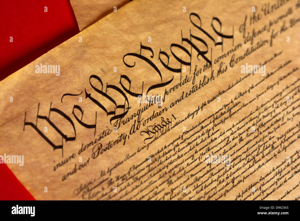
We the People. It stands out above all in the scribed parchment inside the glass-encased shield inside the Rotunda of Congress with three words bigger than the rest: We The People. Penned on a single sheet of animal skin by Jacob Shallus, it stands out as the Great Charter of American liberty, the profound experiment in self-government, and still stands today as the oldest and shortest written constitution of any major government in the world today. Those words stand out above the rest, written in flowing letters outsized to the text, to remind the world upon what power our government sits: We the People.

B. Wisdom of the Day

“Monopoly is a great enemy” and a “wretched spirit” which poses a greater threat to the free market than as it prevents free enterprise from self-defense. Adam Smith.

C. Cultural Recommendation

Ratification: The People Debate the Constitution tells the tale of what the true founders – the generation that birthed freedom on this continent – thought as they argued the merits of this new document. https://www.goodreads.com/book/show/7841680-ratification

D. Appearances

II.                         THE EVIDENCE

 *Note: A reminder — links are NOT endorsements of the ideas contained therein. The Library is big, and it mostly consists of ideas I do not personally share.  


Only for Supporters
To read the rest of this article and access other paid content, you must be a supporter
Read full Article
See More
Available on mobile and TV devices
google store google store app store app store
google store google store app tv store app tv store amazon store amazon store roku store roku store
Powered by Locals