




VivaBarnesLaw
Politics • Culture • News
This is the VivaBarnesLaw Community.
Interested? Want to learn more about the community?
December 22, 2024

Part 6...the final part:

"Abuse of Power: A Comprehensive List of Alleged Federal Crimes by Key Figures in Government and Society"

Introduction

The following comprehensive list details allegations of potential federal crimes committed by key figures across government, corporate, and other influential sectors. These individuals, including high-ranking officials, corporate executives, and policymakers, are alleged to have violated laws protecting the integrity of the United States' justice system, constitutional rights, and public trust. From obstruction of justice and suppression of free speech to mishandling classified information and fabricating intelligence, the alleged actions outlined below have far-reaching implications. Together, they paint a troubling picture of systemic abuse of power, lack of transparency, and an erosion of the principles of accountability and fairness. Each entry is meticulously detailed to provide clarity on the allegations, the crimes potentially committed, and the consequences these actions may have on American society and democracy.


50. Marty Walsh

Total Potential Penalty: 5 years imprisonment and $250,000 in fines

What He Allegedly Did:

1. Misrepresentation of Labor Statistics:

  • Incident: As Secretary of Labor, Walsh allegedly presented skewed labor market data to bolster administration claims about economic recovery and job creation.
  • Specific Crime: 18 U.S.C. § 1001 (False Statements).
    • Explanation: Made false or misleading statements during official reports or Congressional testimony, misrepresenting key labor statistics.
    • Penalties: Up to 5 years imprisonment and fines up to $250,000.

Potential Victims and Impact:

  • Victims: American workers, employers, and policymakers relying on accurate labor market data.
  • Impact: Fostered mistrust in federal labor statistics, undermining faith in government economic policy decisions.

51. Brian Deese

Total Potential Penalty: 5 years imprisonment and $250,000 in fines

What He Allegedly Did:

1. Misrepresentation of Economic Data to Support Policy Goals:

  • Incident: As Director of the National Economic Council, Deese allegedly provided misleading economic data and analysis during briefings and public statements to bolster the administration’s fiscal policies. This included overstatements of job creation and economic recovery metrics.
  • Specific Crime: 18 U.S.C. § 1001 (False Statements).
    • Explanation: Provided false or misleading statements during official government communications or testimony to misrepresent economic conditions.
    • Penalties: Up to 5 years imprisonment and fines up to $250,000.

Potential Victims and Impact:

  • Victims: American citizens, investors, and policymakers relying on accurate economic data.
  • Impact: Undermined public confidence in the neutrality of economic reporting and contributed to misguided policy decisions based on flawed data.

52. Shalanda Young

Total Potential Penalty: 5 years imprisonment and $250,000 in fines

What She Allegedly Did:

1. Falsification of Federal Budget Data:

  • Incident: As Director of the Office of Management and Budget, Young allegedly manipulated budgetary information to justify controversial spending initiatives. This included overstating revenue projections and understating deficits.
  • Specific Crime: 18 U.S.C. § 1001 (False Statements).
    • Explanation: Provided false or misleading information in official budget documents presented to Congress.
    • Penalties: Up to 5 years imprisonment and fines up to $250,000.

Potential Victims and Impact:

  • Victims: Congress, taxpayers, and federal agencies reliant on accurate budgetary information.
  • Impact: Undermined fiscal transparency, leading to potential misallocation of taxpayer resources and erosion of trust in government financial oversight.

53. Michael Morell

Total Potential Penalty: 5 years imprisonment and $250,000 in fines

What He Allegedly Did:

1. Fabrication of Intelligence to Influence Political Narratives:

  • Incident: As a former CIA Deputy Director, Morell allegedly coordinated the drafting and dissemination of a letter by intelligence officials mischaracterizing the Hunter Biden laptop story as Russian disinformation to influence public opinion during the 2020 election.
  • Specific Crime: 18 U.S.C. § 371 (Conspiracy to Defraud the United States).
    • Explanation: Participated in a conspiracy to mislead the public and federal institutions by falsely attributing a political narrative to intelligence assessments.
    • Penalties: Up to 5 years imprisonment and fines up to $250,000.

Potential Victims and Impact:

  • Victims: American voters misled by inaccurate intelligence claims.
  • Impact: Damaged public trust in the neutrality of the intelligence community and its role in ensuring free and fair elections.

54. Elvis Chan

Total Potential Penalty: 5 years imprisonment and $250,000 in fines

What He Allegedly Did:

1. Suppression of Lawful Political Speech:

  • Incident: As an FBI official, Chan allegedly played a key role in pressuring social media platforms to suppress content related to the Hunter Biden laptop story and election integrity debates.
  • Specific Crime: 18 U.S.C. § 241 (Conspiracy Against Rights).
    • Explanation: Coordinated with private entities to deprive citizens of their First Amendment rights.
    • Penalties: Up to 5 years imprisonment and fines up to $250,000.

Potential Victims and Impact:

  • Victims: Social media users and the broader public denied access to information critical for informed decision-making.
  • Impact: Undermined confidence in social media platforms and raised concerns about government overreach into private entities.

55. Janet Yellen

Total Potential Penalty: 5 years imprisonment and $250,000 in fines

What She Allegedly Did:

1. Misrepresentation of Economic Projections:

  • Incident: As Secretary of the Treasury, Yellen allegedly overstated the benefits of certain tax and spending proposals, misleading Congress and the public about their economic impacts.
  • Specific Crime: 18 U.S.C. § 1001 (False Statements).
    • Explanation: Provided inaccurate or incomplete statements regarding financial policies and their projected effects.
    • Penalties: Up to 5 years imprisonment and fines up to $250,000.

Potential Victims and Impact:

  • Victims: American taxpayers and policymakers relying on accurate economic forecasts.
  • Impact: Fostered mistrust in the Treasury Department’s role as a neutral economic adviser and contributed to potential fiscal mismanagement.

56. Catherine Russell

Total Potential Penalty: 5 years imprisonment and $250,000 in fines

What She Allegedly Did:

1. Misrepresentation of International Aid Program Data:

  • Incident: As a former ambassador and senior official, Russell allegedly inflated success metrics for international aid programs to justify continued funding for initiatives that were underperforming.
  • Specific Crime: 18 U.S.C. § 1001 (False Statements).
    • Explanation: Provided false or misleading statements about the effectiveness of U.S.-funded international programs.
    • Penalties: Up to 5 years imprisonment and fines up to $250,000.

Potential Victims and Impact:

  • Victims: Congress, taxpayers, and foreign aid beneficiaries relying on transparent evaluations of aid programs.
  • Impact: Reduced trust in U.S. international aid efforts and misallocated taxpayer funds to programs that failed to achieve their stated objectives.

Conclusion

This exhaustive list serves as a stark reminder of the importance of holding individuals in positions of power accountable for their actions. Allegations of corruption, censorship, and the misuse of authority strike at the heart of public trust and the foundations of democracy. While these cases highlight potential failings within both the government and private sectors, they also underscore the urgent need for transparency, impartial enforcement of the law, and a renewed commitment to justice. Addressing these issues is not only a matter of legality but also of restoring confidence in the institutions that are meant to serve the American people. The gravity of these allegations demands thorough investigation and, if proven, appropriate legal consequences to uphold the integrity of the nation.

Interested? Want to learn more about the community?
What else you may like…
Videos
Podcasts
Posts
Articles
The next stage of midterm results grief: denial

It’s an amazing thing… Seeing the people who have been cheering on the policy that led to this catastrophic defeat, now pretending they never did.

I won’t name names. Don’t need to. It’s literally out of Orwell’s 1984.

People who were cheering on the Iran war yesterday now calling for the Oscar “neocons”.

I can’t imagine what it’s like to have so little shame…

The other coping mechanism is denial. Now people claiming the election was stolen due to fraud.

A lot of people providing a graph that shows 20 million more votes in 2026 and 2024. Conveniently not comparing it to 2018.

I don’t think it was fraud. But even if it was, the Republicans had all three levers of power since getting elected on solving fraud to solve the fraud.

If they did not defeat the fraud, and are now defeated by that fraud, that is on their inability to get the job done.

00:02:51
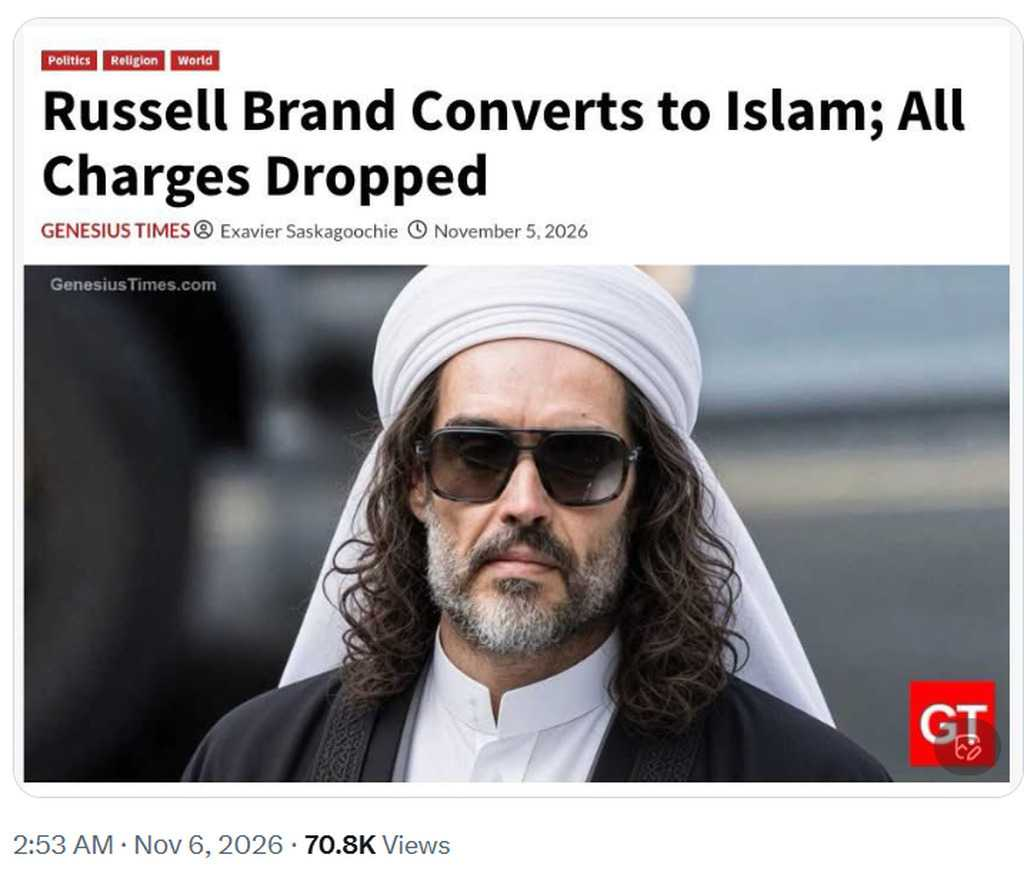
Russell Brand CONVICTED

Clip from today's show.

00:10:24
November 05, 2026
Funny is funny

Maybe I’m not old enough to have heard it before, but I did not see this punchline coming.

Legit lol

00:00:26
February 17, 2024
Appearance on Richard Syrette

I did a quick hit on Richard Syrette yesterday. Gotta keep Canadians apprised of the U.S. madness.

Appearance on Richard Syrette
The Barnes Brief, Podcast Format: Monday, July 17, 2023

Closing Argument: Birthright citizenship is deeply American, and wholly Constitutional.

The Barnes Brief, Podcast Format: Monday, July 17, 2023
Declaration of Independence

Audio podcast style.

Declaration of Independence
Larry Sharpe Suit

Attached for the latest 1776 Law Center supported case.

Larry_Sharpe_Complaint_Draft_-_Admission_Pending.pdf
Questions for Bourbon with Barnes: Thursday, November 5, 2026

Ask in replies and answering Live at 9ish eastern tonight.

@VivaFrei @RobertBarnes LOL

post photo preview
post photo preview
The Barnes Brief: November 6, 2026
I. THE INTRODUCTION
 

Special Notices

 
A. Art of the Day 
  • A common source of painting over the years: the Charles Bridge in Prague, it’s broad pathway bordered by statues of saints over the centuries blessing the passers by. In the eye’s view awaits towering buildings criss-crossing the ages of architecture, from the Romanesque to the Cubist, the Gothic sprites to Rennaisance palaces, from the Baroque glamor to the Art Nouveau throwbacks. Prague — the place where a local biker barking at you on Kafka street seems strangely in sync with the wild styles that speak to you across its skyline, where a visit to a local cafe invites you back into a 12th century cave where dissidents hid out and plotted revolutions.  All of it you can glimpse from the bridge that bridges time itself across its skyline. 
 
B. Wisdom of the Day
 
  • "No man is big enough to run this great Republic. There never has been one. Such domination was never intended. Tranquillity, stability, dependability—all are assured in party sponsorship. and we mean to renew the assurances which were rended in the cataclysmal war.” Warren Harding, July 1920. 

 
C. Appearances & Publications
 
 
D. Daily Picks
 
E. *Bonus: Board Post of the Day
 
II. THE EVIDENCE: BARNES LIBRARY
 
A. Food & Medicine
 
B. Economics
 
C. Politics
 
D. Geopolitics
 
E. Culture & History
 
III. HOMEWORK: Ten of the Top Cases for Sunday Show
  1. Dhillon out. https://www.nytimes.com/2026/11/05/us/politics/harmeet-dhillon-resigns-doj-civil-rights-unit.html
  2. Brennan potential prosecutor out. https://thehill.com/regulation/court-battles/6203924-reding-quinones-doj-resignation/
  3. Big Tech demands right to harm kids. https://www.courthousenews.com/wp-content/uploads/2026/11/meta-v-bonta-complaint.pdf
  4. Trump project blocked. https://www.courthousenews.com/wp-content/uploads/2026/11/chutkan-trump-memorial-arch-blocked-opinion.pdf
  5. Ukraine abuse exposed. https://courthousenews.com/wp-content/uploads/2026/11/gandzyuk-and-others-v-ukraine-echr-judgment.pdf
  6. Immunity at SCOTUS. https://www.courthousenews.com/wp-content/uploads/2026/11/nielsen-scotus-cato-amicus.pdf
  7. Brand convicted. https://www.reuters.com/world/comedian-russell-brand-found-guilty-rape-2026-11-05/
  8. Business reviews and libel law. https://courthousenews.com/minnesota-high-court-urged-to-shield-negative-google-reviews-from-defamation-suits/
  9. Panhandling ban held unconstitutional. https://media.ca11.uscourts.gov/opinions/unpub/files/202311163.pdf
  10. European censorship laws expand. https://rmx.news/article/prison-time-for-discussing-the-great-replacement-french-left-wing-lawmakers-push-for-new-draconian-law/
 
IV. CLOSING ARGUMENT: Classes in the Constitution — Presidential Impeachment
  • The Constitution confers the power of removal of the President through impeachment to Congress, and Congress alone.
  • First, Section 2 of Article I governing the legislative powers of the federal government provide the House “shall have the sole Power of Impeachment” acting as the grand jury function in the impeachment process. The Senate has no role in initiating impeachment, and can only act if the House acts first. The absence of super-majority requirements provide the House to allow impeachment by a mere majority of it’s members present, like any other legislative act.
  • Second, section 4 of Article II cabins what can constitute grounds for impeachment can result in removal, conditioning it upon three substantive claims — treason, bribery or other high crimes and misdemeanors, No specific definition is given of what constitutes “high crimes” but its analogy to treason and bribery provide some direction, as does the historical understanding of the term at the time of ratification — the kind of criminal act that endangers the Constitutional republic and cannot be answered by awaiting a Presidential election.  Treason itself is Constitutionally constricted definitionally in section 3 of Article 3 to “consist only in leving war, or in adhering to their Enemeies, giving them aid and comfort.”
  • Third, Section 3 of Article I imposes further substantive constraints on Impeachment by limiting the legal consequences of impeachment “shall not extend further than to removal from Office, and disqualification to hold and enjoy any Office of honor, Trust or Profit under the United States” while coequally providing that conviction in impeachment does not act as double jeopardy against subsequent criminal prosecution.
  • Fourth, Section 2 of Article 3 removes jury trials from “cases of impeachment” and removes the judicial branch from the Presidential impeachment process except for one limited role: the Chief Justice presiding over the trial.  Under Clause 6 of Section 4 of Article I, the Constitution confers the “sole power to try all impeachments” to the Senate, requiring a “concurrence of two thirds of the members present” to convict.
  • Fifth, the judgment of conviction is not appealable to any other body, and the Senate’s declaration according to its own roles immedietly effects “removal from office.” It has no retroactive or retrospective effect on the legality or validity of any prior Presidential act, even if that act is the grounds for impeachment and conviction itself. Other than Chief Judge setting the rule for evidence admission, the interpretation of the impeachment clause and its impact is left to the judgment of the House and Senate alike. Theoretically, a Chief Justice could impose a different intepretation on the substantive meaning of the conditions of conviction, given its power to “preside over” the trial, but has generally not been interpreted or applied in that manner. 

Read full Article
post photo preview
The Barnes Brief, Halloween Weekend, 2026
I. THE INTRODUCTION
 

Special Notices

 
A. Art of the Day 
  • Mysterious without malevolence, a Sleepy Hollow kind of invite, in the deep woods of deep fall, the kind pumpkins waiting like hitchhikers on All Hallows Eve to greet a pleasant hello, the wavy trees just spooky enough to give a premonition of concern without too much fear, the road part inviting to the curious, part concerning to the wary traveler. Welcome to All Hallows Eve. 
 
B. Wisdom of the Day
    • “The Harvest Moon glows round and bold,
      In pumpkin shades outlined in gold,
      Illuminating eerie forms,
      Unnatural as a candied corn.
      Beware what dare crawls up your sleeve,
      For 'tis the night called Hallows Eve.” Richelle Goodrich. 
 
C. Appearances & Publications
 
 
D. Daily Picks
 
E. *Bonus: Board Post of the Day
 
II. THE EVIDENCE: BARNES LIBRARY
 
A. Food & Medicine
 
B. Economics
 
C. Politics
 
D. Geopolitics
 
E. Law
III. HOMEWORK: Ten of the Top Cases for Sunday Show
  1. Right to sue judges. https://www.courthousenews.com/wp-content/uploads/2026/10/us-v-maddox.pdf
  2. Government funded ads stopped. https://courthousenews.com/judge-blocks-3-maga-ads-over-concerns-they-breached-taxpayer-funded-propaganda-law/
  3. NFL verdict reinstated. https://www.courthousenews.com/wp-content/uploads/2026/10/ninth-circuit-nfl-opinion.pdf
  4. Zuckerberg suit. https://www.courthousenews.com/wp-content/uploads/2026/10/meta-zuckerberg-stock-control-bid-class-action.pdf
  5. 2ndA & CIA. https://courthousenews.com/fourth-circuit-considers-second-amendment-argument-from-man-arrested-near-cia-headquarters/
  6. Candace vs Macron. https://www.courthousenews.com/wp-content/uploads/2026/10/macron-owens-dismissal.pdf
  7. United sued for high costs by employers. https://www.plansponsor.com/six-employers-accuse-unitedhealth-of-breaching-fiduciary-duty/
  8. Ninth Circuit allows blocking DHS elections investigation. https://drive.google.com/file/d/1hUpCfn3tnQMXEyk7nC1yD-ls2ZHeeK19/view
  9. Abortion right questioned. https://cdn.ca9.uscourts.gov/datastore/opinions/2026/10/30/26-5558.pdf
  10. Comey indicted. https://storage.courtlistener.com/recap/gov.uscourts.dcd.297297/gov.uscourts.dcd.297297.1.0.pdf
IV. CLOSING ARGUMENT: Classes in the Constitution — Governing Elections
  • Article I establishes how individuals become members of the House of Representatives; first, they must be “chosen every second year”; second, they must be chosen “by the People”; third, the represenation must be by the “several states”; fourth, the voters must be as broad the qualifications for voting for a member of “the most numerous branch of the state legislature.” Article I limits the qualifications for holding office to age (25 years or older), duration of citizenship (7 years minimum), and an inhabitant of the state claiming to represent (at time of election). Of note, the number of representatives within a state depend upon a required census and apportionment.
  • Article I further establishes state control over elections to federal office, subject to Congressional oversight. As Clause 2 of Section 4 of Article 1 provides: The Times, Places and Manner of holding Elections for Senator and Representatives shall be prescribed in each State by the Legislatire thereof; but the Congress may at any time by Law make or alter such Regulations, except as to the Places of chusing Senators.”
  • The first aspect confers control over the “times” of “holding elections" to Congress to “each State”; the second aspect confers control over the “places” of "holding elections” to “each State”; the third aspct confers the “manner” of holding such elections to “each state.” Of note, the power conferred is not given to the state as a whole; rather, in each case, the power is conferred only upon “the legislature thereof.” Note the power is not conferred upon the judicial branch or executive branch of the state, nor to lower county , city or town functionaries of the state. The power to control federal elections is conferred solely upon the legislature of the state. Notably, Congress’ supervisory power is equally constrited to “the times, places and manner” of holding federal elections which they can only “make or alter” by a passed “law.”
  • Of particular note, the “judge of the elections, returns and qualifications” is solely the Congress itself under section 5 of Article I.  Article 2 confers no particular elections power on the Presidency. Article 3 confers no particular elections power on the Judiciary. Congress may, under its power to regulater the “times, places and manner” of elections confer power upon the executive branch or the judicial branch as it seels fit as long as it does not delegate legislative-making power to those bodies.  
  • The Constitutional qualification to it all is the Bill of Rights, restricting the state method of governing election that may condition access to the ballot or expression by the voter according to status. The First Amendment prohibits states from limiting the freedom of assemply and association, of which elections remain the paramount form. The Tenth Amendment protects the right of the people preserved against all governments. The Fifteenth Amendment protects the “right of citizens of the United States to vote” without regard to race. The Nineteenth Amendment protects “the right of citizens of the United States to vote” regardless of gender. The Twenty Fourth Amendment protects “the right of citizens of the United States to vote” regardless of “poll tax or other tax.” The Twenty Sixth Amendment protects “the right of citizens of the United States to vote” regardless of age once a person is at least 18. The broad 14th Amendment provides for Congress to pay laws protecting all property and liberty from incursion or intrusion by the state, manifested in the Civil Rights Acts and Voting Rights Act laws of Congress that, in turn, confer power upon both the Exeuctive branch and the Judicial branch accordingly.
  • Aside from matters arising under the Bill of Rights or special Congressional legislation, the Constitution otherwise confers all powers of regulating federal elections solely and exclusively to the legislature of each state. 
Read full Article
post photo preview
The Barnes Brief: Weekend of October 24, 2026
I. THE INTRODUCTION
 

Special Notices

 
A. Art of the Day 
  • I love globes and maps, especially those with a vintage flavor or ancient maps of how we perceived the world in the past, to show quickly the world can change, how connected so many part of the world can be, the ever present reality of geography in history and contemporary geopolitics, continuing to shape the world we inhabit and how rapidly it we can shift. 
 
B. Wisdom of the Day
  • “Each betrayal begins first with trust.” Martin Luther. 

C. Appearances & Publications
 
 
D. Daily Picks
 
E. *Bonus: Board Post of the Day
 
II. THE EVIDENCE: BARNES LIBRARY
 
A. Food & Medicine
 
B. Economics
 
C. Politics
 
D. Geopolitics
 
E. Law
 
III. HOMEWORK: Ten of the Top Cases for Sunday Show
 
  1. ICE Detentions. https://s3.documentcloud.org/documents/28830924/sosnava.pdf
  2. ICE & Elections. https://www.courthousenews.com/wp-content/uploads/2026/10/california-nurses-vs-mullin-preliminary-injunction.pdf
  3. ID & Elections. https://www.courthousenews.com/wp-content/uploads/2026/10/scanlan-v-coalition-open-democracy-order-scotus.pdf
  4. DOJ sues Alaska over Senate race. https://storage.courtlistener.com/recap/gov.uscourts.akd.80263/gov.uscourts.akd.80263.1.0.pdf
  5. Bias rejected in Italy trial. https://courthousenews.com/wp-content/uploads/2026/10/berlusconi-v-italy-echr-2026-judgment.pdf
  6. Tommy Robinson trial. https://courthousenews.com/british-far-right-activist-defends-messages-to-journalists-in-harassment-trial/
  7. DEI reversal cites AI judges. https://www.courthousenews.com/wp-content/uploads/2026/10/fifth-circuit-mississippi-dei-injunction-reversed.pdf
  8. 2A win in NY. https://www.courthousenews.com/wp-content/uploads/2026/10/buffalo-fed-body-armor-ruling.pdf
  9. Instacart discrimination. https://www.justice.gov/opa/pr/civil-rights-division-and-equal-employment-opportunity-commission-secure-5000000-joint
  10. 2A protects switchblades. https://storage.courtlistener.com/recap/gov.uscourts.ca5.225116/gov.uscourts.ca5.225116.136.1.pdf
 
IV. CLOSING ARGUMENT: Classes in the Constitution — Presidential & Vice Presidential Replacements
 
  • Section 4 of Article II the Constitution provides the President “shall be removed from office on impeachment for, and conviction of, treason, bribery or other high crimes and misdemeanors.” The House gets to be the sole judge of what constitutes a "high crime and misdemeanor" for impeachment while the Senate gets to be the sole judge of what facts constitute "a high crime and misdemeanor." 
  • Clause 5 of Section 2 of Article I vests the power of Impeachment solely to the House of Representatives. Given no specific requirement as to support to impeach, the majority vote default rule presides historically.
  • Clause 6 of Section 3 of Article I vests the power to try impeachments solely in the Senate, requiring "Concurrence of two thirds of the Members present." This means Senators who absent themselves from the Chamber may be excluded potentially from the baseline required to reach two-thirds. 
  • Clause 6 of Section 1 of Article II provides that the Vice President obtains the powers of the President — “all executive powers of the federal government — “in case of” either “removal, death, resignation or inability to discharge the powers and duties of the said Office.”
  • In the instance both are removed, resigned, die, or are unable to discharge the duties, then Congress may legislate what Officer shall then act as President. The Presidential Succession Act of 1947 provides that the Speaker of the House becomes the officer who becomes President in case of Presidential and Vice Presidential absence, followed by the President Pro Tempore of the Senate, and then the cabinet in priority of when that cabinet office was first established. In that last instance, the Secretary of State is first, the Secretary of Treasury second, and the Secretary of Defense third.
  • The Twenthy Fifth Amednment slightly amends that process, still proving the succession protocols. In the case of removal, or death or resignation, “the Vice President shall become President.” Replacement of the Vice President requires Presidential nomination and “confirmation by a majority vote of both Houses of Congress.” 


Read full Article
See More
Available on mobile and TV devices
google store google store app store app store
google store google store app tv store app tv store amazon store amazon store roku store roku store
Powered by Locals