Revelation that Shamir Bartered US Secrets Is Part of a Lifetime Pattern
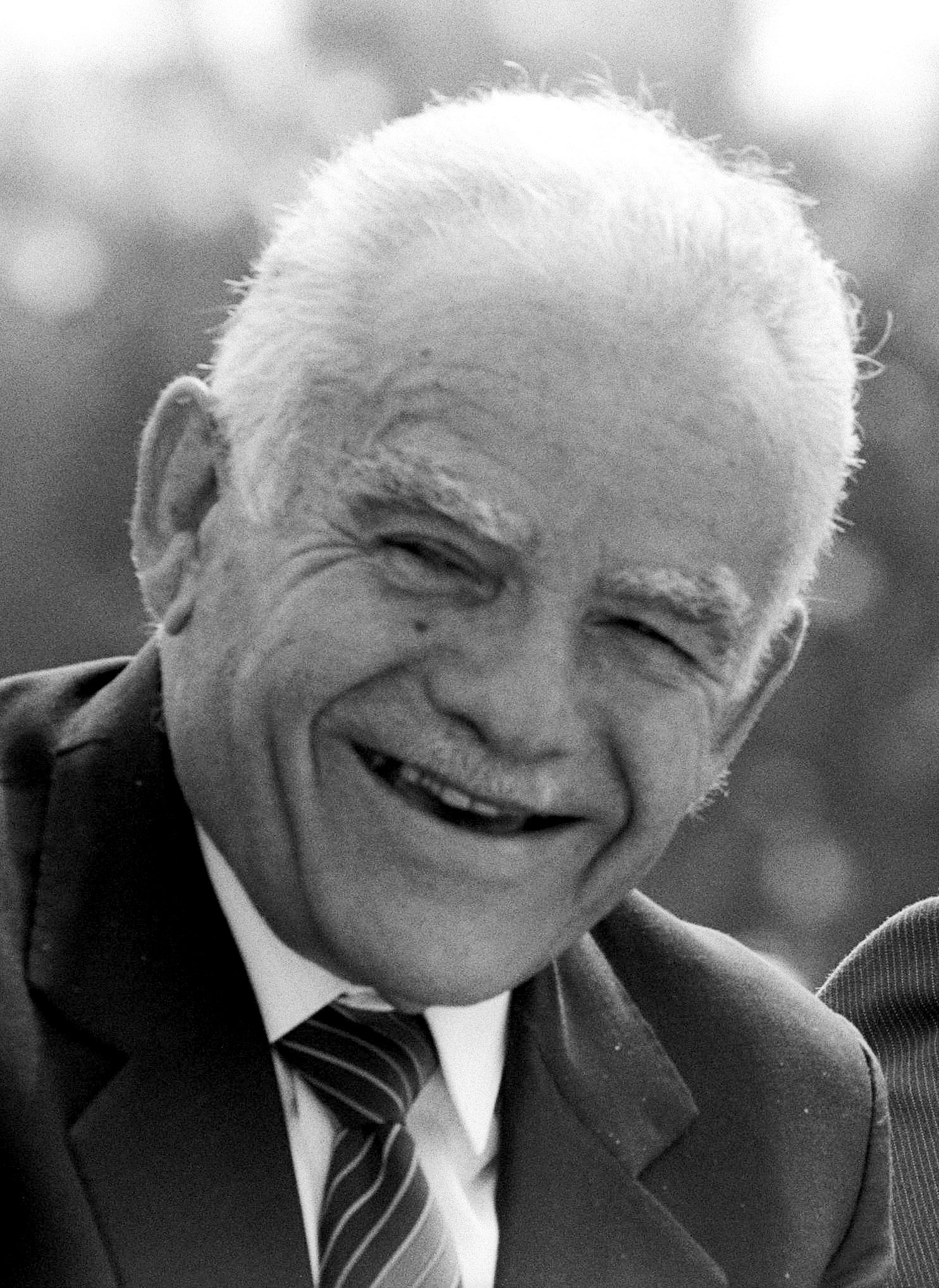
The revelations in investigative journalist Seymour Hersh's new book The Samson Option that Israeli Prime Minister Yitzhak Shamir delivered to the Soviets" sanitized "US secrets stolen by American spy Jonathan Pollard has received more attention in the US than any of Hersh's other revelations. According to Hersh, some of Pollard's information "was directly provided to Yevgeny M. Primakov, the Soviet Foreign Ministry's specialist on the Middle East [now chief of foreign intelligence for the Kremlin], who met publicly and privately with Shamir."
Americans should not be surprised. The action, some details of which became public four years ago, was both characteristic and purposeful. In December 1987, a United Press International story quoted US intelligence analysts as saying that some of the Pollard material "was traded to the Soviets in return for promises to increase emigration of Soviet Jews to Israel." While Hersh agrees that that might have been one of the rationales for the decision to pass the American secrets to Moscow, he also proposes a more interesting explanation.
The move by the leader of Israel, a supposedly anti-Soviet and pro-American "strategic asset," to sell US intelligence to the Evil Empire (which explains the harsh sentence imposed on Pollard) might have been motivated by Shamir's interest in establishing Soviet good will "as a means of offsetting Israel's traditional reliance on the US," Hersh suggests. This Israeli-US relationship, according to Hersh, disturbed the prime minister for personal as well as diplomatic reasons.
Hersh quotes an Israeli source as confirming that Shamir "viscerally disliked the US." The Israeli prime minister "has always been fascinated with authority and strong regimes. He sees the US as very soft, bourgeois, materialistic and effete," according to the Israeli source.
Hersh's disclosures should not have astounded any serious student of Shamir's political career, which is marked by strong anti-Western attitudes and attraction to authoritarianism. After the bloody downfall of Romanian dictator Nicolae Ceausescu, instead of celebrating the emergence of democracy in Eastern Europe, Shamir chose to argue in a public speech that the lesson to be learned from the anti-Ceausescu revolution is that " we have to prevent similar political chaos and anarchy" in Israel.
It was therefore not surprising that the first cheer that was heard outside the Soviet Union in support of the anti-Gorbachev coup attempt within the Kremlin was that of Israel's prime minister.
While US media focused on alleged Iraqi and Palestinian elation over Gorbachev's apparent downfall, the Israeli press reported that Shamir told close aides he hoped the coup leaders would impose "order" in the Soviet Union, facilitate Soviet Jewish immigration to Israel, help Israel against the emerging Arab-American alliance, and work with it against Islamic fundamentalism.
This fantasy of an alliance between neo-Stalinism and militant Zionism sounds familiar to those who have followed Shamir's political career. During the 1940s, he was a leader of Lehi, a Jewish underground organization. It was known as the "Stern Gang" to British authorities, against whom it conducted terrorist acts in the Middle East throughout World War II while it attempted to develop alliances with fascist Italy, Nazi Germany and the Soviet Union.
Indeed, there was a major difference between Shamir's Lehi and the Irgun Zvei Leumi, another underground extremist group. With the outbreak of World War II, the Irgun declared a cease-fire in its activities against British targets and some of its leaders joined British military and intelligence units to fight the Nazis. It resumed its anti-British attacks only after the tide had turned against the German-Italian axis.
Lehi, led by Avraham Stern until he was killed by the British, never abandoned its strong anti-British and anti-Western position, even as Nazi armies swept into nearby Greece and threatened Cairo. The group's initial goal was to form an alliance between Zionism and the Axis Powers.
According to well-documented evidence collected by Hebrew University professor Yehuda Bauer, the Lehi leaders first approached representatives of fascist Italy and proposed a "Mediterranean Treaty," according to which an independent Hebrew state in Palestine would help Italy achieve total strategic and commercial domination in the Mediterranean region.
Zionist-Nazi Cooperation Proposed
When the overtures to the Italians elicited no serious response from Rome, Stern and his colleagues dispatched a representative to meet in Lebanon in early 1941 with a German agent. They later sent the German Embassy in Ankara a detailed proposal for Zionist-Nazi cooperation. The Lehi proposal offered to help the Germans force the British out of Palestine in return for permission to establish a Jewish state there to which European Jewry would be transferred by the Nazis. This fantastic plan emphasized the ''common nationalist and totalitarian bonds" between Nazi ideology and Lehi's revisionist Zionism.
As German and Italian forces were surrendering Shamir had become one of Lehi's most powerful leaders and the organization, in turn, came under a strong pro-Soviet influence. Indeed, Shamir was a main proponent of forming an alliance with Stalinist Russia to help evict the British from the region and weaken the pro-Western regimes there.
After the establishment of Israel, Shamir even proposed in a 1949 article published in Lehi's magazine, Maos, that Israel adopt the Communist system. "The Communist parties in the Soviet Union and the other popular democratic nations," wrote Israel's future prime minister, should serve as the "model of a political force" that Israel needed to establish a "collective and nationalist economic authority."
In the early 1960s, Shamir served as one of the heads of Mossad operations in France, where he helped to develop an alliance with Paris based on an anti-American orientation.
The Israelis, like the French, were opposed to attempts by the Kennedy administration to reach some kind of accommodation with the Arab nationalist movement and its leader, Egyptian President Gamel Abdel Nasser. The French were particularly angry over American support for Algerian independence and saw Nasser as the main force behind the insurgency in France's North African colony. The Israelis were worried that American overtures to the Egyptian leader could damage their position in the region, and tilt US policy against them.
The alliance that developed between Israel and France was based, therefore, on mutual opposition to American policies in the region. Results included close ties between the French secret service and the Israeli Mossad, mutual support for covert operations in the Middle East, and cooperation in the development of Israel's nuclear weapons capability. Shamir, from his position in Paris, had overseen much of this activity.
Replacing American Patronage
The current weakening of the US-Israeli "strategic alliance, " resulting from the end of the Cold War and the diminished Soviet threat, probably reminds Shamir of the loosening French-Israeli ties that accompanied the end of the Algerian war in 1962. It was only after 1967 that Israel switched from its French to an American orientation, marketing itself as America's "unsinkable aircraft carrier in the Eastern Mediterranean."
Recognizing that even Israel's powerful American lobby cannot reverse the loosening of ties between Israel and Washington, Shamir has been trying behind the scenes to replace the US with new patrons. Hence, his expectation that an authoritarian Russian nationalist regime might cooperate with the Jewish state to help contain the "Muslim threat" in the Central Asian republics.
Starting with statements in a September press conference in Paris that "the history of our relations with the United States is one of ups and downs," and that Israel might need new "interlocutors, " Shamir proposed that Israel "balance" its connection with America by expanding ties with the European Community (EC). Because of rising anti-Muslim sentiment in Europe, especially in France with its large North African immigrant community, some Israelis envision a return to the good old days of the French-Israeli alliance, extended to all of Europe.
The EC leaders, however, were cool to Shamir's marriage proposal, and particularly his request for significant EC financial aid to help settle the Soviet Jews in Israel. EC leaders pointed to the chutzpah in Shamir's requests for their money while rejecting any serious European role in a Middle Eastern peace conference. Shamir even labeled European proposals for solving the Palestinian-Israeli problem as "not sufficiently objective. " The Europeans, for their part, emphasized that long-term ties with the EC will be contingent upon Israel giving up the West Bank and Gaza and permitting Palestinian self-determination.
Shamir and other Israeli foreign policymakers also are seeking closer ties with Türkiye. They believe that after the Gulf war and the cold shoulder it received by its efforts to join the EC, Türkiye may wish to play a growing role in the Middle East.
For years Israel has maintained close covert relationships with Ankara based on mutual hostility toward perceived threats from radical Arabs, particularly Syria. Several of Israel's Washington lobbyists have helped the Turks against the Greek lobby by using their power on Capitol Hill against, for example, a congressional resolution commemorating Armenians killed by the Turks during World War I.
New Israeli overtures toward the Turks are based on a more ambitious grand design. They envision Türkiye—and not Iran or Saudi Arabia—serving as a political magnet for several of the Muslim republics after the collapse of the Soviet Union. Those republics in Central Asia and in the Caucasus are composed of Turkish-speaking populations.
A "Greater Israel-Greater Türkiye" Axis
Türkiye, therefore, has the potential to lead a new Greater Türkiye federation with which Israel could build close ties. According to the Israeli daily Ha'aretz, Israel has signed consular and aviation agreements with the Stalinist government of the Muslim republic of Azerbaijan (as has Türkiye). The Israeli science minister also has visited the Azerbaijan capital of Baku to sign a "friendship declaration" with it. Israel also has launched overtures to two non-Muslim republics in the Caucasus, Georgia and Armenia, which it hopes may also end up within Türkiye's sphere of influence.
Still another source of hope for Israel is the militant government of Serbia, led by former Communist Slobodan Milosevic. Not unlike Shamir's Greater Israel project, Milosevic is attempting to create his own Greater Serbia plan. And, like Shamir, he is facing his own intifada, a Muslim insurrection in Kosovo, his own West Bank, a formerly autonomous region which he annexed to Serbia.
Serbian emissaries have visited Israel in recent months and raised the possibility of establishing closer ties between the two countries, based upon the common Muslim threats to their interests. The Serbians also expressed hope that Israel would use its legendary influence in Washington to help them improve their image in the US and attract Western investment. (At the same time, the Serbians hope to maintain close ties with Libya, their main source of oil.)
The same hope that Israel can be induced to use its powerful base in Washington to facilitate ties with the US explains the rush of former Communist regimes in Poland, Hungary and Czechoslovakia to renew diplomatic relations and expand ties with Israel.
Catch-22
However, there is an element of catch-22 in the Israeli strategic calculations. Israel hopes to improve its ties to the Eastern European countries and the Soviet Union to offset weakening relationships with Washington. However, the reason those countries are flirting with the Jewish state is because they hope to gain access through the Israeli-American connection to Western aid and support. With that connection weakening, other countries may feel less inclined to court the Israelis.
Which brings Shamir and his policymakers back to square one. Unless Israel solves its conflict with the Palestinians and integrates itself into the Middle East, Israel will find it more and more difficult to maintain its ties with the United States and Europe. Some Likud leaders like Shamir are betting on instability resulting from the rise of Islamic governments in some Middle Eastern states and growing tensions between the Western nations and Muslim countries. In their vision, a violent confrontation between a radical Islamic bloc and the West, which could include countries like Russia and India, might resuscitate Israel's role as a self-proclaimed Western "strategic asset."
Israeli Likud propagandist Daniel Doron drew the main lines of this long-term Israeli vision in the Wall Street Journal. Headlined "The Mideast's Real Troubles Aren't Arab-Israeli, " his article suggested that "in comparison with the momentous upheavals rocking the Muslim world, the Arab-Israeli conflict is a sideshow with little geopolitical significance. " It is a derivative conflict, "Israel being the target of convenience for Islam's great sense of hurt and obsessive hostility toward the West."
Doron urges the West to prepare for a long struggle with Islam. "Remember that Christian Europe needed several centuries to control such forces, " he comments. Therefore, instead of forcing it to make concessions, the West should view Israel in the larger scheme of things and help turn it into a strategic outpost in a Muslim world plagued by "explosive tensions, compounded by religious zealotry and xenophobic nationalism."
Such crooked analyses illustrate the possible traps into which the US might fall if it does not force the pace of the peace process. The Likud government could drag out the peace negotiations in order to stall and buy time, while its supporters in America try to market a Muslim bogeyman as the post-Cold War global threat to America and the West.
Such propaganda has the power of self-fulfilling prophecy. The absence of a solution to the Palestinian-Israeli conflict is conducive to a rise in radicalism and terrorism in the Middle East. Such developments could then tee used by "experts" of the Doron mold to "prove" their "forget-the-Arab-Israeli conflict and beware-of-the-big-bad-Islamic-wolf" theses.
(More)
https://www.wrmea.org/1991-december/january-1992/revelation-that-shamir-bartered-us-secrets-is-part-of-a-lifetime-pattern.html