




VivaBarnesLaw
Politics • Culture • News
This is the VivaBarnesLaw Community.
Interested? Want to learn more about the community?

https://www.msn.com/en-ph/autos/electric-cars/f1-bosses-agree-to-engines-with-reduced-electric-power-from-2030/ar-AA2hT0R7.

I wasn't aware that F1 had shifted away from V8 engines.

This semester I'm taking business law, which I'm really glad I did because 1) corporations is on the BAR and 2) it fills out the basics of how a lot of these business suits happen.

So in the interest of finals review, looking at the FIA which made this disastrous decision to move away from V8 engines, I wonder what kinds of lawsuits you could do on this. It's an international association, headquartered in France, but you probably could still sue them in the US. There's likely a financial institution they keep funds in that you could use to get juridiction over them. Side note: I have an AWESOME secured transactions professor. This guy really cares about things his students should know. Not just because they're in his elective class. But because he thinks people should know these things. One of the things he put in his Secured Transactions textbook, which I thought was AWESOME, was the explanation of what the DTC is. https://www.investopedia.com/terms/d/dtc.asp basically they are the ledger and broker for all securities certificates. You can get uncertificated securities, and you can acquire stock certificates without the DTC through certain means, but most stocks you buy are through an entity that is registered through the DTC and you're assigning contact rights if the benefits of the securities when you do trades. The reason my professor included it is because he wanted the class to understand how the legal interest in a lien against securities gets created. I never heard about this system once in school. I found out about it at 27 when I was building out my knowledge of the financial system because I wanted to be able to double check something Jeff Snyder said. (1. Most of what Snyder says is based on mainstream headlines so quite a lot of what he says is wrong when you go look at the details of an earnings report, or a given market he's made a clcikbait video on. The car market in particular, the trend description is correct but the why is always wrong. 2. Autocorrect is changing words I type 3 words down the sentence. This is a terrible functionality and it's introducing nonsensical typos. The correction isn't a real English word sometimes and I don't understand why.) Anyways so because the DTC which has the ownership ledger is in New York, we basically permanently have financial leverage over overseas owners because it's in American jurisdiction. One day I will spend some more time looking into how this has been used. I'm sure it's some kind of foreign policy nuclear option--but we do have a supreme court case where the executive and the legislature both went after foreign governments' accounts in new York. So I don't think it's that crazy of a proposition.

A lot of corporations and agency law is essentially the same, so I'm going to make the assumption that it basically applies to an international association. At its root the decision to change from a V8 engine for eco purposes is a business decision. Maybe you could get into a breach of duty of loyalty by the board on the part of the associate members by asserting they made the decision based on a financial conflict of interest. If any of them owned many stocks in electric vehicle companies, for example, that benefit from the contract with new motors. Maybe a family member is on the board of the company that made the new electric motors. Absent some of these facts, I think you have a good argument that adoption of green energy policy is a breach committed in bad faith. Green energy policy for a luxury race car association strikes me as intentionally merking their vehicle product because their goals are opposite. I think to adopt green energy policy as a race car association is intent to do harm to the association. Because it means you hurt your product, the actual race--electric parts are extremely heavy in an environment where racers will dehydrate themselves to weigh 100grams less to win by fractions of a second. Efforts to reduce fuel consumption for an event that consumes fuel by its nature means doing the race less well. The green energy policies adopted by every government have had the effect of wasting money, impeding the ability to conduct core functions, and it's been demonstrated for over a decade now. They tried making green airplanes--and ignored that batteries are INSANELY heavy so that would never work. Didn't stop anyone from wasting millions of dollars on the idea. So say you get bad faith, then there's no business judgment rule problem. I bet we could fix a lot of things if you could prove that adoption of certain corporate policies is bad faith because it's motivated by personal gain--destroying core business functionality ffor the ideological goals of a board member, given our now multi-year evidence that these policies are harmful. It's like continuing to put Asbestos in homes 2 decades after it was proven that it causes cancer, instead of changing the product so it doesn't cause cancer. That's more than negligence--thats a decision to destroy your company. And the primary company that made asbestos insulation doesn't exist anymore because of their conduct so it's an apt analogy.

Both of these get you over your business judgment rule deference -- where the court says "we will dismiss this case in the initial proceedings because you have insufficiently pled a breach of the duty of loyalty by the decision makers in the association, we protect businesses by giving them deference in court, which gives the freedom to make decisions as businesses. Otherwise everyone would sue every business every time they lost money. (And in the case of Tesla we let them sue even though they made money. Like 5x made money.) If you get what they call BJR deference then I think you'd lose because if it's a politically unfavorable position then any fig leaf will be acceptable and your case gets thrown out. You get BJR deference with 1) showing that the director or board member is staying informed of the business. To get this I think you'd have had to have had the FIA do nothing in response to their formula 1 cars with the electric motors stalling and costing millions in lost costs related to the event. They did something, and are going back to V8. If they hadn't done something i think you'd have enough to say they failed this prong of the test, so they wouldn't get BJR deference. 2) they have to act in good faith. Imo this prong of the test is the dumbest because it requires "substantive decision making process" which basically means you have lackeys make reports and you have meetings with meeting minutes. It should mean something, like actually acting in good faith, but the reality of how courts apply this is it's a box checking exercise. 3) they have to make the decision in the best interest of the corporation. What the FIA would say is, due to government pressures and overall trends globally, it is good for our image to have such a facially wasteful company attempting to go green. The court would likely accept this if there's no personal financial gain in it for the decision makers that looks like a conflict of interest.

It's my opinion that a lot of business law is crap. Because in a world without judicial co-opting via academia, the green energy policies which are essentially anti-human, after being proven as such for 20+ years, the companies would be liable to their shareholders for continuing to pursue it. That's not a duty to profit maximize theory--it's a "don't pursue policies that are proven existential threats to our business" theory. But they get political protection because the judges share the opinion. DEI hiring breaks the law--it's clear cut breach of duty of care in bad faith. If lawsuits had been allowed to move forward on this then this DEI stuff would have died on the vine in the 70s. But the DOJ created the disparate impact rule, and the effect of this was signaling protection for every company that engaged in DEI over the past 50 years.

Interested? Want to learn more about the community?
What else you may like…
Videos
Podcasts
Posts
Articles
55 minutes ago
Only the best for our chicks…

The backyard is starting to look like Mars from the movie The Martian.

00:00:32
Brian Cole Junior parents interview

I know there’s a lot they can’t discuss publicly. This Interview is good.

00:01:12
November 27, 2026
The intelligent design side of things…

And here’s a video from the more beautiful part of the world. Nature.

I tend to get exceptionally lucky spotting moments like this… But probably just because I’m constantly looking for them! Lol

00:03:16
February 17, 2024
Appearance on Richard Syrette

I did a quick hit on Richard Syrette yesterday. Gotta keep Canadians apprised of the U.S. madness.

Appearance on Richard Syrette
The Barnes Brief, Podcast Format: Monday, July 17, 2023

Closing Argument: Birthright citizenship is deeply American, and wholly Constitutional.

The Barnes Brief, Podcast Format: Monday, July 17, 2023
Declaration of Independence

Audio podcast style.

Declaration of Independence
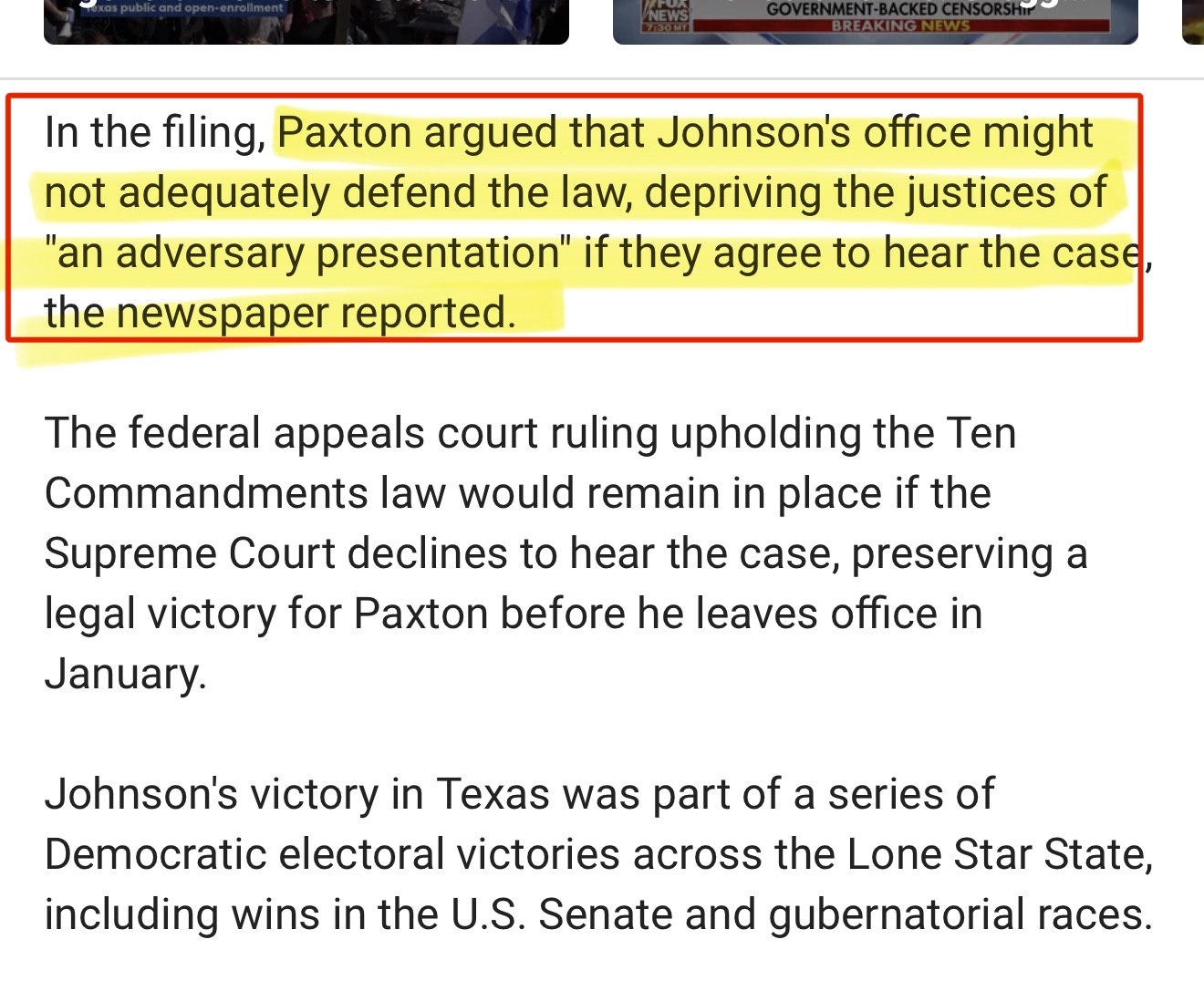
New Texas Attorney General will not pursue 10 Commandments law to Supreme Court

The new Democrat, Attorney General will not defend the 10 Commandments law before the Supreme Court. It was a victory at the appellate level, so if the court declines to hear it, it’s still a win for Texas.

Paxton anticipated the move and drafted pleadings accordingly

post photo preview

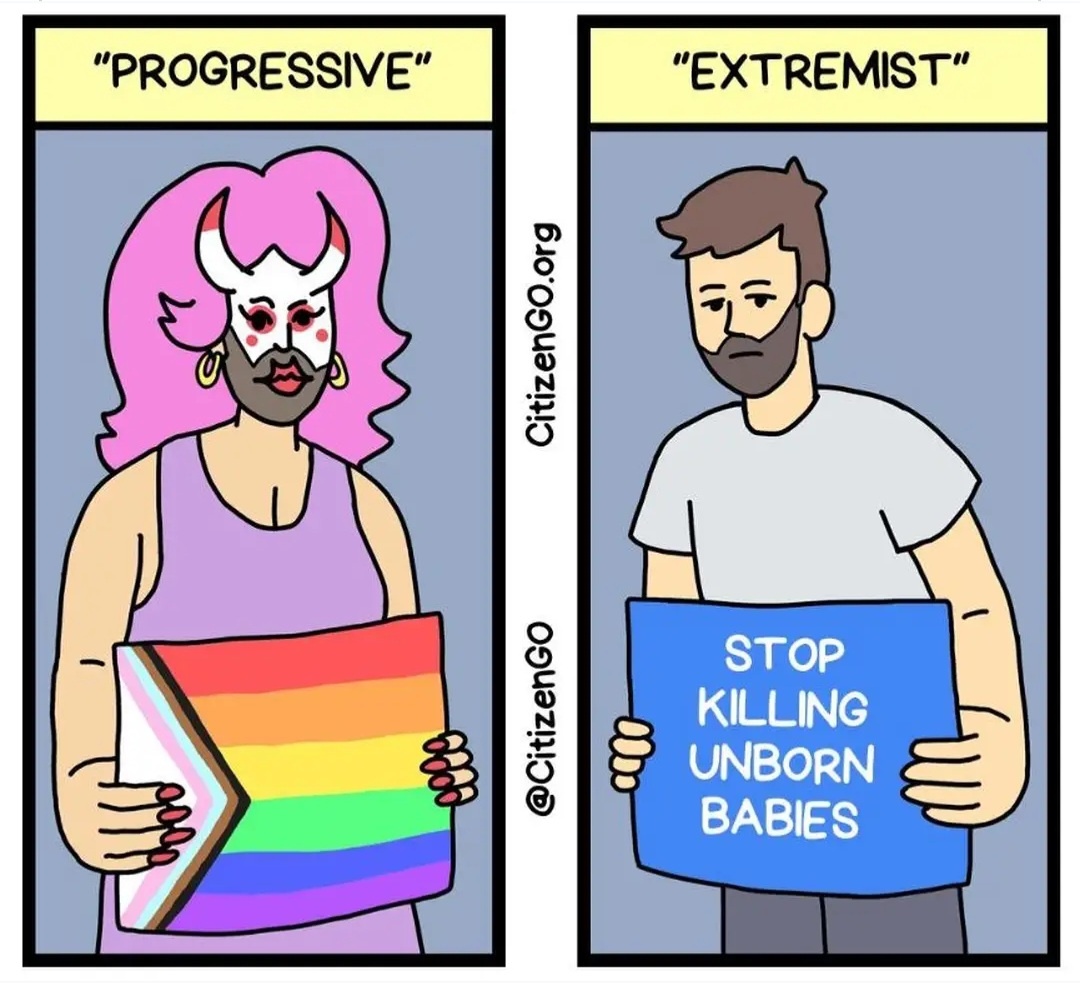
Welcome to the DISINFORMATION age!!!

post photo preview

"If you got your money honey, we got your disease"

post photo preview
The Barnes Brief: Friday, November 20, 2026
I. THE INTRODUCTION
 

Special Notices

 
A. Art of the Day 
  • My kind of private library, deep leather bound seats (hopefully hand constructed), dark wood floors, high ceilings, embredded bookshevles filles with old and new books alike, a softly lantern-lit, a lifesize open window to the outside, where the water flows into the mind’s eye, a marriage of the inner and outer worlds, like rivers of thoughts flowing inside the mind. 
 
B. Wisdom of the Day
 
  • “That serpent’s eye, that charms to destroy” describing military glory. Abraham Lincoln. 
 
C. Appearances & Publications
 
 
D. Daily Picks
 
E. *Bonus: Board Post of the Week
 
II. THE EVIDENCE: BARNES LIBRARY
 
A. Food & Medicine
 
B. Economics
 
C. Politics
 
D. Geopolitics
 
E. Culture, Law & History
 
III. HOMEWORK: Ten of the Top Cases for Sunday Show
  1. Brian Cole wins right to counsel.  https://x.com/thevivafrei/status/2123561915452465280?a=EZhRDvbreiFndmq05xg&s=20
  2. University held liable for metoo hoax. https://www.thecollegefix.com/jury-holds-u-maryland-liable-after-cleared-student-was-labeled-rapist-ousted-from-lacrosse-team/
  3. Genocide at ICC. https://israellegaldispatch.substack.com/p/preliminary-thoughts-on-icj-the-gambia
  4. Commie judges. https://storage.courtlistener.com/recap/gov.uscourts.mad.302017/gov.uscourts.mad.302017.91.0.pdf
  5. 2ndA win. https://www.ca5.uscourts.gov/opinions/pub/24/24-30241-CR0.pdf
  6. Attack on vaccine exemptions. https://x.com/AbigailIovine/status/2123220596460785911?a=VMpap3nE7GE-gD6fd4w&s=20
  7. EU sanctions. https://x.com/BowesChay/status/2123086142689984784?a=nRse5zI29bC4_eRamLg&s=20
  8. FOIA fight. https://x.com/TomFitton/status/2122774146354708898?a=5AjlqO0kOeA5dtAPcdo&s=20
  9. Horse carriages banned. https://www.nbcnewyork.com/news/local/nyc-officially-bans-horse-drawn-carriages-starting-in-june-2028/6574230/
  10. Surveillance state. https://media.ca7.uscourts.gov/cgi-bin/OpinionsWeb/processWebInputExternal.pl?Submit=Display&Path=Y2026/D11-18/C:25-2487:J:Kirsch:aut:T:fnOp:N:3644210:S:0
IV. CLOSING ARGUMENT: Classes in the Constitution — Congressional Power over Foreign Policy
  • The Constitution confers limited powers to the legislative branch — only those “legislative” powers “herein granted” expressly in the Constitution. Those legislative powers are not Constitutionally constricted to solely domestic affairs however.
  • The Constitution’s express powers granted Congress specifc and itemize under Section 8 of Article I encompass legislative powers over America’s foreign policy, including: the power to “law and collect imposts” (as long they are uniform),  to “provide for the common defense”, to borrow from anyone, to  “regulate commerce with foreign nations”, to control the “rule of naturalization” of foreigners into the nation, to regulate “foreign coin”, to “define and punish piracies and felonies commotted on the high seas”, to “define and punish offences against the law of nations”, “to declare war”, to “grant letters of marque and reprisal”, to “make rules concerning captures on land and water”, to raise and support armies” (at two-year limits), to “provide and maintan a navy”, to “make rules for the regulation of the land and naval forces”, to provide for calling for the militia,” to “repel invasions”, to provide for the governing of the militia including “organizing, arming and disciplining” as well as to “exercise authority” over all “forts, magazines, arsenals” as federal territory, and finally the implied powers “to make all laws which shall be necessary and proper for carrying into execution the forgoing powers.”
  • As to kinetic conflict, the powers give expressly and exclusively to Congress the power “to declare war” as well as the then establishmed means of using martial power, such as the power to “raise and support” Armies, to govern how to call up the militia, including power over the militia and the federal tirritory of forts.
  • By contrast, all “executive power” vested in the President encompassed enforcement of those decisions not the initiation of those decisions. Only after Congress “raised and supported” an Army could the President become the “Commander in Chief” of that Army, limiting even his power to make Treaties to whose that receive two-thirds Consent of the Senate. The duty of the President requires only that he faithfully execute the laws of the land, not that he write those laws himself.
  • Who agreed? President George Washington himself. In his correspondence to General Moultrie concerning the Creek conflict along the South Carolina borders, President Washington explained in plain english. Congressional approval “would be essential to an offensive expedition” of any military kind. Washington emphasized accurate information was essential, as was public debate and Congressional consent be informed by true and accurate facts. Military offensive means was only for “whenever Congress should decide that measure to be proper and necessary.” As Washington explicated: “The Constitution vests the power of declaraing War with Congress.” Washington further explained the meaning of war: any “offensive expedition of importance” using martial means. This required Congress obtain sufficient and true information as no military operations could be “undertaken” until and unless Congress “deliberated upon the subject and authorized such a measure.”
  • James Madison explained the same: “in no part of the constitution ios more wisdom to be found than in the clause which confides the question of war or peace to the legislatiure and not the executive department.” This is because the power of war “would be too great” a “temptation” for “any one man.” The “ambition, avarice, vanity, the venial love of fame are all in conspiracy against the desire and duty of peace.” As President in 1812, he followed that in requesting Congressional consent and assent to the War of 1812.
  • Alexander Hamilton contrasted America to imperial rule, highlighting the power to go to war, and even to raise an army, rightly remained only to the legislative branch of government, to avoid the dangers inherent in the power of and over starting war. Critically he did so to get public acceptance of the Constitution replacing the Articles of Confederation.
  • President Adams recognized the same in his correspondence to Congress noting he needed their authority merely to do more than defend the coastline during the conflict with France with any kind of initiation of offensive action.
  • Thomas Jefferson concurred, noting in his correspondence to Madison the critical and essential role the Constitituion providing “one effectual check to the Dog of war by transferring the power of letting him loose from the Executive to the Legislative body.” As President Jefferson would follow this principle in the conflict with the Barbary Pirates, noting the Navy could take no more action than defensive action against attacks without Congressional consent. Jefferson noted the incapacity of offensive operations without Congressional consent led to the disabling of vessels and surrendered adversaries freed. As Jefferson reiterated, offensive actions could only occur when authorized by the Constitution through the sanction of Congress.  Jefferson recommended Congressional authorization to “place our force on an equal footing with that of its adversaries.”
  • Our founders knew: never give the power to start war to a single man. 

Read full Article
post photo preview
The Barnes Brief: Sunday, November 15, 2026
I. THE INTRODUCTION
 

Special Notices

 
A. Art of the Day 
  • The way of life along the then American frontier, the reflections off the lazy river, the natural background fading into view, the foggy morning feel of the skyline, the black cat just sitting afoot monitoring, as Bingham’s portrait of early Americans beckons to a time of slow Sunday mornings amidst nature, hope and exploration around the corner of the waterway and the passing of the hour. 
 
B. Wisdom of the Day
 
  • Why should we take the bread out of the mouths of our own children and give it to strangers?” John Adams. 
 
C. Appearances & Publications
 
 
D. Daily Picks
 
E. *Bonus: Board Post of the Week
 
II. THE EVIDENCE: BARNES LIBRARY
 
A. Food & Medicine
 
B. Economics
 
C. Politics
 
D. Geopolitics
 
E. Culture, Law & History
 
III. HOMEWORK: Ten of the Top Cases for Sunday Show
  1. SCOTUS: Asylum power of the President. https://www.supremecourt.gov/DocketPDF/26/26-239/419860/20260824104858426_Mullin_v_RAICES_petition_final.pdf
  2. SCOTUS: SEC power. https://www.supremecourt.gov/DocketPDF/25/25-944/428786/20261007154234084_25-944_Robinhood_CVSG_final.pdf
  3. SCOTUS: Administrative state power. https://www.scotusblog.com/2026/11/justices-see-immigration-contract-dispute-as-raising-the-possibility-of-major-limits-on-administ/
  4. Court protects immigrant drivers. https://www.courthousenews.com/wp-content/uploads/2026/11/dot-cdl-ruling-immigration-circuit.pdf
  5. Cooper or fiber? https://www.courthousenews.com/wp-content/uploads/2026/11/att-v-comcast-complaint.pdf
  6. Feds vs State on Prediction Markets. https://courthousenews.com/wp-content/uploads/2026/11/cftc-vs-state-of-arkansas-complaint.pdf
  7. 2ndA win against New York. https://www.courthousenews.com/wp-content/uploads/2026/11/second-circuit-nyc-handgun-ruling-nov-2026.pdf
  8. Judge removed. https://www.courthousenews.com/wp-content/uploads/2026/11/robert-draper-decision-order.pdf
  9. Court orders illegal returned. https://www.courthousenews.com/wp-content/uploads/2026/11/no-stay-for-ice-in-deportee-retrieval.pdf
  10. ICE riot ruling. https://cdn.ca9.uscourts.gov/datastore/opinions/2026/11/10/26-1609.pdf
 
IV. CLOSING ARGUMENT: Classes in the Constitution — The Importance of Ties to America 
  • The Constitution rejects the idea that anyone nautralized as a citizen shares the same trustworthy commitment to the country’s well being as a native born American or a citizen residing in the nation for many years. The concept of extended committment to the country and maturation of experience as essential prerequisites for wielding power animates the Constitution.
  • Section 2 of Article I of the Constitution constricts who can wield legislative power in the House of Representatives to 1/ a certain minimum age of 25; 2/ citizens; 3/ citizens for at least 7 years; and 4/ an inhabitant of the representative state.
  • Section 3 of Article I of the Constitution constricts who can wield legislative power in the Senate to 1/ minimum age of 30 years; 2/ citizens; 3/ a citizen for at least 9 years; and 4/ an inhabitant of the state they represent.
  • Concern of foreign meddling led to Section 9 of Article I prohibiting any “title of nobility” to anyone, anywhere, with special concern that no office holder can, without the express Consent of Congress, “accept any present, emolument, office, or title, of any kind, whatever, from any King, Prince or foreign state.”  Equally, one of the few powers stripped of individual states in Section 10 of Article I constricted the power of a state to engage with foreign nations on trade, war, or any kind of agreement or compact with a foreign power.
  • Section 1 of Article II goes further, restricting the executive power to only “a natural born citizen” at least 35 years of agent and fourteen years a resident. The length of communal ties and life experience so deeply intertwined with Constitutional qualification for office reinforced the relevancy of birth and community committment that cannot be duplicated by foreign birth and recent presence.
  • Of note, an auspicious absence in Constitutional qualifications and conditions for holding federal power is for the unelected officialdom, such as the judiciary, military and bureaucracy, as the founders largely overlooked the potency of these positions over time.  
Read full Article
post photo preview
The Barnes Brief: November 6, 2026
I. THE INTRODUCTION
 

Special Notices

 
A. Art of the Day 
  • A common source of painting over the years: the Charles Bridge in Prague, it’s broad pathway bordered by statues of saints over the centuries blessing the passers by. In the eye’s view awaits towering buildings criss-crossing the ages of architecture, from the Romanesque to the Cubist, the Gothic sprites to Rennaisance palaces, from the Baroque glamor to the Art Nouveau throwbacks. Prague — the place where a local biker barking at you on Kafka street seems strangely in sync with the wild styles that speak to you across its skyline, where a visit to a local cafe invites you back into a 12th century cave where dissidents hid out and plotted revolutions.  All of it you can glimpse from the bridge that bridges time itself across its skyline. 
 
B. Wisdom of the Day
 
  • "No man is big enough to run this great Republic. There never has been one. Such domination was never intended. Tranquillity, stability, dependability—all are assured in party sponsorship. and we mean to renew the assurances which were rended in the cataclysmal war.” Warren Harding, July 1920. 

 
C. Appearances & Publications
 
 
D. Daily Picks
 
E. *Bonus: Board Post of the Day
 
II. THE EVIDENCE: BARNES LIBRARY
 
A. Food & Medicine
 
B. Economics
 
C. Politics
 
D. Geopolitics
 
E. Culture & History
 
III. HOMEWORK: Ten of the Top Cases for Sunday Show
  1. Dhillon out. https://www.nytimes.com/2026/11/05/us/politics/harmeet-dhillon-resigns-doj-civil-rights-unit.html
  2. Brennan potential prosecutor out. https://thehill.com/regulation/court-battles/6203924-reding-quinones-doj-resignation/
  3. Big Tech demands right to harm kids. https://www.courthousenews.com/wp-content/uploads/2026/11/meta-v-bonta-complaint.pdf
  4. Trump project blocked. https://www.courthousenews.com/wp-content/uploads/2026/11/chutkan-trump-memorial-arch-blocked-opinion.pdf
  5. Ukraine abuse exposed. https://courthousenews.com/wp-content/uploads/2026/11/gandzyuk-and-others-v-ukraine-echr-judgment.pdf
  6. Immunity at SCOTUS. https://www.courthousenews.com/wp-content/uploads/2026/11/nielsen-scotus-cato-amicus.pdf
  7. Brand convicted. https://www.reuters.com/world/comedian-russell-brand-found-guilty-rape-2026-11-05/
  8. Business reviews and libel law. https://courthousenews.com/minnesota-high-court-urged-to-shield-negative-google-reviews-from-defamation-suits/
  9. Panhandling ban held unconstitutional. https://media.ca11.uscourts.gov/opinions/unpub/files/202311163.pdf
  10. European censorship laws expand. https://rmx.news/article/prison-time-for-discussing-the-great-replacement-french-left-wing-lawmakers-push-for-new-draconian-law/
 
IV. CLOSING ARGUMENT: Classes in the Constitution — Presidential Impeachment
  • The Constitution confers the power of removal of the President through impeachment to Congress, and Congress alone.
  • First, Section 2 of Article I governing the legislative powers of the federal government provide the House “shall have the sole Power of Impeachment” acting as the grand jury function in the impeachment process. The Senate has no role in initiating impeachment, and can only act if the House acts first. The absence of super-majority requirements provide the House to allow impeachment by a mere majority of it’s members present, like any other legislative act.
  • Second, section 4 of Article II cabins what can constitute grounds for impeachment can result in removal, conditioning it upon three substantive claims — treason, bribery or other high crimes and misdemeanors, No specific definition is given of what constitutes “high crimes” but its analogy to treason and bribery provide some direction, as does the historical understanding of the term at the time of ratification — the kind of criminal act that endangers the Constitutional republic and cannot be answered by awaiting a Presidential election.  Treason itself is Constitutionally constricted definitionally in section 3 of Article 3 to “consist only in leving war, or in adhering to their Enemeies, giving them aid and comfort.”
  • Third, Section 3 of Article I imposes further substantive constraints on Impeachment by limiting the legal consequences of impeachment “shall not extend further than to removal from Office, and disqualification to hold and enjoy any Office of honor, Trust or Profit under the United States” while coequally providing that conviction in impeachment does not act as double jeopardy against subsequent criminal prosecution.
  • Fourth, Section 2 of Article 3 removes jury trials from “cases of impeachment” and removes the judicial branch from the Presidential impeachment process except for one limited role: the Chief Justice presiding over the trial.  Under Clause 6 of Section 4 of Article I, the Constitution confers the “sole power to try all impeachments” to the Senate, requiring a “concurrence of two thirds of the members present” to convict.
  • Fifth, the judgment of conviction is not appealable to any other body, and the Senate’s declaration according to its own roles immedietly effects “removal from office.” It has no retroactive or retrospective effect on the legality or validity of any prior Presidential act, even if that act is the grounds for impeachment and conviction itself. Other than Chief Judge setting the rule for evidence admission, the interpretation of the impeachment clause and its impact is left to the judgment of the House and Senate alike. Theoretically, a Chief Justice could impose a different intepretation on the substantive meaning of the conditions of conviction, given its power to “preside over” the trial, but has generally not been interpreted or applied in that manner. 
Read full Article
See More
Available on mobile and TV devices
google store google store app store app store
google store google store app tv store app tv store amazon store amazon store roku store roku store
Powered by Locals