




VivaBarnesLaw
Politics • Culture • News
This is the VivaBarnesLaw Community.
Interested? Want to learn more about the community?

Parousiatic Atheism

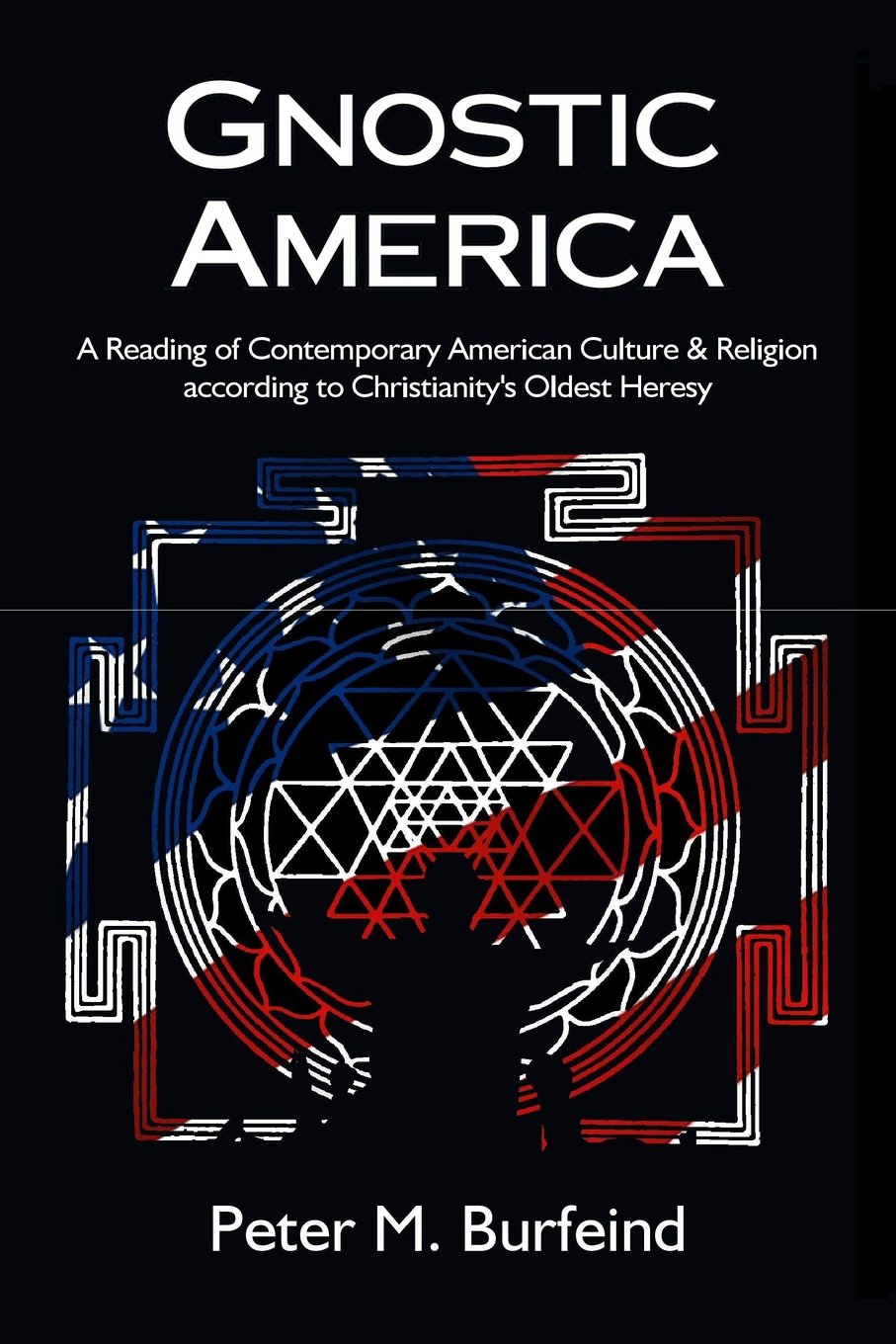
While "parousiatic atheism" is not a standard, mainstream term in academic philosophy or theology, its meaning can be clearly deduced by combining its two root concepts: Parousia (the theological concept of the ultimate divine presence or the Second Coming of Christ) and atheism (the absence of belief in a deity).

When synthesized, the term generally describes an ideological or philosophical stance that addresses eschatological fulfillment, ultimate history, or divine arrival from a completely secular or non-theistic framework.

Breakdown of the Core Concepts

1. The "Parousiac" Framework

In Christian theology, Parousia refers to the physical return of Jesus Christ, marking the end of history, final judgment, and the complete immanence of the divine. In broader philosophical contexts—such as the works of political theorist Eric Voegelin—"parousiatic" is used to describe movements or systems that attempt to bring about an ultimate, perfected "end of history" or a state of supreme realization within the human world.

2. The Atheistic Implication

When "parousiatic" is appended to atheism, it typically manifests in two distinct philosophical interpretations:

• Secular Eschatology (Immanentizing the Parousia): This refers to political or philosophical systems that reject God but retain a deeply religious, apocalyptic structure. For instance, classical Marxism or extreme utopian movements act as a form of "parousiatic atheism." They discard the supernatural deity but promise a literal "heaven on earth" or a perfected final stage of human evolution (the classless society), effectively replacing the Second Coming with human progress.

• Post-Theistic Realization: In some radical theological and existential circles (resembling the "Death of God" theology of the 20th century), it implies that the "divine" has been fully absorbed or dissolved into human consciousness and material reality. The traditional transcendental God is gone (hence, atheism), but humanity has entered a post-historical, fully realized moral era.

Distinctions from Other Forms of Atheism

To contextualize this concept, it helps to see how it differs from more common secular postures:

Stance Core Attitude Relationship to the "End of History"

Parousiatic Atheism Secularized eschatology; seeking or acknowledging an ultimate culmination of human/material history. Active. History is moving toward a definitive, perfected, or fully realized secular state.

Apatheism Complete indifference or apathy toward whether a God exists or not. Irrelevant. The past, present, and future of the cosmos are viewed without any religious or grand narrative structure.

Pragmatic Atheism Living practically as if God does not exist, focusing purely on empirical and immediate world matters. Neutral. Focuses on the "here and now" rather than ultimate historical culminations.

The critique of modern Gnosticism as a threat to Western civilization was originally popularized by the 20th-century philosopher Eric Voegelin, who famously warned against mass ideologies that try to "immanentize the eschaton" (create a secular heaven on earth through political action).

Today, a diverse group of conservatives, libertarian, and populist commentators and scholars have revived this vocabulary to critique modern phenomena like "wokeism," transgenderism, and global technocracy.

Contemporary Figures Addressing Modern Gnosticism

Charles Burris is a well-known paleolibertarian commentator and historian who frequently writes for outlets like LewRockwell.com, his commentary generally focuses on anti-statism, revisionist history, geopolitics, and the critique of the deep state but he has substantially addressed theological or philosophical expositions on Gnosticism.

Gnosticism: The Enduring Heresy and Menace to Western Civilization
https://www.lewrockwell.com/lrc-blog/863902/

Utopian Nightmares and Gnostic Political Religions

Explore utopian nightmares and gnostic political religions through essential books like Norman Cohn's The Pursuit of the Millennium and The Black Book of Communism, revealing the dark history of ideological extremism.

https://www.listmania.org/list/utopian-nightmares-and-gnostic-political-religions

Utopian Nightmares and Gnostic Political Religions II

https://www.amazon.com/shop/profile/amzn1.account.AFULT76AOLEGOERSOHTHLR2UEFKA/list/I7YVWI8DRDTR?ccs_id=58bf57a9-dbed-4739-9fce-d6341e981e16

The Influence of Eric Voegelin: When modern libertarians and paleoconservatives speak out against "modern Gnosticism," they are almost always drawing from political philosopher Eric Voegelin. Voegelin famously argued that modern totalitarian and progressive movements (like Marxism, fascism, and aggressive technocracy) are secularized versions of ancient Gnosticism. He described this as an attempt to "immanentize the eschaton"—meaning a dangerous attempt to create a perfect, heaven-like utopia on Earth through human planning and state coercion.

The Critique of Progressivism as a Secular Religion: In the school of thought shared by Burris, modern progressive statism, globalist central planning, and technocratic control are viewed as a threat to Western civilization because they operate with a Gnostic-like premise: that a specialized elite possesses "exclusive knowledge" (gnosis) capable of reshaping human nature and society by force.

Defense of Traditional Western Order: Traditionalist libertarians argue that Western civilization was built on decentralization, private property, Christian ethics, and natural law. They argue that modern ideological movements seek to completely deconstruct these traditional pillars in favor of an artificial, centralized social order, which they criticize as the ultimate hubris of modern political Gnosticism.

Philosopher Eric Voegelin and theologian Henri de Lubac categorized the founder of sociology Auguste Comte as a key figure in modern political and spiritual Gnosticism, viewing his positivism and Religion of Humanity not as neutral science, but as a secularized religious pathology.

The Gnostic Diagnosis

Immanentization of the Eschaton: Both thinkers argued that Comte attempted to bring about divine perfection and spiritual salvation entirely within human history rather than through transcendence.

Activist Mysticism: Comte combined a detailed blueprint for a perfected industrial society with the human means to enforce it, acting as a self-appointed "high priest" or spiritual dictator.

Rejection of True Transcendent Order: Positivism sought to replace Christian love and divine order with human altruism and a closed, world-immanent system.

In Science, Politics and Gnosticism (and as summarized in his discussions on "Ersatz Religion" ), political philosopher Eric Voegelin identified six core characteristics of the Gnostic attitude. He used these traits to diagnose modern ideological mass movements (such as Marxism, fascism, and progressivism) as secularized versions of ancient Gnosticism.

The Six Traits

Dissatisfaction: The Gnostic feels a profound and radical dissatisfaction with their current life and structural situation.

Blaming the World: They believe worldly flaws stem not from human limitation or sin, but because the world itself is intrinsically and poorly organized.

Belief in Salvation: They hold the firm conviction that total salvation from the evils of existence is entirely possible.

Historical Transformation: They believe that the fundamental structure of being must and will be changed through an unfolding historical process.

Human Effort: They claim that this salvation and change can—and must—be achieved strictly through human action and effort, without transcendent aid.

The Gnostic Formula & Prophet: They make it their central task to discover or construct a "formula" (gnosis) for self- and world-salvation, stepping forward as prophets or architects to lead humanity toward this earthly paradise.

James Lindsay (Anti-Woke Critic & Author): Through his platform New Discourses and lecture series like "Secret Religions of the West," Lindsay argues that critical race theory, queer theory, and modern progressivism are actually esoteric, neo-Gnostic cults posing as social science. He outlines how these movements rely on a specialized, elite "knowledge" (gnosis) to dismantle and re-engineer the natural world and Western institutions.

Traditionalist Conservative Commentator): Host at The Daily Wire, Michael Knowles frequently frames contemporary gender ideology and transgenderism as a direct revival of the Gnostic heresy. He argues that modern progressives enforce a Gnostic split between the mind and body, viewing the biological body as an oppressive "prison" or illusion that must bow to one's internal psychological state.

Dr. Robert P. George (Conservative Legal Scholar & Princeton Professor): Dr. George has written and lectured extensively on the threat of "Neo-Gnosticism" within modern social liberalism. He contends that modern expressive individualism treats the physical body as a mere tool to be manipulated by the sovereign "inner self," directly opposing the traditional Judeo-Christian view of the human person as an integrated unity of body and soul.

Jordan Peterson (Psychologist & Cultural Commentator): While critics occasionally debate Peterson’s Jungian framework as being Gnostic-adjacent, Peterson himself has explicitly spoken out against the Gnostic worldview in his lectures. He critiques the utopian temptation to flee from or reshape physical and biological reality, warning that trying to forcefully re-engineer human nature always collapses into totalitarian chaos.

Institutional and Media Critiques

The European Conservative: This publication frequently features essays analyzing how modern Gnosticism manifests in the "idolatry of sexuality" and the transformation of natural human rights into arbitrary individual desires. They argue this leads to an anti-natural nihilism that strips people of their roots in family, nation, and faith.

This traditionalist journal continually publishes critiques of "Gnostic Politics," tracking how modern political elites act as an enlightened managerial class attempting to manipulate the economy, environment, and human nature under the guise of an inevitable, progressive future.

[1] (https://firstthings.com/gnostic-politics/),

[2] (https://www.bunkhistory.org/resources/the-origins-of-conservatisms-gnostic-meme),

Eric Voegelin on Modern “Gnosticism” | Philosophy Today Feb 18, 2026 — by the conservative Donald Lipsett, with aid from William F. Buckley Jr., Milton Friedman, Frank Meyer, and Ed Feulner.

The conflict between early Gnosticism and Christianity ...Apr 20, 2021 — the gnostics basically wanted a disincarnated. Christ they were saying you know and they viewed the world as utterly fallen.

How Ancient Gnosticism Infiltrated Modern Politics (Will Spenser Podcast ...May 24, 2025)

post photo preview
Interested? Want to learn more about the community?
What else you may like…
Videos
Podcasts
Posts
Articles
Discovery of the day…

I never knew that frogs could carry ticks. Look at this!

00:01:13
BOMBSHELL EVIDENCE Blows Jan 6 Pipe Bomber Story WIDE OPEN — FBI Got the Wrong Guy?

Here's the clip. Share it AWAY!!!

00:19:05
October 18, 2026
Manny and Winnie

It’s pure love.

Or attempted cannibalism.

The jury is still out…

00:00:51
February 17, 2024
Appearance on Richard Syrette

I did a quick hit on Richard Syrette yesterday. Gotta keep Canadians apprised of the U.S. madness.

Appearance on Richard Syrette
The Barnes Brief, Podcast Format: Monday, July 17, 2023

Closing Argument: Birthright citizenship is deeply American, and wholly Constitutional.

The Barnes Brief, Podcast Format: Monday, July 17, 2023
Declaration of Independence

Audio podcast style.

Declaration of Independence
LIVE w/ Baris
placeholder
Board Poll: Sunday Topics

Pick your top topic, if any, and add your own topic, comment or question in the replies below as the Producer's Show Notes for the Sunday Show.

Interview w/ Stanislav
post photo preview
The Barnes Brief: Friday, October 16, 2026
I. THE INTRODUCTION
 

Special Notices

 
A. Art of the Day 
  • The old fold-down wooden desk, handcrafted by deliberate care, the little boxes to store letters and notes, the shelf above to carry papers and books, the firm backed, four quared chair with comforting armrests, above the wooden floor and near the open window, the neighboring painting on the wall, that could sit today just as it had centuries ago, taking the work of the mind back to the place our forefathers enjoyed the same. 
 
B. Wisdom of the Day
  • America is “the champion and vindicator only of her own”, a perfect articulation of America First.  John Quincy Adams. 

C. Appearances & Publications
 
 
D. Daily Picks
 
E. *Bonus: Board Post of the Day
 
II. THE EVIDENCE: BARNES LIBRARY
 
A. Food & Medicine
 
B. Economics
 
C. Politics
 
D. Geopolitics
 
E. Law
 
III. HOMEWORK: Ten Top Cases for Sunday Show
 
  1. Ex-agents sue Patel. https://www.courthousenews.com/wp-content/uploads/2026/10/fbi-agents-sue-patel-over-mar-a-lao-tied-firings.pdf
  2. Court allows non-resident voting. https://www.courthousenews.com/wp-content/uploads/2026/10/rnc-v-evnen-opinion-nebraska-supreme-court.pdf
  3. Social media limits approved. https://www.courthousenews.com/wp-content/uploads/2026/10/netchoice-v-attny-gen-georgia-eleventh-circuit.pdf
  4. California tries to stop ICE arrests. https://www.courthousenews.com/wp-content/uploads/2026/10/california-vs-ice-complaint.pdf
  5. Trans bathrooms & federal funds. https://www.courthousenews.com/wp-content/uploads/2026/10/fairfax-county-school-board-v-mcmahon-ruling.pdf
  6. Court allows sanctuary for illegals in NYC. https://www.courthousenews.com/wp-content/uploads/2026/10/sanctuary-city-dismissed-nyc-eastern-district-new-york.pdf
  7. Looted paintings. https://www.courthousenews.com/wp-content/uploads/2026/10/norton-simon-vs-jewish-federation-complaint.pdf
  8. Court demands lottery for immigrants. https://www.courthousenews.com/wp-content/uploads/2026/10/redeagle-v-rubio-ruling-101426.pdf
  9. California can’t regulate Feds. https://www.courthousenews.com/wp-content/uploads/2026/10/ninth-ciruit-no-vigilantes-act.pdf
  10. Scotus: Privacy suit. https://www.scotusblog.com/2026/10/court-appears-likely-to-allow-internet-suit-based-on-decades-old-video-privacy-law-to-go-forward/
 
IV. CLOSING ARGUMENT: Classes in the Constitution, Reminders from our Founding Fathers on Foreign Entanglements
 
Two founding documents of the founding generation’s approach to foreign entanglments consist of President Washington’s Farewell Address and John Quincy Adams July 4th speech to the House of Representatives in 1821. 
 
Cousin Adams address “on foreign policy” summarized America’s approach to foreign conflicts, by starting with America’s founding rejection of the politics of imperial empire, denouncing Britian’s “portentious system of despotism” with “oppressions of power” governed bby an appetite for “conquest” against the “claims of right” of self-governance. In such an imperial worldview “man had no rights”, where “neither the body nore the soul of the individual was his own” subjecting the people to the “impentarable gloom of this intellectual darkness, and the deep degradation of this servitude” which defined the “British nation” under its imperial mask. These imperial ambitions inflected “the delusions of all Europe” degrading the societies occupied by an intellectually and morally robust people. It was in rejection of these very ideas of empire and presumptions of imperial rule that guided the American revolution. 
 
This animating spirit requires America “respect the indpendence of other nations”, must “abstain from interference in the concerns of others, even when the conflict has been for principes to which America clings.” America “well knows that by enlisting under other banners than her own, she would involve herself beyond the power of extrictation, in all the wars of interest and intrigue, of individual avarice, envy and ambition, which the assume the colors and usrup the standard of freedom” changing her “from liberty to force” creating the hated British “Imperial Diadem, flashing in falkse and tarnished lustre the murky radiance of dominion and power” to become the “distatress of the world” and no longer “the ruler of her own Revolutartionary spirit.” 
 
America is “the champion and vindicator only of her own”, a perfect articulation of America First.  That is why America “does not go aborad searching for monsters to destroy.” America’s “glory is not dominion, but liberty.” 
 
Washington warned in his founding Farewell Address: “the nation which indulges towards another an habitual hatred or an habitual fondness is in some degree a slave. It is a slave to it animosity or to its affection.” Washington discouraged any political connections beyond economic trade with nations of the world due to the likely subsuming of a foreign nation’s cause as our own, their antipathies or adversaries as our own, substituting a foreign nation for our own in decision making. Thus the “true policy” of our founders was “to steer clear of permanent alliances with any portion of the foreign world.” 
 
These principles — avoiding the trap of imperial logic, respecting each nation’s own sovereign path, and escaping the entanglements of foreign conflicts — animated the founders. Only when we abandon these precepts and principles do we lose our way. The first promoters of America First were our founders themselves. 

 

Read full Article
post photo preview
The Barnes Brief: Friday, October 2, 2026
. THE INTRODUCTION
 

Special Notices

 
A. Art of the Day 
  • Another artistic expression of my own self-impression, the contemplative thought of looking out into the world through the oversized window amidst the shadows of dark and light, in between them both, uncovering and discovering along the way, a singular, solo figure in the space empty of objects but full of opportunities, sparse in materials but rich in ideas, waiting to be realized. 
 
B. Wisdom of the Day
  • "He who sacrifices a right for a perceived benefit trades a mountain for a mirage.” Political proverb. 

C. Appearances & Publications
 
 
D. Daily Picks
 
E. *Bonus: Board Post of the Day
 
II. THE EVIDENCE: BARNES LIBRARY
 
A. Food & Medicine
 
B. Economics
 
C. Politics
 
D. Geopolitics
 
E. Law


Read full Article
post photo preview
The Barnes Brief: Thursday, October 1, 2026
THE INTRODUCTION
 

Special Notices

 
A. Art of the Day 
  • The early morning hue, the fog of the dawn, the invitation of a new day, the beckoning of a promising journey, a simple man with a suitcase awaiting the train, to someplace, somewhere, maybe escaping, maybe seeking, the attractive allure of a new day. 
 
B. Wisdom of the Day
  • "A new species would bless me as its creator and source; many happy and excellent natures would owe their being to me.” Viktor Frankenstein. 

C. Appearances & Publications
 
 
D. Daily Picks
 
E. *Bonus: Board Post of Note
 
II. THE EVIDENCE: BARNES LIBRARY
 
A. Health
 
B. Economics
  • The AI/Orivate credit bubble. 
 
C. Politics
 
D. Geopolitics
 
E. Law


Read full Article
See More
Available on mobile and TV devices
google store google store app store app store
google store google store app tv store app tv store amazon store amazon store roku store roku store
Powered by Locals