The American Presidency and Perpetual War,
By Andrew P. Napolitano
One of the defining failures of modern American government has been the steady erosion of Congress’s constitutional authority over war. The Constitution grants Congress — not the president — the power to declare war. Congress decides to go to war. The president wages it.
Over the past several decades, presidents of both major parties have increasingly treated military intervention as an executive prerogative rather than a congressional requirement.
The last six presidents have not reflected distinct foreign policy doctrines but a uniparty continuum of executive overreach. While the particulars differ, each administration has initiated or significantly expanded military action without a formal declaration of war or without clear evidence that the targeted country posed an imminent threat to the United States.
President George H.W. Bush assembled an international coalition following Iraq’s invasion of Kuwait in 1990. Congress ultimately authorized the use of military force. However, it was not a defensive war; it fostered the growing post-Cold War assumption that the United States should act as the world’s policeman.
President Bill Clinton likewise employed military force without declarations of war. The 1999 NATO bombing campaign against Serbia during the Kosovo conflict proceeded despite Congress failing to authorize it in a clear and lasting manner. The administration argued humanitarian intervention justified military action. But even compelling humanitarian concerns do not erase the Constitution’s allocation of war powers.
President George W. Bush fundamentally reshaped American foreign policy after the Sept. 11 attacks. The invasion of Afghanistan initially enjoyed broad support and congressional authorization in response to al-Qaeda’s attacks. However, the 2003 invasion of Iraq remains one of the most controversial and catastrophic military actions in modern American history.
Congress did authorize force, but the constitutional process was undermined by intelligence failures and exaggerated claims about weapons of mass destruction and links between Saddam Hussein and al-Qaeda that ultimately proved unfounded. We now know that Iraq posed no imminent threat to the United States warranting a preventive war. The conflict resulted in enormous human suffering, significant financial costs, regional instability and expanded executive authority that future presidents would inherit.
President Barack Obama accelerated executive war-making despite his early criticism of the Iraq War. His 2011 intervention in Libya stands as perhaps the clearest example. The United States joined NATO air operations that helped overthrow Muammar Gaddafi, yet Congress never authorized the intervention. The administration argued that the operation did not constitute “hostilities” under the War Powers Resolution because American forces faced limited risk and most of the killing was done by U.S. intelligence assets.
President Joe Biden continued this pattern through military operations in Yemen, Syria, Iraq, strikes against Iranian-backed militias — and by funding Ukraine’s war against Russia. The administration justified these actions primarily as force protection, counterterrorism, responses to attacks on U.S. personnel, or defense of democracy and sovereignty. None of these rationales substitutes for congressional authorization.
Moreover, Russia, Ukraine and the U.S. are members of the United Nations. Like the U.N. or not, the U.N. Charter is a treaty written by U.S. officials and ratified by the Senate. Under the Constitution, treaties are the supreme law of the land along with the Constitution itself. The U.N. Charter prohibits all war except for immediate defensive purposes or when authorized by the U.N. Security Council; neither of which is the case with Ukraine.
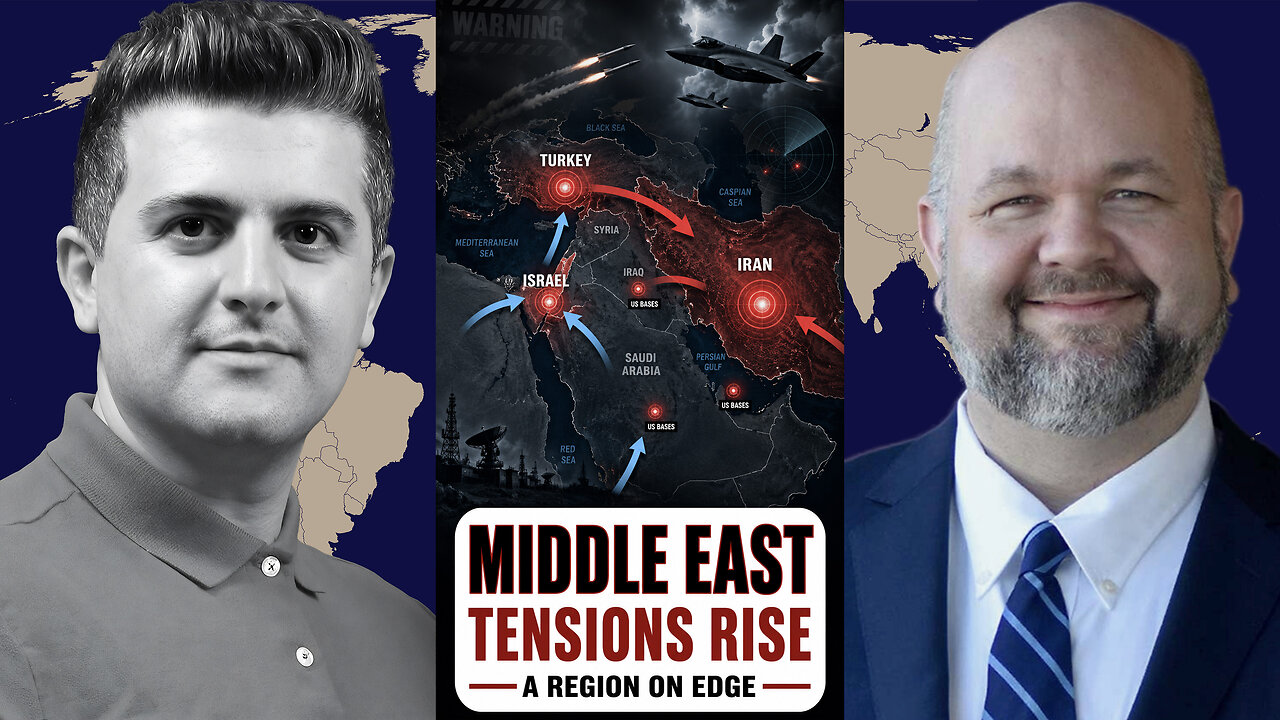
President Donald Trump famously campaigned against “endless wars,” yet his administration launched missile strikes against Syria in 2017 and 2018 without congressional approval, assassinated Iranian General Qassem Soleimani in Iraq in January 2020, commenced the current unlawful and meaningless war against Iran, now in its third stage of combat, and he has financed Israeli expansion — all without congressional authorization.
He has famously indicated that he rejects the constitutional role of treaties and the international laws written pursuant to them. He has even threatened to annihilate the Iranian/Persian civilization.
Those who believe that the Constitution means what it says condemn the underlying assumption that the United States should maintain a global military presence of nearly 800 bases worldwide in 80 countries. These bases, security guarantees and permanent deployments create continual opportunities for military entanglement.
Every intervention generates unintended consequences, some of which become the justification for the next intervention. History teaches that the interventions don’t liberate. They subordinate, control and dominate.
This cycle expands government power at home as well as abroad. It has given us mass incarceration, mass surveillance, mass attacks on speech.
The founders warned against precisely this dynamic. James Madison wrote that “of all the enemies to public liberty, war is, perhaps, the most to be dreaded.” War concentrates power in the executive, increases public debt, expands surveillance, limits civil liberties and encourages secrecy.
A government organized around perpetual military readiness acquires the earmarks of an empire. Foreign policies of empires are based on dominance and force. Foreign policies of republics are based on commerce, diplomacy and genuine national defense. Military force should be reserved for defending the United States against actual or imminent attacks, not for remaking foreign societies, policing civil wars or pursuing humanitarian objectives.
From this perspective, the constitutional issue is inseparable from the policy issue. Even when intervention appears morally appealing or strategically prudent, allowing presidents to wage war unilaterally establishes precedents that future administrations will inevitably expand.
Executive power, once claimed, is never surrendered voluntarily.
The uniparty pattern in the past 36 years suggests that the problem is institutional rather than partisan. Republicans and Democrats alike have embraced increasingly unconstitutional theories of presidential war powers, while Congress has often acquiesced by avoiding politically difficult votes.
The result has been a steady transfer of the Constitution’s most consequential power from the legislative branch to the executive. The result has also been millions of innocent deaths, trillions of wasted dollars and industrial scale destruction. Is America really safer, are Americans truly freer, because of all these wars? NO and Hell No; we are weaker, poorer, less safe and less free.
To learn more about Judge Andrew Napolitano, visit JudgeNap.com.
Reprinted with the author’s permission.
Copyright © Andrew P. Napolitano
Andrew P. Napolitano [is a former judge of the Superior Court of New Jersey, is the senior judicial analyst at Fox News Channel. Judge Napolitano has written nine books on the U.S. Constitution. The most recent is Suicide Pact: The Radical Expansion of Presidential Powers and the Lethal Threat to American Liberty.