Murray N. Rothbard: Toward a “Science of Liberty,”
By Joseph T. Salerno
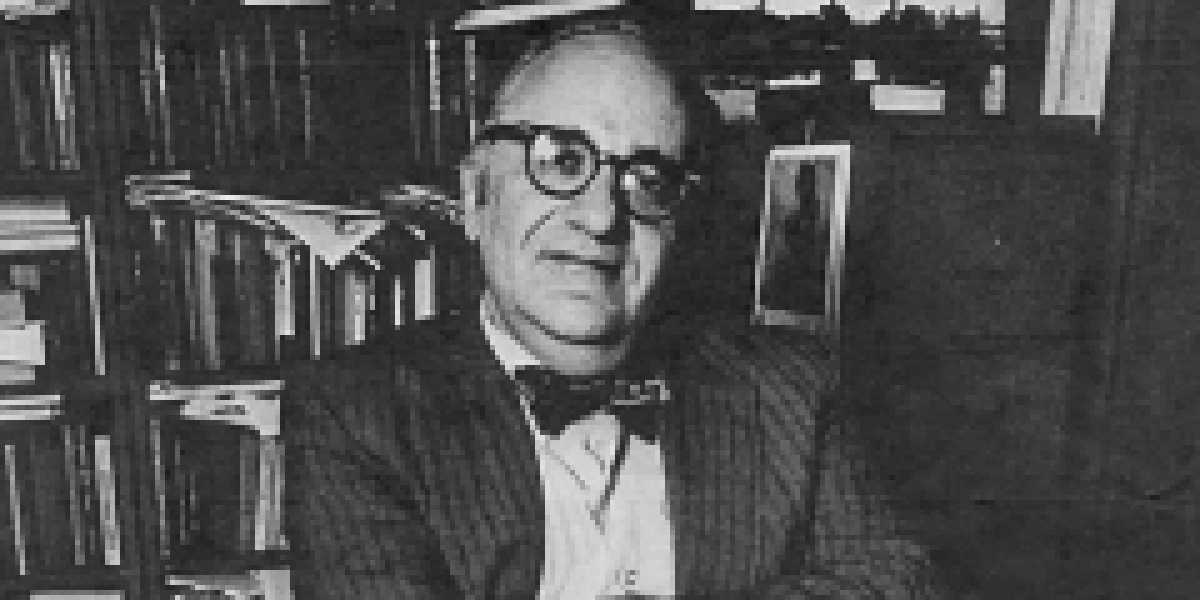
Murray N. Rothbard was a system builder in the mode of Ludwig von Mises, Frank H. Knight, and Friedrich A. Hayek. Like these eminent economists, Rothbard concluded that mastery of pure economic theory alone does not get one very far. Social, economic, and political problems are intertwined and complex and require a grand theory to address them. The social theorist must be familiar with such diverse disciplines as epistemology, political philosophy, politics, history, and economics. For Rothbard, the unifying theme of social theory was liberty. He recognized early on the causal role of liberty in the flourishing of human society and the deleterious social effects of the state’s infringements on liberty. Thus, throughout his career, Rothbard strove to develop an overarching “science of liberty,” writing several major works and numerous articles on economic theory, economic history, political philosophy, political history, the methodology of the social sciences, and intellectual history.
Rothbard was born in Bronx, New York, in 1926 to Raya (née Babushkin) and David Rothbard. Murray was influenced at a young age by the individualist-conservative views of his father, a petroleum engineer. Skipping several grades in school, Murray enrolled at Columbia University in 1942 at the age of sixteen. At age nineteen he received his AB degree with honors in economics and mathematics, and soon after, he enrolled in Columbia’s PhD program in economics. Columbia was one of the two institutions that had a formative influence on Rothbard’s intellectual development.
In the 1940s, Columbia University was a leading academic institution in the United States and housed one of the top three economics departments in the nation. Notable faculty included Arthur F. Burns, John Maurice Clark, Joseph Dorfman, Harold Hotelling, and George Stigler. Rothbard took courses with all these eminent economists. He was especially influenced by the institutionalists Burns and Dorfman and impressed both professors. Burns expected Rothbard to make “a prominent place for himself” in the world. Rothbard respected Burns, recalling that in his lectures Burns was “a brilliant theorist” and that his “critique of orthodox theory . . . was excellent.” Rothbard held Dorfman in high esteem as a historian of economic thought and in the dedication to An Austrian Perspective on Economic Thought named him as one of his mentors along with Ludwig von Mises. Dorfman appreciated Rothbard’s abilities and agreed to chair his dissertation committee.
Rothbard took a graduate course in price theory from George Stigler, the creator of modern Chicago price theory. As a self-proclaimed “anti- New Deal, extreme right-wing Republican,” Rothbard appreciated the free-market views that Stigler openly expressed in class to the bewilderment of his left-liberal students. Stigler referred the class to a pamphlet criticizing rent controls that he had coauthored with Milton Friedman, published by a then-obscure organization, the Foundation for Economic Education (FEE). Founded in 1946 by Leonard Read, FEE was the second institution that shaped Rothbard’s intellectual outlook. Shortly after Rothbard wrote to FEE for the pamphlet, he was introduced to the world of the libertarian Old Right through the writings of Albert Jay Nock, Isabel Paterson, Rose Lane Wilder, Garet Garrett, and especially Frank Chodorov, who was to become his mentor in political and social theory.
Not only did Rothbard study the institutionalist approach under its contemporary leaders and learn the Chicago variant of neoclassical price theory from its founder, but he also spent an entire year in an honors seminar going chapter by chapter through Marshall’s Principles of Economics, then the bible of neoclassical economics. With logical positivism sweeping the economics profession during the 1940s and shunting aside both institutionalism and the deductive method, Rothbard took a course on the philosophy of economics with Ernest Nagel, one of the leading exponents of logical positivism, who impressed him with his criticisms of institutionalism. Rothbard also enrolled in a graduate mathematical statistics course offered by the eminent statistician Harold Hotelling but became disillusioned when he realized after a few lectures that statistical inference was based on the “groundless assumption” of a normal distribution. Thus, his Columbia education left Rothbard with an inchoate feeling that something was wrong with both the positivist and institutionalist approaches to economics, later reflecting that he “tended to agree with institutionalist critiques of Keynesians and mathematicians, but also with the latter’s critiques of the institutionalists.”
By the time he completed his coursework at Columbia, Rothbard was a well-trained, if somewhat uncomfortable, neoclassical economist well versed in contemporary economic theory and method. After passing his orals in 1948, Rothbard embarked on his doctoral dissertation. Completed by 1951 and entitled “The Panic of 1819: Reactions and Policies,” it was a thorough examination of contemporary opinion on the causes of and remedies for the panic. Although Rothbard amassed a plethora of facts for his dissertation, he eschewed any theoretical investigation, neither trying to empirically test a theory along positivist lines nor to derive a theory from the agglomeration of facts à la institutionalism. Burns, a member of Rothbard’s committee, was dissatisfied with the dissertation, and Dorfman deferred to his more formidable colleague. Rothbard’s PhD degree was finally awarded in 1956, after Burns departed Columbia for a post in the Eisenhower administration.
In the meantime, Rothbard’s personal association with FEE’s staff and associates, particularly Frank “Baldy” Harper and Frank Chodorov, led him to quickly convert from the free-market conservatism of his youth to a pure libertarian position. The winter of 1949–50 was the watershed moment in Rothbard’s intellectual development as an economist and as a libertarian.
Despite learning from distinguished economists at Columbia, Rothbard by his own admission had “never been able to find a comfortable home in economic theory.” But Rothbard took a huge intellectual leap forward when he discovered through FEE the thought of Ludwig von Mises and read his recently published magnum opus, Human Action. Rothbard began regularly attending Mises’s weekly seminar at New York University. Before even finishing Mises’s treatise, Rothbard converted to Austrian economics and adopted Mises’s praxeological approach to economics theory, which revitalized the deductive method by grounding it in the fundamental fact of human action. At about the same time, Rothbard realized that the limited-government laissez-faire position was “logically untenable” when he was unable to answer the objection raised by left-liberal friends: If people could collectively decide that government should provide police, courts, and military defense, then why couldn’t they decide that government should also operate steel mills or dams? Rothbard’s epiphany led him to adopt a pure anarcho-capitalist position.
Rothbard’s career moved swiftly after his dual conversion. With the financial support of the Volker Fund, Rothbard accepted Mises’s offer to write a textbook based on Human Action. By 1951 he was hard at work on the project that would culminate in his pathbreaking, two-volume treatise Man, Economy, and State (MES), in which he deduced the entire corpus of economic principles using Mises’s step-by-step praxeological method. This was a feat which even Mises himself had not accomplished. Rothbard finished writing his tome by early 1956, before he was awarded his PhD, and the book was published in 1962. The completed manuscript initially included seven chapters on interventionism which, mainly to control the book’s length, were reduced to a single chapter. Rothbard’s full treatment of interventionism was published in 1970 as Power and Market: Government and the Economy. With a grant from the Earhart Foundation, he then immediately began to write America’s Great Depression (AGD). Completed in 1957 and published in 1963, AGD elaborated and refined Austrian business cycle theory and used it to explain the Great Depression. It still stands as the exemplar of applied economics in the modern Austrian tradition.
When Rothbard began to write MES, his use of the praxeological method quickly led him to realize that Mises’s treatise had left large gaps, particularly in price theory and production theory, and that these areas required significant elaboration. Rothbard made the momentous decision to expand his project from a college-level textbook into a full-blown treatise. Beginning with the undeniable fact of human action—the purposeful use of means to achieve ends—and a handful of factual observations about reality, Rothbard used logic to deduce the entire edifice of economic theory.
Besides repairing the gaps in Misesian economics, Rothbard made numerous theoretical breakthroughs and discoveries of his own. These included using Mises’s ordinal utility theory and regression theorem to expand Eugen von Böhm-Bawerk’s famous analysis of price formation by the “marginal pairs” under barter into a complete explanation of money prices determined by supply and demand. Rothbard also dynamized price theory by demonstrating how expectations and speculative activities impact supply and demand schedules and expedite the market’s equilibration process.
In production theory, Rothbard recognized that Mises’s treatment was sparse and incomplete. After a false start trying to develop the theory by focusing on a single firm in isolation, along Marshallian partial-equilibrium lines, Rothbard turned to Eugen von Böhm-Bawerk’s economy-wide Austrian general-equilibrium analysis of the structure of production. Rothbard emphasized Böhm-Bawerk’s “capitalist-entrepreneurs,” who were continually ranging throughout the economy, seeking to allocate their capital to those lines and stages of production that promised the highest returns on investment, and incorporated Mises’s construct of the evenly rotating economy into Böhm-Bawerk’s analysis. The move from Marshallian partial-equilibrium to Böhm-Bawerkian general-equilibrium analysis enabled Rothbard to demonstrate that the complex capitalist economy operates as a unitary means-ends framework in which firms are tightly linked to one another through vertical and horizontal relations as suppliers and demanders of inputs and producers of complementary or substitute products.
Rothbard further advanced production theory by incorporating the scattered insights of various Austrian writers on the topics of subjective value, capital, interest, factor pricing, and entrepreneurship into a unified theoretical system. He integrated the Fetter-Mises pure time-preference theory of interest with the structure of production analysis pioneered by Böhm-Bawerk and further developed by Knut Wicksell and Hayek. He used ordinal-utility analysis of individual value scales to expound the concept of the time market, in which savings are supplied and demanded in the structure of production. Rothbard demonstrated that the natural interest rate on the time market was the uniform long-run rate of return on investment in production processes and that the interest rate on loans was merely a reflection of this natural rate. This insight enabled him to show that the prices of the factors of production are determined by the value of the additional good produced by the “marginal,” or last, unit of the factor hired, discounted by the interest rate. Rothbard’s production theory identified the primary function of the entrepreneur as calculating and effecting the most profitable allocation of savings and investment under uncertainty. To sum up, Rothbard gathered all the loose strands of thought among earlier Austrian writers and wove them into a systematic explanation of the dynamic production process.
Rothbard also made important breakthroughs in monopoly theory. He denied that a demand curve for a good determined on a purely free market would permit an entrepreneur to charge a monopoly price for the good. Earlier Austrian economists from Carl Menger to Mises had maintained that a particular configuration of the demand curve on the free market would allow a seller to restrict production or withhold stock to attain a monopoly price, defined as a price above the “competitive price.” This would impair social welfare, as scarce resources would be diverted to less valuable uses from the point of view of consumer preferences. Rothbard demonstrated that a monopoly price cannot emerge on a purely free market because the shape and position of all demand curves are governed solely by voluntary consumer preferences and, therefore, a competitive price cannot be distinguished from a monopoly price. In an uncertain world, entrepreneurs are continually striving to forecast future consumer demands in order to produce the quantity of the product that maximizes their profit. Those who overestimate the demand for a product, will restrict production and raise their price if they expect demand to remain constant. This is simply a natural market adjustment, and all entrepreneurs—from hot dog vendors to automakers—engage in it. There is no standard by which to distinguish which supply restrictions aim at attaining a monopoly price and which occur under the pressure of competition.
Furthermore, Rothbard showed, the theory of monopoly price is applicable to monopoly grants bestowed on privileged sellers from outside the market by governments. Legal restrictions imposed on sellers of the same or similar products forcibly narrow consumers’ choices and thereby cause a coercive reconfiguration of the market demand curve that may lead to a higher price that is not in accord with their voluntary preferences. Thus, Rothbard concluded, the only meaningful distinction is between the free-market price and a monopoly price.
(More)
https://www.lewrockwell.com/2026/07/joseph-salerno/murray-n-rothbard-toward-a-science-of-liberty/