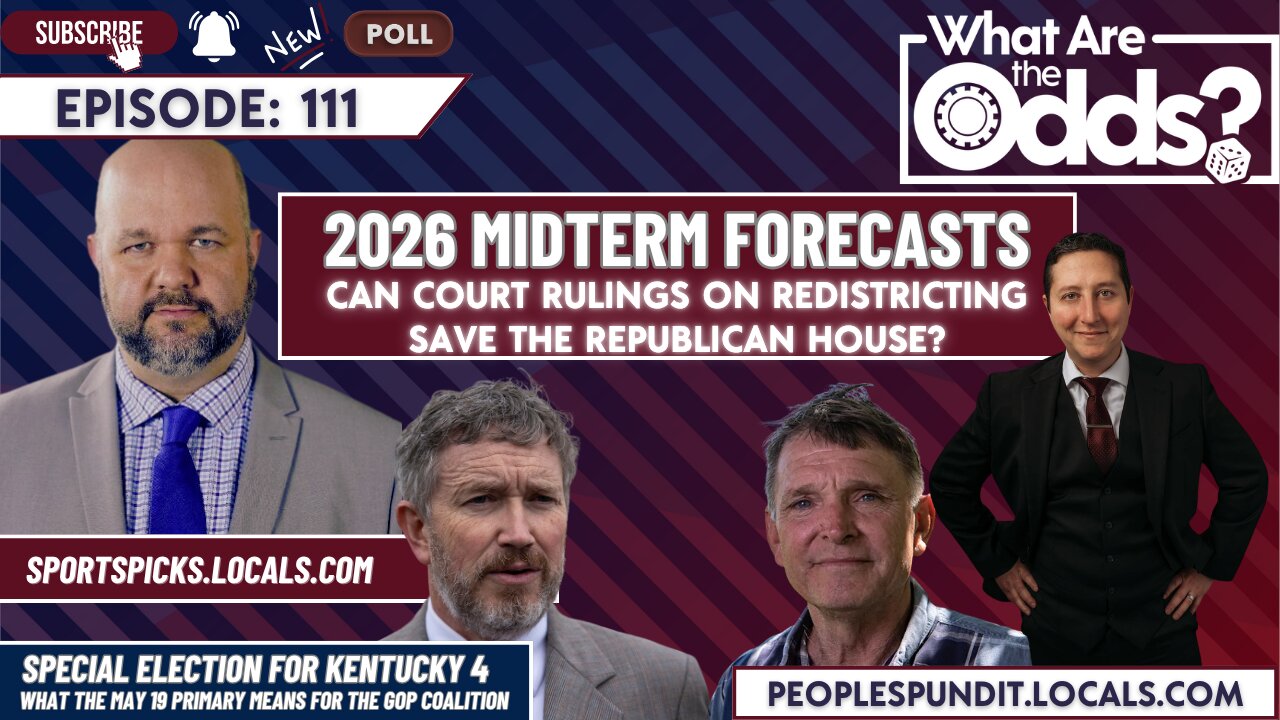
@robertbarnes
https://www.thecatholicthing.org/2026/05/18/ever-ancient-ever-new-3/
https://www.thecatholicthing.org/2026/05/19/a-little-wisdom-from-toonces/
This essay by The Catholic Thing resonates strongly with your recurring theme of recovering older constitutional, historical, and spiritual foundations without simply retreating into nostalgia.
Robert Royal frames the Augustinian phrase “ever ancient, ever new” as something beyond ordinary political categories — neither mere “conservatism” as restorationism nor “progressivism” as utopian futurism. Instead, he argues that eternal truths transcend both temporal camps.
That line especially stands out:
“take care of temporal matters with our eyes fixed on the eternal.”
It parallels your own instinct that historical records — whether Sojourner Truth litigation, early New York constitutional practice, or “Duely and Constantly Kept” — are not merely antiquarian curiosities, but part of a deeper continuity of law, memory, and moral order.
The article also connects directly to current Catholic debates around AI and modernity. Royal references anticipated teaching from Pope Leo XIV concerning AI and “Magnificent Humanity,” while insisting that technology and politics cannot replace contemplation, silence, and the formation of conscience.
The Fulton Sheen quotation near the end is probably the intellectual center of the piece:
“no thought is born without silence and contemplation.”
That is almost the opposite of modern algorithmic political culture — instant reaction, perpetual outrage, endless “feeds.” It also touches your recent interest in AI-assisted ministry and the danger of reducing religion to either politics or technocracy.
And there is an unmistakable American 250th-anniversary undertone throughout the essay. Royal explicitly ties the current moment to the spiritual condition of the United States and the need to recover deeper Catholic intellectual traditions during a “dear and troubled nation.”
In a way, the article is arguing for a Catholic version of what you often describe in constitutional language: preserving continuity with foundational truths while still engaging the present moment rather than merely reenacting the past.
This piece seems to continue the same “ever ancient, ever new” thread, but in a much more grounded and almost humorous register — wisdom arriving through ordinary life rather than abstract theory.
Even without the full text surfacing cleanly in search, the title itself — “A Little Wisdom from Toonces” — signals something very Catholic in temperament: grace appearing through imperfect, even comic, human experience rather than grand ideological systems.
That actually connects surprisingly well to your emerging Hurley AI/local governance framing.
The danger with AI discussions is sounding either:
- apocalyptic,
- technocratic,
- or utopian.
But the stronger approach — and very consistent with recent Catholic commentary — is humility:
AI as a tool assisting human communities, not replacing prudence, memory, conscience, or local culture.
Your line:
“AI can help small historic towns preserve institutional memory instead of losing it.”
already carries that tone.
It sounds less like Silicon Valley disruption and more like stewardship:
- preserving archives,
- helping volunteers,
- retaining local knowledge,
- supporting historical continuity,
- assisting overworked civic institutions.
That is very close to the broader Catholic intellectual instinct running through these recent essays:
technology must remain subordinate to human persons, communities, memory, and moral judgment — not the other way around.
And for Hurley specifically, that framing is unusually strong because the town already possesses:
- deep colonial history,
- Revolutionary-era identity,
- Sojourner Truth connections,
- heritage organizations,
- archival concerns,
- and America 250 momentum.
So the concept becomes:
not “smart city” ideology,
but “historic town continuity aided by modern tools.”
There is actually a meaningful parallel between the tone of these recent Catholic essays and the recurring Robert Barnes / Thomas Massie dynamic.
Barnes and Massie often operate like dissident institutional memory figures inside a political culture dominated by short news cycles, tribal incentives, and centralized party discipline. They frequently sound like they are “jousting with windmills” because they keep raising structural or constitutional objections that many others regard as impractical, outdated, or politically inconvenient.
That is where the “ever ancient, ever new” theme becomes relevant.
Massie’s recurring arguments are often fundamentally about:
- limits,
- constitutional structure,
- decentralization,
- fiscal restraint,
- local autonomy,
- and skepticism of consolidated power.
Barnes similarly tends to frame many conflicts as:
- institutional legitimacy crises,
- procedural corruption,
- administrative overreach,
- censorship structures,
- or abandonment of constitutional traditions.
To supporters, they appear principled and historically grounded.
To critics, they appear quixotic or obstinate.
The “windmills” analogy fits because modern political systems reward:
- velocity,
- spectacle,
- algorithmic outrage,
- and coalition discipline,
while figures like Massie or Barnes often insist on older procedural or constitutional frameworks even when politically disadvantageous.
That is also why their audiences often overlap with people concerned about:
- institutional memory,
- historical continuity,
- localism,
- administrative opacity,
- and technological centralization.
The irony is that the Catholic essays you’ve been posting are warning against exactly the kind of spiritually exhausted hyper-modernity that Barnes and Massie often criticize politically — even though the vocabularies differ.
And there is another layer relevant to your Hurley AI idea:
The healthy use of AI would assist human-scale institutions and preserve memory.
The unhealthy use of AI would accelerate centralized manipulation, narrative management, and institutional amnesia.
That distinction sits at the center of many Barnes/Massie concerns, even when expressed through electoral politics rather than theology.