




I. INTRODUCTION
Only for Supporters
To read the rest of this article and access other paid content, you must be a supporter


Japan Is the Off-Ramp to Iran That Nobody in Washington Is Talking About
And the biggest obstacle isn't Tehran. It's the Israeli far right.
We're six days into a shooting war with Iran. Khamenei is dead. The IRGC command structure is fractured. Some kind of interim leadership council is trying to hold the country together while American and Israeli bombs keep falling. Oil markets are a mess. The Strait of Hormuz is effectively shut down. And the only question anyone in Washington seems interested in is: how long does this last?
That's the wrong question. The right question is: how does this end without turning into Iraq 2.0?
There's a realistic answer sitting right in front of us. It runs through Tokyo.
THE JAPAN CASE
Japan has something no other country on earth can offer right now. It has credibility with Iran. It has a security alliance with the United States. It has zero colonial baggage and zero religious history in the Middle East. It has world-class infrastructure and reconstruction capability. And it has a desperate, immediate economic need to get the Strait of Hormuz reopened, because roughly 70% of its oil imports pass through that chokepoint.
This isn't theoretical. Japan and Iran have maintained diplomatic relations since 1929. In 1953, a Japanese oil tanker broke a British naval blockade to purchase Iranian crude after Mossadegh nationalized Anglo-Iranian oil. Iranians still remember that. Through the 1970s, Iran supplied nearly half of Japan's crude imports. Even after the 1979 revolution, Japan kept the relationship alive when virtually every Western-aligned nation walked away.
Japan mediated between Iran and Iraq during the 1980s war. In 2019, Prime Minister Abe flew to Tehran with Trump's blessing. It was the first visit by a Japanese PM in 41 years. The Atlantic Council assessed at the time that Japan carries none of the historical or religious baggage of other potential mediators, and that Japanese-proposed solutions could give Iranian hardliners a way to accept off-ramps without the political cost of what would look like Western capitulation terms.
Khamenei rejected Abe's offer in 2019. But Khamenei had leverage then. He was alive, in power, under no existential threat. Today the regime is decapitated. The military command is in disarray. And neither Russia nor China has lifted a finger to help. Moscow is consumed with Ukraine. Beijing is calculating trade exposure, not honoring alliance commitments. Both condemned the strikes at the UN. Both have provided zero military support, zero humanitarian aid, zero economic lifeline. Iran's interim council, which includes the reformist President Pezeshkian, is running out of options fast.
WHAT THIS ACTUALLY LOOKS LIKE
First, the United States grants Japan a limited sanctions waiver for Iranian crude oil. Something on the order of 200,000 barrels per day. This is not unprecedented. In 2018, Japan was one of eight countries that received temporary waivers before ultimately complying with maximum pressure sanctions. Many Japanese refineries were specifically configured for Iranian light crude. The infrastructure to restart this trade already exists.
Second, in exchange for that waiver, Japan takes the lead on visible civilian reconstruction inside Iran. Water filtration systems. Power grid restoration. Rail infrastructure. These are sectors where Japan has decades of proven expertise through JICA, its international development agency, which has operated in 190 countries for over 70 years. Japan has already committed to using this same model for Ukraine's reconstruction, deploying firms like Nippon Koei that have engineering operations in 160 countries.
Third, the United States funds the reconstruction through Japan. JICA and USAID have co-funded projects together for decades. The institutional plumbing already exists. The point is that American money flows through Japanese institutions, and Japanese engineers show up on the ground. Iranian civilians see people rebuilding their water supply who aren't wearing American uniforms and aren't carrying American political baggage.
Fourth, Japan appoints a senior, respected figure as the public face of the effort. Someone with diplomatic gravitas and no partisan associations. Japan's political culture produces exactly this kind of elder statesman. There's precedent. In 2013, former Foreign Minister Komura was dispatched to Tehran as a special envoy and held meetings with Rouhani, Zarif, and Rafsanjani.
Let’s be clear about what this is. This isn’t charity. This isn’t idealism. This is a trade. Japan gets oil and energy security. America gets a clean exit with no occupation and no boots on the ground. Iran gets civilian infrastructure and an economic lifeline. Everybody pays their own way, everybody walks away with something they need, and nobody has to pretend they’re doing it out of the goodness of their heart. That’s not foreign policy fantasy. That’s a deal.
WHY THIS ISN'T NATION-BUILDING
I want to be very clear about what I'm not saying. I'm not saying we topple what's left of the Iranian government and install something new. I'm not saying we dissolve the IRGC the way we dissolved the Iraqi army. I'm not saying American contractors fly in and start drawing up a new Iran.
What I'm saying is that Pezeshkian is still alive. He's a reformer. He survived the strikes. He's now part of a three-person leadership council trying to hold the country together. The question isn't whether Iran will have a government. It will. The question is whether that government stabilizes with some outside help on civilian infrastructure, or whether it collapses into a vacuum that gets filled by the worst elements still standing.
Japan doesn't manage Iran. Iran manages Iran. Japan rebuilds water systems and power grids while giving whatever Iranian leadership emerges the economic breathing room to stabilize on their own terms. That is a fundamentally different proposition from what we did in Baghdad.
THE RESULT
Everyone gets to claim a win. Trump gets to say he won the war, destroyed the nuclear program, and avoided an occupation. Japan's Prime Minister Takaichi gets an elevated global role, restored energy security, and historic diplomatic credibility. Iran's interim leadership gets an economic lifeline that lets them stabilize without surrendering to the West. And the entire Global South watches a non-Western ally rebuild a devastated country while Russia and China stood by and did nothing.
THE TIMING
Takaichi has already confirmed she'll have frank talks on Iran with Trump at a scheduled summit on March 19. She has Trump's personal endorsement from the recent election. She's bringing a $550 billion investment package. She commands a two-thirds supermajority in Japan's lower house. Foreign Minister Motegi is already in contact with Oman, which has served as the primary back-channel to Tehran for years. Oman's foreign minister publicly stated on March 3 that off-ramps are available and called for an immediate ceasefire. Iran's ambassador to Japan held a press conference in Tokyo that same day.
The diplomatic channels are live. What's missing is a concrete proposal. March 19 is the window to put one on the table.
THE NETANYAHU PROBLEM
Now here's where it gets complicated, and this is the part that matters most for anyone with influence in the current administration.
Israel's security cabinet approved narrowly defined military objectives for this operation: degrade nuclear capability, destroy ballistic missile infrastructure, cut off proxy funding. Regime change is notably absent from the approved list. Netanyahu himself told the public this would not be an endless war.
But the coalition hardliners tell a different story. National Security Minister Ben Gvir and Finance Minister Smotrich want total regime collapse. No managed transition. No reconstruction. No stabilization that could allow any future Iranian government to reconstitute. In their framing, any framework that rebuilds Iranian infrastructure is "rebuilding the enemy."
This is the faction most likely to torpedo a peaceful off-ramp. Not because they have a strategic alternative, but because prolonged chaos in Iran serves their broader regional vision. One senior analyst at Chatham House put it plainly: Israel's far right views turmoil spreading across Iran, Iraq, and the Gulf as advantageous. Not something to be resolved.
Here's the thing, though. They're structurally weaker than they appear.
It's important to distinguish between this faction and Israel's actual strategic interest. A stable, permanently denuclearized Iran is better for Israeli security than a failed state radiating instability across the Gulf. Most of the Israeli defense establishment knows this. The people who don't want that outcome are a specific political faction operating from ideological commitments, not strategic ones.
Ben Gvir and Smotrich already tried to kill the Gaza hostage deal earlier this year. They voted against it. It passed anyway because the opposition provided a legislative safety net. The same mechanism can function here. Netanyahu doesn't need their votes to accept a framework that originates from Washington and Tokyo.
Israeli elections must be held by October 2026. Netanyahu is already looking past the far right. Reporting from multiple Israeli outlets indicates his preferred post-election coalition partner is Naftali Bennett, not Ben Gvir. He's positioning to shed the extremists the moment electoral math allows it.
Most importantly, the framework can be designed so that Ben Gvir and Smotrich have no effective leverage point. If the deal is structured as a bilateral U.S.-Japan initiative, Netanyahu can deflect with his most reliable move: "This is the President's decision." If reconstruction is limited to civilian infrastructure with no military dimensions, there is no credible "rearming the enemy" argument. If it's tied to permanent nuclear dismantlement verification, Netanyahu gets the biggest political win of his career. And if it's sequenced after the declared military objectives are achieved, nobody can claim the war was cut short.
Netanyahu's own biographer once observed that if something is necessary for his political survival, he will sacrifice his ideology every time. A clean military victory followed by ally-managed civilian reconstruction and no quagmire is better positioning for October elections than open-ended conflict and rising Israeli casualties.
THE STRATEGIC BONUS
There's one more dimension here that should appeal to anyone thinking about great power competition.
A Japan-led reconstruction of Iran would catch both Russia and China completely flat-footed. China signed a 25-year Comprehensive Cooperation Program with Iran and invested heavily in Belt and Road port infrastructure at Bandar Abbas. Much of that physical infrastructure has now been degraded by the strikes. If Japan moves quickly, it fills that vacuum before Beijing can re-engage. Russia has been trying to position itself as a diplomatic mediator, but it has no resources, no credibility, and no capacity to back up its rhetoric with action.
The message to the developing world would be unmistakable. When Iran needed its "multipolar" partners, they disappeared. The country that actually showed up to rebuild was an American ally operating through transparent international institutions. That kind of narrative shift has consequences far beyond Iran. Nobody would see it coming at this scale. That's the point.
WHERE THIS GOES
The framework is historically grounded, institutionally feasible, and strategically sound. Japan has the relationships, the reconstruction expertise, the energy incentive, and the diplomatic positioning. The March 19 summit provides a natural venue. The far-right Israeli obstacle is real but manageable through deal design and political timing.
The constraint isn't whether this can work. It's whether anyone with access to the decision-makers is thinking along these lines. The war will end. The question is whether it ends with a plan or with a vacuum. We've seen what vacuums produce in this part of the world. We don't need to see it again.
From yesterday. the intro segment (not the first long interview with Larry)
www.larrysharpe.com
I did a quick hit on Richard Syrette yesterday. Gotta keep Canadians apprised of the U.S. madness.
Ask in replies and answering Live at 9ish eastern tonight.
It’s different enough from the Candace Owens lawsuit, but could be an indication of liability to her… it does have elements of rhyme to it.
Some TikToker psychic was claiming a University professor was responsible for Kohberger Idaho murders.
Crazy conspiracy theory stuff. Just ordered it to pay $10 million for defamation and intentional infliction of emotional distress.

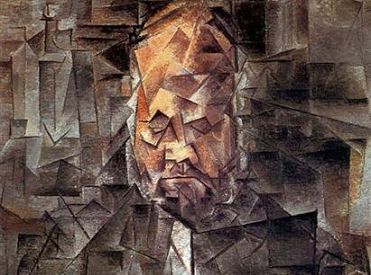
I. INTRODUCTION
A. Art of the Week
B. Recommendation of the Week
C. Wisdom of the Week
D. Appearances
II. THE EVIDENCE
A. Barnes Library: Curated Weekly Articles of Interest
*Bonus: Bald eagle rescued. https://abc7ny.com/post/nypd-officers-describe-rare-rescue-trapped-american-bald-eagle-icy-hudson-river-nyc/18616678/
B. Best of the Board: Five Fantastic Posts of the Week
*Bonus: Bondi mockery. https://vivabarneslaw.locals.com/post/7703469/spotted-all-over-washington-dc-while-i-normally-don-t-share-the-political-views-of-people-in-dc
**Bonus: Weekly Wisdom. https://vivabarneslaw.locals.com/post/7704649/the-intersection-of-politics-youtube-commentary-and-critical-traffic-infrastructure-https-you
C. Homework: Cases of the Week for Sunday
*Lobbyist disclosure laws. https://www.law.cornell.edu/uscode/text/2/chapter-26
**Lobbying disclosure guidelines. https://www.senate.gov/legislative/resources/pdf/S1guidance.pdf
***Transanity in Canada. https://vivabarneslaw.locals.com/post/7704549/tribunal-ruling-out-of-british-columbia-canada
III. CLOSING ARGUMENT: Constitution Masterclass Series — Article I, Tariffs
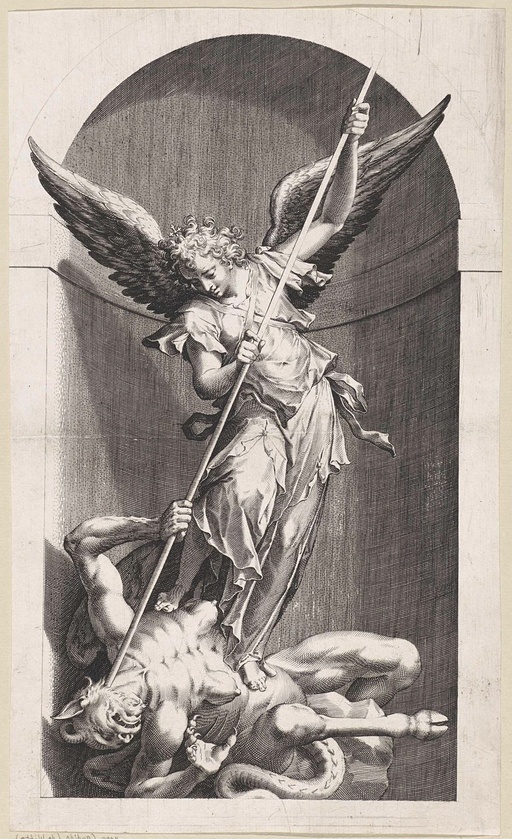
I. INTRODUCTION
A. Art of the Week
B. Recommendation of the Week
C. Wisdom of the Week
D. Appearances

II. THE EVIDENCE
A reminder: links are NOT endorsements of the authors or their interpretation of events, but intended to expand our library of understanding as well as expose ideas of distinct perspective to our own.
A. Barnes Library: Ten of the Top Curated Weekly Articles
B. Homework: Cases of the Week for Sunday
*Bonus: Livenation Ticketmaster Antitrust https://www.hollywoodreporter.com/music/music-industry-news/live-nation-doj-lawsuit-after-gail-slater-resignation-1236504011/
**Bonus: NCAAF eligibility suit. https://www.knoxnews.com/picture-gallery/sports/college/university-of-tennessee/football/2026/02/13/joey-aguilar-eligibility-hearing-tennessee-vs-ncaa/88659399007/
***Bonus: AI plagiarism win. https://www.newsday.com/long-island/education/adelphi-university-ai-plagiarism-lawsuit-oh07enyz
C. Best of the Board: Ten of the Top Posts
III. CLOSING ARGUMENT: Constitution Masterclass Series — Article I, Elections