




I. INTRODUCTION
Only for Supporters
To read the rest of this article and access other paid content, you must be a supporter


"Sri Lankan authorities reportedly said on Wednesday that the Sri Lanka Navy dispatched a rescue mission after a distress call from an Iranian ship. Sri Lanka sent ships and aircraft to rescue 30 Iranian sailors aboard the Iranian frigate - Iris Dena - which was sinking Wednesday just ouside the island's territorial waters, AFP news agency reported, citing foreign minister Vijitha Herath said. He told parliament that 30 injured sailors were being brought to a hospital in the island's south from the 180-crew frigate was sinking from dawn.
While exact details of the operation that ensued after the distress call were not known, an individual, who identified himself as a Sri Lankan journalist, wrote on X that the Iranian ship in distress was about 40 nautical miles off Galle.
Citing Aruna Jayasekara, deputy minister of defence, the person said the Navy and Air Force were conducting a joint rescue operation to extract the crew from the ship."
https://www.hindustantimes.com/world-news/sri-lanka-navy-sends-ships-aircraft-after-distress-call-from-iranian-vessel-iris-dena-101772605277885.html
"The IDF carried out a new wave of airstrikes in Tehran targeting command centers linked to Iran’s security forces and the Basij militia, as hostilities with Iran and its allies continued to escalate across the region. The military also released a video of fighter jets striking an Iranian helicopter and troops preparing a missile launch. The IDF said the strikes targeted dozens of command centers belonging to Iran’s internal security forces and the Basij, a paramilitary organization that operates under Iran’s Islamic Revolutionary Guard Corps and plays a key role in enforcing the regime’s authority..."
https://www.ynetnews.com/article/hjqtusbtzx#autoplay
"The IDF says it has launched a wave of strikes against Hezbollah infrastructure in Beirut.
It says further details will be provided later.
Ahead of the strikes, the military issued evacuation warnings for two buildings in the Lebanese capital."
https://www.timesofisrael.com/liveblog_entry/idf-says-new-wave-of-strikes-underway-against-hezbollah-targets-in-beirut/
"Defense Minister Israel Katz says any leader appointed by the Iranian regime to replace Ali Khamenei will be an “unequivocal target for elimination.”
“Any leader appointed by the Iranian terror regime to continue leading the plan to destroy Israel, threaten the US and the free world and the countries of the region, and oppress the Iranian people, will be an unequivocal target for elimination,” Katz says in a statement.
“It does not matter what his name is or where he hides,” he says..."
https://www.timesofisrael.com/liveblog_entry/katz-khameneis-successor-will-be-unequivocal-target-for-elimination/
"
Iranian Kurdish militias have consulted with the United States in recent days about whether, and how, to attack Iran’s security forces in the western part of the country, three sources with knowledge of the matter told Reuters.
The Iranian Kurdish coalition of groups based on the Iran-Iraq border in the semi-autonomous region of Iraqi Kurdistan has been training to mount such an attack in hopes of weakening the country’s military, as the United States and Israel pound Iranian targets with bombs and missiles.
The goal would be to create room for Iranians opposed to the Islamic regime to rise up now that Supreme Leader Ali Khamenei and other top officials have been killed since the US-Israeli attack began on Saturday, two of the sources said..."
https://www.timesofisrael.com/us-in-talks-with-iranian-kurds-on-potential-cia-backed-op-for-uprising-sources/
"Senior US officials said Tuesday that President Donald Trump ordered strikes on Iran after Tehran demonstrated during three rounds of nuclear talks last month that it was not serious about giving up the capacity to produce a nuclear weapon.
“They basically offered us a lot of political wins and some concessions, but they were unwilling to give up the building blocks of what they needed to preserve to get to a bomb,” said one of the two senior US officials who briefed reporters on condition of anonymity.
The two officials used the opportunity to offer new details on the three rounds of negotiations that were held, offering more context on Trump’s decision to launch Operation Epic Fury amid mounting criticism from Democrats and some MAGA Republicans regarding the urgency, strategy and timeline of the operation. Echoing comments made on Monday by Prime Minister Benjamin Netanyahu, the second official added that Iran was trying to move additional nuclear facilities underground, this time without “air shafts,” which were used by the US to identify Tehran’s three main nuclear sites in strikes last year.
Laying out Washington’s objectives in the negotiations, the second senior US official said they were for Iran to hand over all of its highly enriched uranium; ensure that the three nuclear facilities hit by the US last year — Natanz, Fordow and Isfahan — would be decommissioned forever; guarantee that Iran would cease its support for proxy militia groups; and dismantle Iran’s ballistic missile program. The senior US official acknowledged that the latter two issues were not addressed in the three rounds of talks mediated by Oman. However, he said that the US decided those issues would be raised in separate talks that would include Arab allies, who are impacted by Iran’s missile program and support for proxies.
While Trump’s top negotiators Jared Kushner and Steve Witkoff informed their Iranian counterparts during the talks that they expected Tehran to negotiate with its Arab neighbors on its missiles and proxy support, Iran never did so.
“That was one of the first tells — that while we agreed in good faith to allow the region to take on these two issues, the Iranians made no attempt whatsoever to convene the region and talk about them,” the first US official said. During the first round on February 6, Iran’s top negotiator, Foreign Minister Abbas Araghchi, asserted that Iran had an “inalienable” right to enrich uranium and that it already had enough of it to produce 11 nuclear bombs, the US official said, echoing revelations made on Monday by Witkoff in a Fox News interview.
Joining Witkoff and Kushner at that meeting was US Army Central Command chief Adm. Brad Cooper, leading Araghchi to ask the Trump aides if they were trying to “threaten” Tehran by having him there.
“No, he just happened to be in the neighborhood,” Witkoff quipped in response, according to the first US official.
The American negotiators used the opportunity to press the Iranians on why they needed to be building their nuclear facilities underground, to which Araghchi responded that they don’t want their sites to be bombed.
“If there’s nothing nefarious being done there, then you shouldn’t be worried about a bomb,” Kushner responded, according to the first US official.
“We were very clear from the first meeting that we had with Araghchi that President Trump’s goal was to leave the region and the world safer than before, and if they wanted to act like a normal country, then we can have a really amazing relationship,” the US official recalled.
WASHINGTON — Senior US officials said Tuesday that President Donald Trump ordered strikes on Iran after Tehran demonstrated during three rounds of nuclear talks last month that it was not serious about giving up the capacity to produce a nuclear weapon.
“They basically offered us a lot of political wins and some concessions, but they were unwilling to give up the building blocks of what they needed to preserve to get to a bomb,” said one of the two senior US officials who briefed reporters on condition of anonymity.
The two officials used the opportunity to offer new details on the three rounds of negotiations that were held, offering more context on Trump’s decision to launch Operation Epic Fury amid mounting criticism from Democrats and some MAGA Republicans regarding the urgency, strategy and timeline of the operation.
00:12
21:24
Echoing comments made on Monday by Prime Minister Benjamin Netanyahu, the second official added that Iran was trying to move additional nuclear facilities underground, this time without “air shafts,” which were used by the US to identify Tehran’s three main nuclear sites in strikes last year.
Laying out Washington’s objectives in the negotiations, the second senior US official said they were for Iran to hand over all of its highly enriched uranium; ensure that the three nuclear facilities hit by the US last year — Natanz, Fordow and Isfahan — would be decommissioned forever; guarantee that Iran would cease its support for proxy militia groups; and dismantle Iran’s ballistic missile program.
Get The Times of Israel's Daily Edition
by email and never miss our top stories
Newsletter email address
Your email
Get it
By signing up, you agree to the terms
The senior US official acknowledged that the latter two issues were not addressed in the three rounds of talks mediated by Oman. However, he said that the US decided those issues would be raised in separate talks that would include Arab allies, who are impacted by Iran’s missile program and support for proxies.
While Trump’s top negotiators Jared Kushner and Steve Witkoff informed their Iranian counterparts during the talks that they expected Tehran to negotiate with its Arab neighbors on its missiles and proxy support, Iran never did so.
“That was one of the first tells — that while we agreed in good faith to allow the region to take on these two issues, the Iranians made no attempt whatsoever to convene the region and talk about them,” the first US official said.
Advertisement
In this handout photo released by Iran’s Foreign Ministry on February 26, 2026, Iran’s Foreign Minister Abbas Araghchi (L) speaks with Oman’s Foreign Minister Badr Albusaidi during their meeting in Geneva. (Iran’s Foreign Ministry / AFP)
A peaceful underground program?
During the first round on February 6, Iran’s top negotiator, Foreign Minister Abbas Araghchi, asserted that Iran had an “inalienable” right to enrich uranium and that it already had enough of it to produce 11 nuclear bombs, the US official said, echoing revelations made on Monday by Witkoff in a Fox News interview.
Joining Witkoff and Kushner at that meeting was US Army Central Command chief Adm. Brad Cooper, leading Araghchi to ask the Trump aides if they were trying to “threaten” Tehran by having him there.
“No, he just happened to be in the neighborhood,” Witkoff quipped in response, according to the first US official.
The American negotiators used the opportunity to press the Iranians on why they needed to be building their nuclear facilities underground, to which Araghchi responded that they don’t want their sites to be bombed.
“If there’s nothing nefarious being done there, then you shouldn’t be worried about a bomb,” Kushner responded, according to the first US official.
“We were very clear from the first meeting that we had with Araghchi that President Trump’s goal was to leave the region and the world safer than before, and if they wanted to act like a normal country, then we can have a really amazing relationship,” the US official recalled.
Advertisement
“You would think that with these guys at their weakest point ever, with President Trump — who is proven not to be a bluffer — moving real assets to the region, we thought they would show real movement toward creating a real deal. But all we got were games and tricks and denials,” the first US official lamented, indicating that talks got off on the wrong foot. In the second meeting on February 17, Araghchi told Witkoff and Kushner that Iran would never let the Americans “achieve something diplomatically that [they] weren’t able to achieve militarily,” the first US official recalled, characterizing it as a slip-up that the Iranian foreign minister tried to later walk back.
Also during that second meeting, the US negotiators asked their Iranian counterparts to put together a full proposal detailing the concessions Tehran would be willing to make, the second US official said.
While Washington asked to receive the proposal before the third round convened on February 26, Iran did not comply.
Instead, its negotiators showed up to the third meeting with a one-page declaration professing that it does not want a nuclear weapon.
When Witkoff and Kushner asked if the Iranians had the detailed proposal that was requested, the latter handed over a roughly half-a-dozen-page document that tried to make a case for Tehran to be allowed to have a limited, “needs-based” enrichment program over a ten-year period, the second US official recalled.
Iran barred the American negotiators from taking the document back to Washington for consultation, but the US official said he did a quick review of it on site and was “dismayed.” While it detailed Iran’s handover of nuclear material to the US, it “essentially would have allowed them to enrich at a multiple of five times what was allowed under the JCPOA,” the US official said, referring to the 2015 Iran nuclear deal, which capped enrichment at 3.67% purity. Trump abandoned the deal in 2018, and Iran subsequently massively increased its enrichment toward weapons-grade levels. The Iranian proposal’s details regarding the existing Tehran Research Reactor also set off alarm bells for Witkoff and Kushner, the US second official said.
When the Americans shared the document with International Atomic Energy Agency director Rafael Grossi — who was also participating in the talks — they concluded that Iran was asking to be able to produce over seven times as much uranium as what would be needed for medical purposes, the US official said.
“The claim that they were using a research reactor to do good for the Iranian people was a complete and false pretense to hide the fact that they were [trying to] stockpile there,” the official added, claiming that the proposal would have kept Iran only weeks away from enough weapons-grade material to produce a nuclear bomb. Witkoff and Kushner used the third meeting to test Iran’s claim of merely seeking a peaceful civil nuclear program by offering for the US to provide Tehran with free fuel to do so.
“They really twisted themselves into pretzels to try to explain how enrichment was their national right and their national pride,” the first US official said.
While the Iranians and the Omani mediators wanted the US to publicly project positivity about the third round of talks, Witkoff and Kushner felt there was not enough to be upbeat about, the official said.
Reporting back to Trump after last Thursday’s talks, Kushner told him, “Look, if you want us to make an Obama kind of deal, maybe it would be an Obama-plus deal, we could probably get one done..."
https://www.timesofisrael.com/us-officials-say-diplomatic-path-was-at-dead-end-when-trump-approved-iran-strikes/
First three shots have been open frame, spare, strike.
Let’s see if it continues with the upward trajectory.
Here's the story
Download Rumble Wallet now and step away from the big banks — for good! https://rumblewallet.onelink.me/bJsX/vivafrei
I did a quick hit on Richard Syrette yesterday. Gotta keep Canadians apprised of the U.S. madness.


I. INTRODUCTION
A. Art of the Week
B. Recommendation of the Week
C. Wisdom of the Week
D. Appearances
II. THE EVIDENCE
A. Barnes Library: Curated Weekly Articles of Interest
*Bonus: Bald eagle rescued. https://abc7ny.com/post/nypd-officers-describe-rare-rescue-trapped-american-bald-eagle-icy-hudson-river-nyc/18616678/
B. Best of the Board: Five Fantastic Posts of the Week
*Bonus: Bondi mockery. https://vivabarneslaw.locals.com/post/7703469/spotted-all-over-washington-dc-while-i-normally-don-t-share-the-political-views-of-people-in-dc
**Bonus: Weekly Wisdom. https://vivabarneslaw.locals.com/post/7704649/the-intersection-of-politics-youtube-commentary-and-critical-traffic-infrastructure-https-you
C. Homework: Cases of the Week for Sunday
*Lobbyist disclosure laws. https://www.law.cornell.edu/uscode/text/2/chapter-26
**Lobbying disclosure guidelines. https://www.senate.gov/legislative/resources/pdf/S1guidance.pdf
***Transanity in Canada. https://vivabarneslaw.locals.com/post/7704549/tribunal-ruling-out-of-british-columbia-canada
III. CLOSING ARGUMENT: Constitution Masterclass Series — Article I, Tariffs
I. INTRODUCTION
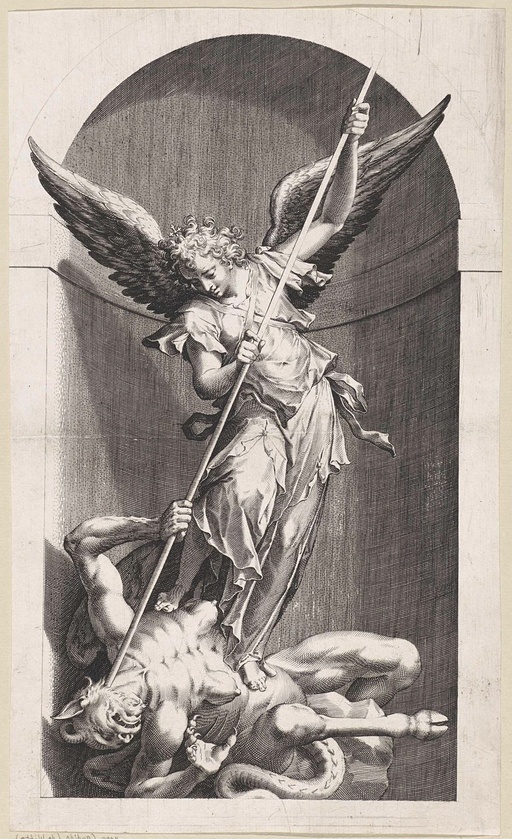
A. Art of the Week
B. Recommendation of the Week
C. Wisdom of the Week
D. Appearances

II. THE EVIDENCE
A reminder: links are NOT endorsements of the authors or their interpretation of events, but intended to expand our library of understanding as well as expose ideas of distinct perspective to our own.
A. Barnes Library: Ten of the Top Curated Weekly Articles
B. Homework: Cases of the Week for Sunday
*Bonus: Livenation Ticketmaster Antitrust https://www.hollywoodreporter.com/music/music-industry-news/live-nation-doj-lawsuit-after-gail-slater-resignation-1236504011/
**Bonus: NCAAF eligibility suit. https://www.knoxnews.com/picture-gallery/sports/college/university-of-tennessee/football/2026/02/13/joey-aguilar-eligibility-hearing-tennessee-vs-ncaa/88659399007/
***Bonus: AI plagiarism win. https://www.newsday.com/long-island/education/adelphi-university-ai-plagiarism-lawsuit-oh07enyz
C. Best of the Board: Ten of the Top Posts
III. CLOSING ARGUMENT: Constitution Masterclass Series — Article I, Elections