VivaBarnesLaw
Politics • Culture • News
The Barnes Brief: Friday, October 10, 2025
October 10, 2025
post photo preview
Art of the Day

I.   INTRODUCTION

A. Art of the Day

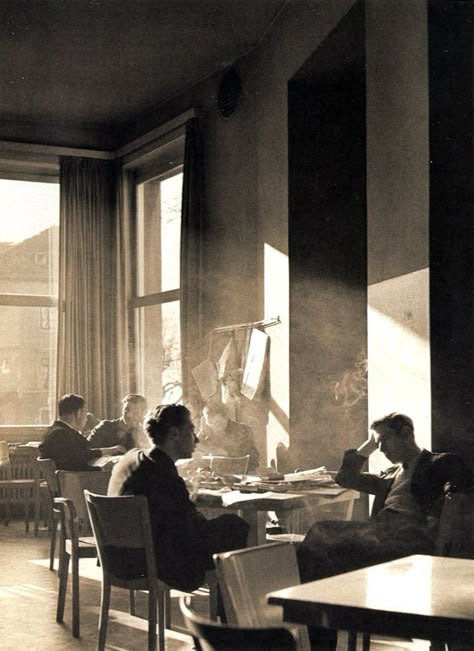
The symmetry of shape, the mirrored reflections off the still water, the delights of the desert each mirror and balance each other in this photograph that reminds me of a still painting, attracting introspective thought by getting lost in its perspective of nature meets man.

B. Wisdom of the Day

“Peace cannot be kept by force; it can only be achieved by understanding.” Albert Einstein.

C. Cultural Recommendation

In the Deep State themed films, shows, and book, a personal favorite is Rubicon. https://www.imdb.com/title/tt1389371/

D. Appearances


*Note: A reminder — links are NOT endorsements of the ideas contained therein. The Library is big, and it mostly consists of ideas I do not personally share.  


II. THE EVIDENCE

A.   Daily News of Interest

*Bonus: Dolly not dead. https://www.dailymail.co.uk/tvshowbiz/article-15174635/Dolly-Parton-breaks-silence-health-condition-sister-asked-prayers-country-singer.html

B.    Daily Deep Dive: Gaza Peace

*Bonus: Before and after Hamas. https://martindicaro.substack.com/p/before-and-after-hamas

C. Cases of Consequence

*Bonus: Mail in ballots at SCOTUS. https://www.supremecourt.gov/oral_arguments/argument_transcripts/2025/24-568_7l48.pdf

III.   CLOSING ARGUMENT: Free Speech Rights on Campus

  • State universities are state actors, and as such, they are subject to the restraints imposed by the Constitution and by concomitant state laws in many jurisdictions. We start with the First Amendment to the United States Constitution.
  • “Congress shall make no law…abridging the freedom of speech…or the right of the people peaceably to assemble, and to petition the Government for a redress of grievances.” These three coequal protections cover each aspect of speech – speech itself; the assembly often necessary to effectuate speech; and the petitioning process required to make it meaningful in many instances. As related to the university, the first two predominate.
  • As I had reason to remind myself recently, many state laws go further. Take for example Tennessee Code 49-7-2405. Tennessee law reinforces students “right to free speech” enforced through institutions affording students “the broadest latitude to a speak any issue” with a specific prohibition that it “not to be suppressed because the ideas put forth are through by some or even by most members of the community to be offensive, immoral, indecent, disagreeable, radical or wrongheaded.” In other words, no so-called hate speech exception. In the organizational context, the law specifically prohibits an school to “deny student activity fee funding to a student organization based on the viewpoints” of that organization. The only prohibited conduct is harassment, defined as “unwelcome conduct directed toward a person that is discriminatory on a basis prohibited by federal, state or local law, and that is so severe, pervasive and objectively offensive that it effectively bars the victim’s access to an educational opportunity or benefit.”
  • The principal Supreme Court case on the subject derives from the SDS movement in the 1960 and 1970s on college campuses – the Students for a Democratic Society. As the Supreme Court reiterated: “the vigilant protection of constitutional freedoms is nowhere more vital than in the community of American schools.” Academic freedom is freedom of speech for students and the associational rights embodied therein with the right to peaceably assemble. Indeed, the right to organize on campus derives from the marriage of those three First Amendment freedoms forementioned – the freedom of association is “implicit in the freedoms of speech, assembly and petition.”
  • As the High Court held in Healy: “There can be no doubt that denial of official recognition, without justification, to college organizations burdens or abridges that associational right.”  As a disfavored “prior restraint” on student’s future speech, “a heavy burden rests on the college to demonstrate the appropriateness of the action” and that appropriateness is limited to “preventing disruption on campus” from violent conduct, not a heckler’s veto.
  • There is no place more essential to the exchange of ideas, robust debate, and the freedom of speech than a college campus in the very origination of ideas for many people during their intellectual coming of age. Protecting First Amendment freedoms for organizations like Turning Point USA thus remains essential to respecting the legacy of Charlie Kirk and enforcing the law of the land in our foundational formational documents of the very First Amendment in our rightly famed Bill of Rights. 

community logo
Join the VivaBarnesLaw Community
To read more articles like this, sign up and join my community today
52
What else you may like…
Videos
Podcasts
Posts
Articles
Sneak peek

All roads in Canada lead to censorship

00:22:02
Clip from today

Virginia Redistricting BOMBSHELL: Democrats Just Got HANDED Their Worst Nightmare

00:14:42
This was Marion’s project

Let the kid get bored, she said.

I’m going to do this properly! There will be Blue Jays eating seeds out of my naked belly button!

00:00:20
February 17, 2024
Appearance on Richard Syrette

I did a quick hit on Richard Syrette yesterday. Gotta keep Canadians apprised of the U.S. madness.

Appearance on Richard Syrette
The Barnes Brief, Podcast Format: Monday, July 17, 2023

Closing Argument: Birthright citizenship is deeply American, and wholly Constitutional.

The Barnes Brief, Podcast Format: Monday, July 17, 2023
Declaration of Independence

Audio podcast style.

Declaration of Independence
LIVE w/ Baris
placeholder
Board Poll: Self-Identification

Which best describes how you would answering this Baris poll question as of today? Add your own comments in the replies.

Board Poll: Sunday Topics

Pick your top topic, if any, and add your own topic, question, or comments as the Producer Show Notes for the Sunday Show.

post photo preview
The Weekend Barnes Brief: Friday, May 8, 2026
 
I. THE INTRODUCTION
 
A. Art of the Week
  • Venezia. The Atlantis-like ancient city with its bridges over canals, long boats mastered by the gondolier, the city whose balls made masquarade masks famous, where artisans of show-making spend a whole day to make a single show of artistic wonderment, a hidden restaurant in a corner alley uncovers the best Italian cuisine, and the city whispers of its centuries of stories from its cathedrals and water-hugging mansions of Casanova’s fame. 
 
B. Wisdom of the Week
  • You’re never out of the race. 
 
C. Cultural Recommendation of the Week
 
D. Appearances


II. THE EVIDENCE
 
A. Barnes Library: Weekly Curated Articles
 
 
B. Homework: Sunday Show Cases
  1. Malpractice. https://www.foxnews.com/us/iowa-woman-died-hernia-repair-nurses-dismissed-painful-post-surgery-symptoms-lawsuit
  2. Gates fake meat goes to court. https://texasagriculture.gov/News-Events/Article/10760/Opinion-Fake-Meat-Real-Trouble-Texas-Won-t-Bow-to-Billionaires-or-Bureaucrats
  3. DOJ sues Commierado for 2A.https://www.justice.gov/crt/media/1439591/dl
  4. DOJ promises action against Big Ag. https://www.fooddive.com/news/beef-prices-trump-antitrust-doj-investigation/819331/
  5. Democrat raided. https://courthousenews.com/fbi-raids-democratic-virginia-state-senators-office/
  6. Insider trading indictment. https://www.justice.gov/d9/2026-05/usa_v._fejal_et_al_-_indictment.pdf
  7. Insider trading investigation https://seekingalpha.com/news/4588393-doj-probes-26b-in-war-linked-oil-trades---report
  8. Pay for play investigations https://www.cbsnews.com/news/trump-pardon-recipients-democrats-congressional-investigation-pay-to-play/
  9. EU: must allow welfare for migrants. https://www.courthousenews.com/wp-content/uploads/2026/05/kh-inps-cjeu-judgment.pdf
  10. DEI may lose, even in Twin Cities. https://courthousenews.com/minneapolis-public-schools-struggles-in-trump-suit-over-dei-policy/
  11. China spies on trial. https://courthousenews.com/feds-describe-global-network-of-chinese-police-stations-at-nyc-spy-trial-opening/
  12. Tiger’s DUI: Implied Consent Constitutionality Questions. https://scholarlycommons.law.emory.edu/cgi/viewcontent.cgi?article=1401&context=elj
 
C. Deep Dive: The Economy
  1. Stock Market & Commodities: 
  2. AI Bubble & Capital Shift
  3. Housing
  4. Gold’s future. https://substack.com/inbox/post/196409142
  5. Inflation expectations. https://www.zerohedge.com/economics/inflation-expectations-jump-3-year-high-financial-pessimism-surges-ny-fed-survey
 
D.  Best of the Board
 
III. THE CLOSING ARGUMENT: Constitution Masterclass -- The 30,000 Cap
 
  • Article I, Section 2, Clause 3 provides: “The Number of Representatives shall not exceed one for every thirty Thousand, but each State shall have at least one Representative.”  Interpretations clash: was this intended to impose a cap on the number of people a member of the House could represent, or the number of Representatives that could ever be in the House? Equally, who can enforce the rights of Section 2 as applied to Representatives?
  • Congress capped the number of representatives by the Permanent Apportionment Act of June 18, 1929, and has not changed it since. A 1941 federal law provided the means to assign seats after the Census. States contested this when it lost a seat after the 1990 census due to this cap.  The Supreme Court acknowledged this was not a question submitted exclusively to the Legislative branch as a “political question” beyond its jurisdiction to resolve. Thus, the question turns to the import and intent of the 30,000 rule — is it a cap on the number of representatives or is it a ceiling on the number of people represented?
  • The phraseology can be read either way — that the restaint is on the “number of” Representatives in a ratio to the population rather than the population size represented by the District; or that the ratio intends a cap on the number of people represented by each representative. Linguistically, the former argument holds more sway; historically and philosophically, the latter argument proffers more persuasive evidence.
  • If we see it as sufficiently ambigious to turn to the Constitutional record, we find that the ratio of the house to the population was intended to be close to the people at a size no more than 30,000 people, reflected in the papers of the Founding Fathers themselves.
  • Indeed, the controversy over this language almost sunk the Constitution itself, despite the supporters arguing in Federalist Papers throughout that this was a minimum of people to be represented not merely a cap on the number of representatives in the House. So much so, that the very first amendment ever proposed was to clarify this point: that the minimum number of representatives must be proportional to the population in a strict ratio. Due to an editing error as passed by Congress, the amendment never passed, though mostly it faded as the Founding generation protected the intended ratio in fact.
  • The best plaintiff to seek such a relief would likely be a state without representation due to the absence of this maximum number of people per representative, given the prior case-law on the subject, or, of course, Congress itself could remedy the problem all by itself. 
Read full Article
post photo preview
The Briefer Barnes Brief: Thursday, May 7, 2026
  • Art of the Day
Something majestic of a colorful Oriole in flight, the feeling of freedom in the outstretched wings to soar in the sky, beyond gravity and above the landed earth, ready to roam and reign while seeking a safe and strong landing place for a bit of a rest. 
 
  • Board Post of Note
 
 
  • Economics
Burry of Big Short fame: Yen trade unwinding impacts. https://substack.com/@michaeljburry/note/c-205215463
 
  • Politics
Tucker & Massie.
 
  • Law
 
  • World
Peruvian elections feature left-right battle. https://boz.substack.com/p/peru-presidential-election-polls
Read full Article
post photo preview
The Briefer Barnes Brief: Wednesday, May 6, 2026

I. INTRODUCTION

  • A.  Art of the Day: Best way to start a day: early morning coffee. Maybe on a back porch. Maybe at a kitchen table. Maybe in a friendly diner. Maybe at a corner caffe. Maybe in a local coffee house. A tradition commenced in the hills of Yemen, it traversed the Islamic world until it reached Europe, where it turn the holy inspirational drink in the Turkish caves to the everyday place of chatter in the newborn cafes of Europe in the 17th century. Be that as it may, for many still, it signals the start of the day in a good way. 
  • B.  Board Post of the Day: https://vivabarneslaw.locals.com/post/7905561/title
II. THE EVIDENCE 

A.  Barnes Library

  1. Economy: Snider on gas prices.
  2. Culture: World Cup interest dims. https://www.forbes.com/sites/suzannerowankelleher/2026/05/05/hotels-world-cup-non-event-so-far/
  3. Politics: Massie mini-documentary.
  4. Law: Abortion pill at SCOTUS. https://www.scotusblog.com/2026/05/abortion-pill-dispute-returns-to-supreme-court/
  5. Geopolitics: Larry Johnson on Trump’s mixed signals. https://sonar21.com/ball-of-confusion-trumps-mixed-signals-on-iran/
*Bonus: Animated Fed history told by some friends of mine years ago that they gave away for free. 
Read full Article
See More
Available on mobile and TV devices
google store google store app store app store
google store google store app tv store app tv store amazon store amazon store roku store roku store
Powered by Locals