







VivaBarnesLaw
Politics • Culture • News
This is the VivaBarnesLaw Community.
Interested? Want to learn more about the community?

Trump’s Plan To Bring the Hammer Down on the Deep State’s Foreign Aid,
By David Stockman

Hot damn!

Not only has Elon Musk brought the hammer down on the entirety of the Deep State’s foreign aid boondoggles, but his sleuths have apparently also uncovered one of the Swamp’s most pernicious artifices. To wit, numerous Federal agencies, including USAID, purchase a shit-ton of expensive subscriptions from beltway megaphones like Politico, which by pure happenstance, of course, favor their agency subscribers with a steady patter of “news” that tracks right down the UniParty fairway.

And we aren’t talking chump change. These “subscriptions” for the “pro” version of various Politico newsletters, for instance, come at $3,000 to $24,000 a pop. Since two of the latter were purchased by the climate crisis bureau over at USAID you have to wonder what that had to do with feeding the world’s starving masses or why USAID bureaucrats needed high-priced climate policy gossip when their inboxes were already flooded with free climate change propaganda from dozens of other Federal agencies, Federally-funded think tanks, NGOs and anti-fossil fuel activists.

As it happened, the tab across all Federal agencies just for the various Politico publications accumulated to $8.2 million over the past nine years according to USASpending.gov. Since most of that cash flow was due to purchase of the high-price “pro” versions, we can only imagine the “deep” insights that must be contained in the “Politico Pro Analysis” at $5,000 per year. Well, at least compared to the regular political gossip/news contained in the standard “Politico” subscription at $200 per year that a smattering of political junkies out in Flyover America apparently purchase.

Yes, we have a thing against Politico mainly because it almost always comes down on the side of more government, more climate crisis claptrap, more Nanny State meddling and more war. But we also recall that it was founded by two former Washington Post reporters—a fact that triggered a trip down memory lane with respect to the one and same foreign aid spending machine that Elon has now sent crashing.

To wit, shortly after the inauguration in 1981 we were finishing the first Reagan budget and had taken a pretty good 33% whack out of foreign aid in a proposal sent over to the State Department on January 27th. Yet the ink was hardly dry on OMB’s detailed and well justified plan to save what was big money back then—about $2.6 billion per year–when our confidential budget “pass-back” to the State Department found its way into a screaming front-page Washington Post headline the very next day!

The tone, of course, was that you pencil pushers at OMB don’t dare interfere with the august business of running the world from Foggy Bottom and the Pentagon on account of budgetary considerations. In fact, when we had our showdown over the matter with the Secretary of State in front of President Reagan the former had a truly goofy way of teeing up the matter.

Said former General Al (“I’m in charge here”) Haig,

“Mr. President, your bean-counting budget director wants to embarrass you before the entire world by having you rear-back and shove your head straight into a pencil sharpener!”

Honest injun. That’s what the man said, apparently on the belief that spending in service of the Empire was not a matter for green eye-shades to trifle with, as the lead paragraphs of the Washington Post story make clear

The Washington Post

Huge Cutback Proposed in Foreign Aid

Reagan’s Budget Director Proposes Huge Cutback in U.S. Foreign Aid

January 28, 1981

By John M. Goshko

President Reagan’s budget director, David A. Stockman, has proposed the biggest cutback of the U.S. foreign aid program since its inception in the aftermath of World War II. It would slice enormous chunks out of every phase of development assistance, tie it closely to American political interests and make it subsidiary to military aid

A plan completed Tuesday by Stockman’s Office of Management and Budget calls for slashing the $8 billion fiscal 1982 foreign aid proposal submitted to Congress by former president Carter by $2.6 billion to bring it down to $5.47 billion. A copy of the OMB proposal has been obtained by The Washington Post.

To accomplish the cuts, Stockman’s plan calls for drastically trimming every facet of nonmilitary aid: direct bilateral assistance to Third World countries, contributions to multilateral development banks, international organizations such as U.N. agencies, the Food for Peace program and the Peace Corps.

If pursued by the Reagan administration, the Stockman proposals are certain to trigger an outburst of fierce opposition from foreign aid supporters in Congress and the traditional U.S. foreign policy establishment, which regards the program as one of the most important tools for influencing events.

In particular, some informed sources said yesterday, it is likely to provide the first test of strength between Secretary of State Alexander M. Haig Jr., who is surrounding himself with foreign policy moderates, and those on the far right side of the Reagan administration whose first emphasis is on draconian budget cutting and an unabashed “American First” approach to the conduct of foreign affairs.

Haig’s reaction to the Stockman plan is not known. But, the sources noted, if he accepts it in anything resembling its present form, he will be beginning his stewardship of the administration’s foreign policy effectively deprived of what all of his Republican and Democratic predecessors in the postwar period regarded as one of their most important policy tools.

As it happened, we mostly got rolled by what was already then the congealed UniParty consensus that America’s Homeland security depended upon the maintenance of an Empire abroad. Therefore massive amounts of humanitarian aid, development assistance and walking around money for foreign government allies in the developing world were part and parcel of that requirement.

To be sure, we did manage to wrestle Haig and his Deep State allies to a draw of sorts. That is, in today’s dollars of purchasing power (2024$) the foreign aid and state department operating budget posted at $33.7 billion in Jimmy Carter’s outgoing budget for FY 1980. By 1988, and despite all the internal resistance in the Reagan cabinet and end runs by the State and AID bureaucracies to the appropriations committees on Capitol Hill, the constant dollar foreign aid/state department budget had actually been reduced, albeit by a very modest 7% to $31.5 billion.

But that’s all she wrote. The same budget items today stand at $63 billion in the same constant dollars or more than double Reagan’s outgoing level. And that’s the case even though Haig’s main rationale for big spending on foreign aid—the need to counter Soviet machinations in the developing world—disappeared into the dustbin of history 34 years ago.

As it also happened, last time around the Donald naively filled his national security apparatus with Empire Firsters at the NSC, State, DOD and the intelligence agencies. Not surprisingly, when he reluctantly vacated the Oval Office in January 2021 the State/Foreign Aid budget had clocked in at $61.4 billion in constant dollars (FY 2024 $).

So in spending double what the Gipper had grudgingly agreed to under constant pressure from the Deep State national security apparatus, Donald Trump gave no indication during his first time around that he was an actual threat to the Deep State. And that’s notwithstanding the relentless attacks and opposition of the latter and its multiple attempts to defenestrate and ultimately impeach him.

Alas, this time around the barn the Donald may have turned Elon Musk loose out of a wanna be centi-billionaire’s crush on the world’s richest man, but whatever the motivation Musk has struck the gold we stumbled upon 44 years ago nearly to this date. That is to say, the whole complex of the State and USAID funds, which flow to the World Bank, the IMF, the various UN Agencies and literally thousands of NGOs and news agencies like Reuters, AP, the BBC, Politico and countless more are the mother lode of the Empire’s base camp on the Potomac.

Route that camp on the foreign aid budget and you will soon have the whole Deep State in a broad-based retreat as the entitled apparatchiks who populate it suddenly realize that their seeming permanent and ineffable grasp on unelected power has been shaken loose.

We can only hope that this time around the Donald realizes that if you can face down the dandies who run the soft side of the Warfare State, the 2024 election might actually mean something, and for the first time in more than four decades at that.

For removal of doubt, there is one thing Trump could do to ensure that this run at the foreign aid boondoggle is more successful than the one we tried 44 years ago. To wit, he could insist than an America First national security policy must focus tightly on an invincible nuclear deterrent and a powerful conventional defense of the North American coastline and airspace. But that it does not need an Empire nor a network of globe-spanning alliances and endless meddling in the internal economic and political affairs of distant lands that have no bearing on the homeland security and liberty of the American people.

In short, foreign aid does exactly nothing for true homeland security and should be eliminated entirely—lock, stock and barrel. That would reduce the bloated Federal work force by more than 10,000 bureaucrats in one fell swoop, and save upwards of $40 billion per year.

Moreover, there is a simple way to counter the beltway bleating about the defunding of programs to combat hunger, HIV/AIDS and diseases like cholera, malaria, and measles in the developing world. To wit, proclaim that all of these worthy efforts lie in the realm of philanthropy, not national security policy or the proper remit of government.

Accordingly, he could announce the establishment of a Humanitarian Help Fund and ask Bill Gates and the rest of the billionaire liberals class to each contribute $1 billion to the fund. That would shut them up right quick, especially if a large neon billboard were set up at the former USAID headquarters in the Ronald Reagan Building indicating the level of their contributions to date against the $1 billion target for each.

After all, there is no greater example of the mendacity of the UniParty consensus than the housing of USAID in the Ronald Reagan Building. While he held his nose on the aforementioned $30 billion budget, he never gave up his personal opinion that foreign aid is a giant rat hole. And we can attest to hearing that repeatedly and unhesitatingly.

Balance of Washington Post Story From January 1981

.…….Haig tentatively is scheduled to meet with Stockman and other senior administration officials tomorrow to discuss the aid question. At a news conference yesterday he paid obeisance to the need for budgetary austerity, but noted pointedly that foreign aid “can sometimes be a very cost-effective way” of ensuring the success of American policy goals.

Entitled “Foreign Aid Retrenchment,” the OMB document sets out as its underlying assumptions that “every major program should take some reduction,” that “bilateral aid has priority over multilateral aid programs” and that “security assistance has priority over development assistance.”

It goes on to conclude, “The primary impact of this proposal would be to eliminate or reduce U.S. participation in a range of multilateral organizations which are not responsive to U.S. foreign policy concerns. . . . The reductions in aid would mainly affect the poorer countries to Africa and the Asian subcontinent.

Bilateral development aid,” it continues, “could be concentrated on a small number of countries of key importance to the United States, perhaps at the loss of influence in countries of lesser importance.”

The Stockman proposals specifically argue that the United States should curtail sharply its contributions to the International Development Association, which is managed by the World Bank and which makes low-interest loans to the world’s poorest countries. Although the United States recently pledged $3.24 billion to the IDA for the 1981-83 period, the plan calls for Reagan to revoke the pledge and reduce the U.S. contribution by half.

In regard to other multilateral development banks, Stockman proposes that in 1981 the United States revoke its three-year pledge of funds to the African Development Bank, in 1982 stop replenishing funds of the International Fund for Agricultural Development and in ensuing years phase out its support for such other institutions as the Inter-American Development Bank and the Asian Development Bank.

The plan advocates big cutbacks of voluntary contributions to international organizations, and refusal to pay any unreasonable increased assessments. It specifically suggests U.S. withdrawal from the U.N. Education, Scientific and Cultural Organization (UNESCO) because of its “pro-PLO[Palestine Liberation Organization] policies and its support for measures limiting the free flow of information.”

In respect to the Food for Peace program (PL 480), Stockman’s proposal would eliminate U.S. loans to needy countries to cover food purchases from America. It would continue to put U.S. surplus food into the hands of voluntary organizations such as CARE and Catholic relief agencies.

In addition to calling for cuts in bilateral assistance administered by the Agency for International Development ($686 million below the Carter-proposed budget for fiscal 1982), the plan says that the Peace Corps’ volunteer levels should be cut by 25 percent, a move that would force it to reduce its activities sharply and eliminate service in some countries where it now is represented.

Reprinted with permission from David Stockman’s Contra Corner.

Former Congressman David A. Stockman was Reagan's OMB director, which he wrote about in his best-selling book, The Triumph of Politics. His latest books are The Great Deformation: The Corruption of Capitalism in America and Peak Trump: The Undrainable Swamp And The Fantasy Of MAGA. He's the editor and publisher of the new David Stockman's Contra Corner. He was an original partner in the Blackstone Group, and reads LRC the first thing every morning.

Copyright © David Stockman

Interested? Want to learn more about the community?
What else you may like…
Videos
Podcasts
Posts
Articles
November 19, 2026
Typical morning at Casa Viva

I don’t know how the chickens managed to get in the house.

Just kidding, I know exactly who took them in the house!

00:00:46
November 17, 2026
Bowling now

Bowling above average, but I got this one!

00:00:35
November 17, 2026
Feeding the chicks

Manny really is the cutest dog on earth!

The irony is that Winnie, the blind one, can’t be trusted anywhere near the birds.

00:01:27
February 17, 2024
Appearance on Richard Syrette

I did a quick hit on Richard Syrette yesterday. Gotta keep Canadians apprised of the U.S. madness.

Appearance on Richard Syrette
The Barnes Brief, Podcast Format: Monday, July 17, 2023

Closing Argument: Birthright citizenship is deeply American, and wholly Constitutional.

The Barnes Brief, Podcast Format: Monday, July 17, 2023
Declaration of Independence

Audio podcast style.

Declaration of Independence
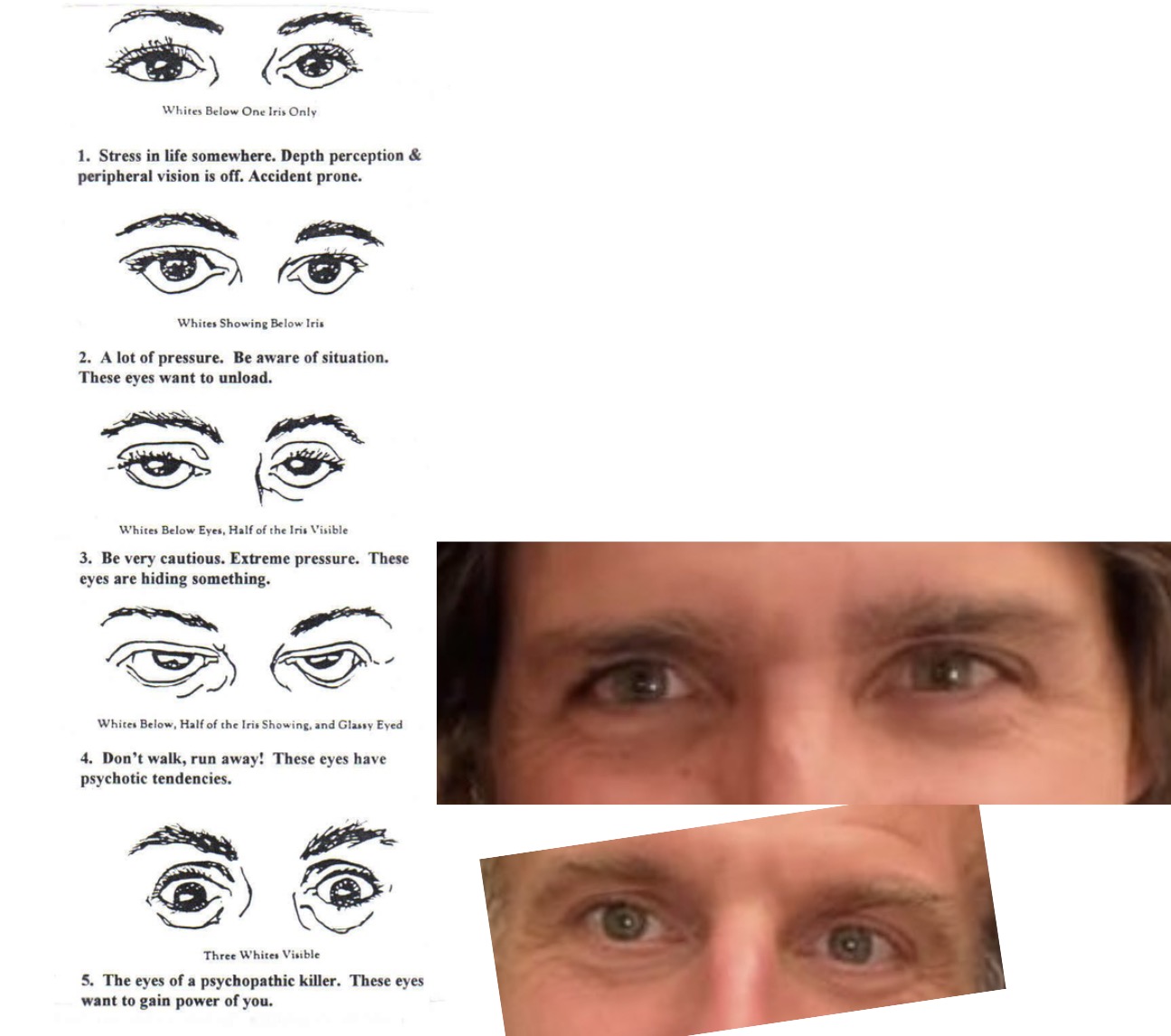
Sanpaku Eyes

I don’t know if anyone has ever heard of the concept of Sanpaku Eyes. It’s pretty wild… This is an actual image, and I cut out their eyes and overlay them next to the appropriate eyes

post photo preview
post photo preview
post photo preview
The Barnes Brief: Friday, November 20, 2026
I. THE INTRODUCTION
 

Special Notices

 
A. Art of the Day 
  • My kind of private library, deep leather bound seats (hopefully hand constructed), dark wood floors, high ceilings, embredded bookshevles filles with old and new books alike, a softly lantern-lit, a lifesize open window to the outside, where the water flows into the mind’s eye, a marriage of the inner and outer worlds, like rivers of thoughts flowing inside the mind. 
 
B. Wisdom of the Day
 
  • “That serpent’s eye, that charms to destroy” describing military glory. Abraham Lincoln. 
 
C. Appearances & Publications
 
 
D. Daily Picks
 
E. *Bonus: Board Post of the Week
 
II. THE EVIDENCE: BARNES LIBRARY
 
A. Food & Medicine
 
B. Economics
 
C. Politics
 
D. Geopolitics
 
E. Culture, Law & History
 
III. HOMEWORK: Ten of the Top Cases for Sunday Show
  1. Brian Cole wins right to counsel.  https://x.com/thevivafrei/status/2123561915452465280?a=EZhRDvbreiFndmq05xg&s=20
  2. University held liable for metoo hoax. https://www.thecollegefix.com/jury-holds-u-maryland-liable-after-cleared-student-was-labeled-rapist-ousted-from-lacrosse-team/
  3. Genocide at ICC. https://israellegaldispatch.substack.com/p/preliminary-thoughts-on-icj-the-gambia
  4. Commie judges. https://storage.courtlistener.com/recap/gov.uscourts.mad.302017/gov.uscourts.mad.302017.91.0.pdf
  5. 2ndA win. https://www.ca5.uscourts.gov/opinions/pub/24/24-30241-CR0.pdf
  6. Attack on vaccine exemptions. https://x.com/AbigailIovine/status/2123220596460785911?a=VMpap3nE7GE-gD6fd4w&s=20
  7. EU sanctions. https://x.com/BowesChay/status/2123086142689984784?a=nRse5zI29bC4_eRamLg&s=20
  8. FOIA fight. https://x.com/TomFitton/status/2122774146354708898?a=5AjlqO0kOeA5dtAPcdo&s=20
  9. Horse carriages banned. https://www.nbcnewyork.com/news/local/nyc-officially-bans-horse-drawn-carriages-starting-in-june-2028/6574230/
  10. Surveillance state. https://media.ca7.uscourts.gov/cgi-bin/OpinionsWeb/processWebInputExternal.pl?Submit=Display&Path=Y2026/D11-18/C:25-2487:J:Kirsch:aut:T:fnOp:N:3644210:S:0
IV. CLOSING ARGUMENT: Classes in the Constitution — Congressional Power over Foreign Policy
  • The Constitution confers limited powers to the legislative branch — only those “legislative” powers “herein granted” expressly in the Constitution. Those legislative powers are not Constitutionally constricted to solely domestic affairs however.
  • The Constitution’s express powers granted Congress specifc and itemize under Section 8 of Article I encompass legislative powers over America’s foreign policy, including: the power to “law and collect imposts” (as long they are uniform),  to “provide for the common defense”, to borrow from anyone, to  “regulate commerce with foreign nations”, to control the “rule of naturalization” of foreigners into the nation, to regulate “foreign coin”, to “define and punish piracies and felonies commotted on the high seas”, to “define and punish offences against the law of nations”, “to declare war”, to “grant letters of marque and reprisal”, to “make rules concerning captures on land and water”, to raise and support armies” (at two-year limits), to “provide and maintan a navy”, to “make rules for the regulation of the land and naval forces”, to provide for calling for the militia,” to “repel invasions”, to provide for the governing of the militia including “organizing, arming and disciplining” as well as to “exercise authority” over all “forts, magazines, arsenals” as federal territory, and finally the implied powers “to make all laws which shall be necessary and proper for carrying into execution the forgoing powers.”
  • As to kinetic conflict, the powers give expressly and exclusively to Congress the power “to declare war” as well as the then establishmed means of using martial power, such as the power to “raise and support” Armies, to govern how to call up the militia, including power over the militia and the federal tirritory of forts.
  • By contrast, all “executive power” vested in the President encompassed enforcement of those decisions not the initiation of those decisions. Only after Congress “raised and supported” an Army could the President become the “Commander in Chief” of that Army, limiting even his power to make Treaties to whose that receive two-thirds Consent of the Senate. The duty of the President requires only that he faithfully execute the laws of the land, not that he write those laws himself.
  • Who agreed? President George Washington himself. In his correspondence to General Moultrie concerning the Creek conflict along the South Carolina borders, President Washington explained in plain english. Congressional approval “would be essential to an offensive expedition” of any military kind. Washington emphasized accurate information was essential, as was public debate and Congressional consent be informed by true and accurate facts. Military offensive means was only for “whenever Congress should decide that measure to be proper and necessary.” As Washington explicated: “The Constitution vests the power of declaraing War with Congress.” Washington further explained the meaning of war: any “offensive expedition of importance” using martial means. This required Congress obtain sufficient and true information as no military operations could be “undertaken” until and unless Congress “deliberated upon the subject and authorized such a measure.”
  • James Madison explained the same: “in no part of the constitution ios more wisdom to be found than in the clause which confides the question of war or peace to the legislatiure and not the executive department.” This is because the power of war “would be too great” a “temptation” for “any one man.” The “ambition, avarice, vanity, the venial love of fame are all in conspiracy against the desire and duty of peace.” As President in 1812, he followed that in requesting Congressional consent and assent to the War of 1812.
  • Alexander Hamilton contrasted America to imperial rule, highlighting the power to go to war, and even to raise an army, rightly remained only to the legislative branch of government, to avoid the dangers inherent in the power of and over starting war. Critically he did so to get public acceptance of the Constitution replacing the Articles of Confederation.
  • President Adams recognized the same in his correspondence to Congress noting he needed their authority merely to do more than defend the coastline during the conflict with France with any kind of initiation of offensive action.
  • Thomas Jefferson concurred, noting in his correspondence to Madison the critical and essential role the Constitituion providing “one effectual check to the Dog of war by transferring the power of letting him loose from the Executive to the Legislative body.” As President Jefferson would follow this principle in the conflict with the Barbary Pirates, noting the Navy could take no more action than defensive action against attacks without Congressional consent. Jefferson noted the incapacity of offensive operations without Congressional consent led to the disabling of vessels and surrendered adversaries freed. As Jefferson reiterated, offensive actions could only occur when authorized by the Constitution through the sanction of Congress.  Jefferson recommended Congressional authorization to “place our force on an equal footing with that of its adversaries.”
  • Our founders knew: never give the power to start war to a single man. 

Read full Article
post photo preview
The Barnes Brief: Sunday, November 15, 2026
I. THE INTRODUCTION
 

Special Notices

 
A. Art of the Day 
  • The way of life along the then American frontier, the reflections off the lazy river, the natural background fading into view, the foggy morning feel of the skyline, the black cat just sitting afoot monitoring, as Bingham’s portrait of early Americans beckons to a time of slow Sunday mornings amidst nature, hope and exploration around the corner of the waterway and the passing of the hour. 
 
B. Wisdom of the Day
 
  • Why should we take the bread out of the mouths of our own children and give it to strangers?” John Adams. 
 
C. Appearances & Publications
 
 
D. Daily Picks
 
E. *Bonus: Board Post of the Week
 
II. THE EVIDENCE: BARNES LIBRARY
 
A. Food & Medicine
 
B. Economics
 
C. Politics
 
D. Geopolitics
 
E. Culture, Law & History
 
III. HOMEWORK: Ten of the Top Cases for Sunday Show
  1. SCOTUS: Asylum power of the President. https://www.supremecourt.gov/DocketPDF/26/26-239/419860/20260824104858426_Mullin_v_RAICES_petition_final.pdf
  2. SCOTUS: SEC power. https://www.supremecourt.gov/DocketPDF/25/25-944/428786/20261007154234084_25-944_Robinhood_CVSG_final.pdf
  3. SCOTUS: Administrative state power. https://www.scotusblog.com/2026/11/justices-see-immigration-contract-dispute-as-raising-the-possibility-of-major-limits-on-administ/
  4. Court protects immigrant drivers. https://www.courthousenews.com/wp-content/uploads/2026/11/dot-cdl-ruling-immigration-circuit.pdf
  5. Cooper or fiber? https://www.courthousenews.com/wp-content/uploads/2026/11/att-v-comcast-complaint.pdf
  6. Feds vs State on Prediction Markets. https://courthousenews.com/wp-content/uploads/2026/11/cftc-vs-state-of-arkansas-complaint.pdf
  7. 2ndA win against New York. https://www.courthousenews.com/wp-content/uploads/2026/11/second-circuit-nyc-handgun-ruling-nov-2026.pdf
  8. Judge removed. https://www.courthousenews.com/wp-content/uploads/2026/11/robert-draper-decision-order.pdf
  9. Court orders illegal returned. https://www.courthousenews.com/wp-content/uploads/2026/11/no-stay-for-ice-in-deportee-retrieval.pdf
  10. ICE riot ruling. https://cdn.ca9.uscourts.gov/datastore/opinions/2026/11/10/26-1609.pdf
 
IV. CLOSING ARGUMENT: Classes in the Constitution — The Importance of Ties to America 
  • The Constitution rejects the idea that anyone nautralized as a citizen shares the same trustworthy commitment to the country’s well being as a native born American or a citizen residing in the nation for many years. The concept of extended committment to the country and maturation of experience as essential prerequisites for wielding power animates the Constitution.
  • Section 2 of Article I of the Constitution constricts who can wield legislative power in the House of Representatives to 1/ a certain minimum age of 25; 2/ citizens; 3/ citizens for at least 7 years; and 4/ an inhabitant of the representative state.
  • Section 3 of Article I of the Constitution constricts who can wield legislative power in the Senate to 1/ minimum age of 30 years; 2/ citizens; 3/ a citizen for at least 9 years; and 4/ an inhabitant of the state they represent.
  • Concern of foreign meddling led to Section 9 of Article I prohibiting any “title of nobility” to anyone, anywhere, with special concern that no office holder can, without the express Consent of Congress, “accept any present, emolument, office, or title, of any kind, whatever, from any King, Prince or foreign state.”  Equally, one of the few powers stripped of individual states in Section 10 of Article I constricted the power of a state to engage with foreign nations on trade, war, or any kind of agreement or compact with a foreign power.
  • Section 1 of Article II goes further, restricting the executive power to only “a natural born citizen” at least 35 years of agent and fourteen years a resident. The length of communal ties and life experience so deeply intertwined with Constitutional qualification for office reinforced the relevancy of birth and community committment that cannot be duplicated by foreign birth and recent presence.
  • Of note, an auspicious absence in Constitutional qualifications and conditions for holding federal power is for the unelected officialdom, such as the judiciary, military and bureaucracy, as the founders largely overlooked the potency of these positions over time.  
Read full Article
post photo preview
The Barnes Brief: November 6, 2026
I. THE INTRODUCTION
 

Special Notices

 
A. Art of the Day 
  • A common source of painting over the years: the Charles Bridge in Prague, it’s broad pathway bordered by statues of saints over the centuries blessing the passers by. In the eye’s view awaits towering buildings criss-crossing the ages of architecture, from the Romanesque to the Cubist, the Gothic sprites to Rennaisance palaces, from the Baroque glamor to the Art Nouveau throwbacks. Prague — the place where a local biker barking at you on Kafka street seems strangely in sync with the wild styles that speak to you across its skyline, where a visit to a local cafe invites you back into a 12th century cave where dissidents hid out and plotted revolutions.  All of it you can glimpse from the bridge that bridges time itself across its skyline. 
 
B. Wisdom of the Day
 
  • "No man is big enough to run this great Republic. There never has been one. Such domination was never intended. Tranquillity, stability, dependability—all are assured in party sponsorship. and we mean to renew the assurances which were rended in the cataclysmal war.” Warren Harding, July 1920. 

 
C. Appearances & Publications
 
 
D. Daily Picks
 
E. *Bonus: Board Post of the Day
 
II. THE EVIDENCE: BARNES LIBRARY
 
A. Food & Medicine
 
B. Economics
 
C. Politics
 
D. Geopolitics
 
E. Culture & History
 
III. HOMEWORK: Ten of the Top Cases for Sunday Show
  1. Dhillon out. https://www.nytimes.com/2026/11/05/us/politics/harmeet-dhillon-resigns-doj-civil-rights-unit.html
  2. Brennan potential prosecutor out. https://thehill.com/regulation/court-battles/6203924-reding-quinones-doj-resignation/
  3. Big Tech demands right to harm kids. https://www.courthousenews.com/wp-content/uploads/2026/11/meta-v-bonta-complaint.pdf
  4. Trump project blocked. https://www.courthousenews.com/wp-content/uploads/2026/11/chutkan-trump-memorial-arch-blocked-opinion.pdf
  5. Ukraine abuse exposed. https://courthousenews.com/wp-content/uploads/2026/11/gandzyuk-and-others-v-ukraine-echr-judgment.pdf
  6. Immunity at SCOTUS. https://www.courthousenews.com/wp-content/uploads/2026/11/nielsen-scotus-cato-amicus.pdf
  7. Brand convicted. https://www.reuters.com/world/comedian-russell-brand-found-guilty-rape-2026-11-05/
  8. Business reviews and libel law. https://courthousenews.com/minnesota-high-court-urged-to-shield-negative-google-reviews-from-defamation-suits/
  9. Panhandling ban held unconstitutional. https://media.ca11.uscourts.gov/opinions/unpub/files/202311163.pdf
  10. European censorship laws expand. https://rmx.news/article/prison-time-for-discussing-the-great-replacement-french-left-wing-lawmakers-push-for-new-draconian-law/
 
IV. CLOSING ARGUMENT: Classes in the Constitution — Presidential Impeachment
  • The Constitution confers the power of removal of the President through impeachment to Congress, and Congress alone.
  • First, Section 2 of Article I governing the legislative powers of the federal government provide the House “shall have the sole Power of Impeachment” acting as the grand jury function in the impeachment process. The Senate has no role in initiating impeachment, and can only act if the House acts first. The absence of super-majority requirements provide the House to allow impeachment by a mere majority of it’s members present, like any other legislative act.
  • Second, section 4 of Article II cabins what can constitute grounds for impeachment can result in removal, conditioning it upon three substantive claims — treason, bribery or other high crimes and misdemeanors, No specific definition is given of what constitutes “high crimes” but its analogy to treason and bribery provide some direction, as does the historical understanding of the term at the time of ratification — the kind of criminal act that endangers the Constitutional republic and cannot be answered by awaiting a Presidential election.  Treason itself is Constitutionally constricted definitionally in section 3 of Article 3 to “consist only in leving war, or in adhering to their Enemeies, giving them aid and comfort.”
  • Third, Section 3 of Article I imposes further substantive constraints on Impeachment by limiting the legal consequences of impeachment “shall not extend further than to removal from Office, and disqualification to hold and enjoy any Office of honor, Trust or Profit under the United States” while coequally providing that conviction in impeachment does not act as double jeopardy against subsequent criminal prosecution.
  • Fourth, Section 2 of Article 3 removes jury trials from “cases of impeachment” and removes the judicial branch from the Presidential impeachment process except for one limited role: the Chief Justice presiding over the trial.  Under Clause 6 of Section 4 of Article I, the Constitution confers the “sole power to try all impeachments” to the Senate, requiring a “concurrence of two thirds of the members present” to convict.
  • Fifth, the judgment of conviction is not appealable to any other body, and the Senate’s declaration according to its own roles immedietly effects “removal from office.” It has no retroactive or retrospective effect on the legality or validity of any prior Presidential act, even if that act is the grounds for impeachment and conviction itself. Other than Chief Judge setting the rule for evidence admission, the interpretation of the impeachment clause and its impact is left to the judgment of the House and Senate alike. Theoretically, a Chief Justice could impose a different intepretation on the substantive meaning of the conditions of conviction, given its power to “preside over” the trial, but has generally not been interpreted or applied in that manner. 
Read full Article
See More
Available on mobile and TV devices
google store google store app store app store
google store google store app tv store app tv store amazon store amazon store roku store roku store
Powered by Locals