





I. THE INTRODUCTION
Special Notices
- Watch the whole conference & support 1776 Law Center. https://www.1776lawcenter.com/2026-conference/v/robert-barnes
A. Art of the Day
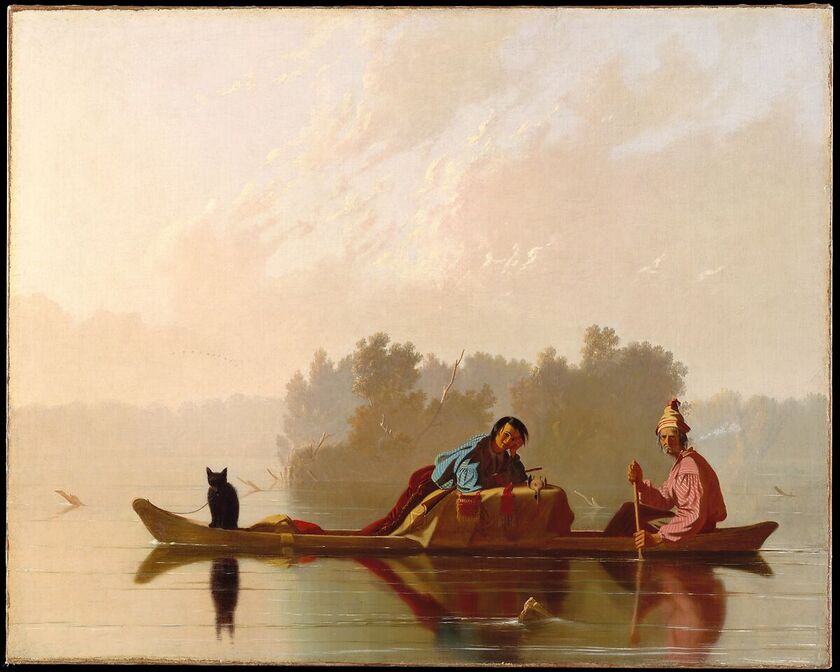
- My kind of private library, deep leather bound seats (hopefully hand constructed), dark wood floors, high ceilings, embredded bookshevles filles with old and new books alike, a softly lantern-lit, a lifesize open window to the outside, where the water flows into the mind’s eye, a marriage of the inner and outer worlds, like rivers of thoughts flowing inside the mind.
B. Wisdom of the Day
- “That serpent’s eye, that charms to destroy” describing military glory. Abraham Lincoln.
C. Appearances & Publications
- Uploading clips to individual channel. https://www.youtube.com/@robertbarnes5175/videos
- Daniel Davis.
- Stanislav.
- Dialogue Works.
- Baris.
- Going Underground.
- The Duran
- LIVE AMA https://sportspicks.locals.com/post/8336481/betting-w-barnes-friday-november-20-2026
D. Daily Picks
E. *Bonus: Board Post of the Week
II. THE EVIDENCE: BARNES LIBRARY
A. Food & Medicine
B. Economics
C. Politics
D. Geopolitics
- New parties rise in UK. https://x.com/RupertLowe10/status/2123552938547089785?a=m1m-504OCT3ymeAHc80&s=20
E. Culture, Law & History
- Rubio’s Anti-American Worldview. https://thebarnesbrief.substack.com/p/rubios-anti-american-worldview-the
III. HOMEWORK: Ten of the Top Cases for Sunday Show
- Brian Cole wins right to counsel. https://x.com/thevivafrei/status/2123561915452465280?a=EZhRDvbreiFndmq05xg&s=20
- University held liable for metoo hoax. https://www.thecollegefix.com/jury-holds-u-maryland-liable-after-cleared-student-was-labeled-rapist-ousted-from-lacrosse-team/
- Genocide at ICC. https://israellegaldispatch.substack.com/p/preliminary-thoughts-on-icj-the-gambia
- Commie judges. https://storage.courtlistener.com/recap/gov.uscourts.mad.302017/gov.uscourts.mad.302017.91.0.pdf
- 2ndA win. https://www.ca5.uscourts.gov/opinions/pub/24/24-30241-CR0.pdf
- Attack on vaccine exemptions. https://x.com/AbigailIovine/status/2123220596460785911?a=VMpap3nE7GE-gD6fd4w&s=20
- EU sanctions. https://x.com/BowesChay/status/2123086142689984784?a=nRse5zI29bC4_eRamLg&s=20
- FOIA fight. https://x.com/TomFitton/status/2122774146354708898?a=5AjlqO0kOeA5dtAPcdo&s=20
- Horse carriages banned. https://www.nbcnewyork.com/news/local/nyc-officially-bans-horse-drawn-carriages-starting-in-june-2028/6574230/
- Surveillance state. https://media.ca7.uscourts.gov/cgi-bin/OpinionsWeb/processWebInputExternal.pl?Submit=Display&Path=Y2026/D11-18/C:25-2487:J:Kirsch:aut:T:fnOp:N:3644210:S:0
IV. CLOSING ARGUMENT: Classes in the Constitution — Congressional Power over Foreign Policy
- The Constitution confers limited powers to the legislative branch — only those “legislative” powers “herein granted” expressly in the Constitution. Those legislative powers are not Constitutionally constricted to solely domestic affairs however.
- The Constitution’s express powers granted Congress specifc and itemize under Section 8 of Article I encompass legislative powers over America’s foreign policy, including: the power to “law and collect imposts” (as long they are uniform), to “provide for the common defense”, to borrow from anyone, to “regulate commerce with foreign nations”, to control the “rule of naturalization” of foreigners into the nation, to regulate “foreign coin”, to “define and punish piracies and felonies commotted on the high seas”, to “define and punish offences against the law of nations”, “to declare war”, to “grant letters of marque and reprisal”, to “make rules concerning captures on land and water”, to raise and support armies” (at two-year limits), to “provide and maintan a navy”, to “make rules for the regulation of the land and naval forces”, to provide for calling for the militia,” to “repel invasions”, to provide for the governing of the militia including “organizing, arming and disciplining” as well as to “exercise authority” over all “forts, magazines, arsenals” as federal territory, and finally the implied powers “to make all laws which shall be necessary and proper for carrying into execution the forgoing powers.”
- As to kinetic conflict, the powers give expressly and exclusively to Congress the power “to declare war” as well as the then establishmed means of using martial power, such as the power to “raise and support” Armies, to govern how to call up the militia, including power over the militia and the federal tirritory of forts.
- By contrast, all “executive power” vested in the President encompassed enforcement of those decisions not the initiation of those decisions. Only after Congress “raised and supported” an Army could the President become the “Commander in Chief” of that Army, limiting even his power to make Treaties to whose that receive two-thirds Consent of the Senate. The duty of the President requires only that he faithfully execute the laws of the land, not that he write those laws himself.
- Who agreed? President George Washington himself. In his correspondence to General Moultrie concerning the Creek conflict along the South Carolina borders, President Washington explained in plain english. Congressional approval “would be essential to an offensive expedition” of any military kind. Washington emphasized accurate information was essential, as was public debate and Congressional consent be informed by true and accurate facts. Military offensive means was only for “whenever Congress should decide that measure to be proper and necessary.” As Washington explicated: “The Constitution vests the power of declaraing War with Congress.” Washington further explained the meaning of war: any “offensive expedition of importance” using martial means. This required Congress obtain sufficient and true information as no military operations could be “undertaken” until and unless Congress “deliberated upon the subject and authorized such a measure.”
- James Madison explained the same: “in no part of the constitution ios more wisdom to be found than in the clause which confides the question of war or peace to the legislatiure and not the executive department.” This is because the power of war “would be too great” a “temptation” for “any one man.” The “ambition, avarice, vanity, the venial love of fame are all in conspiracy against the desire and duty of peace.” As President in 1812, he followed that in requesting Congressional consent and assent to the War of 1812.
- Alexander Hamilton contrasted America to imperial rule, highlighting the power to go to war, and even to raise an army, rightly remained only to the legislative branch of government, to avoid the dangers inherent in the power of and over starting war. Critically he did so to get public acceptance of the Constitution replacing the Articles of Confederation.
- President Adams recognized the same in his correspondence to Congress noting he needed their authority merely to do more than defend the coastline during the conflict with France with any kind of initiation of offensive action.
- Thomas Jefferson concurred, noting in his correspondence to Madison the critical and essential role the Constitituion providing “one effectual check to the Dog of war by transferring the power of letting him loose from the Executive to the Legislative body.” As President Jefferson would follow this principle in the conflict with the Barbary Pirates, noting the Navy could take no more action than defensive action against attacks without Congressional consent. Jefferson noted the incapacity of offensive operations without Congressional consent led to the disabling of vessels and surrendered adversaries freed. As Jefferson reiterated, offensive actions could only occur when authorized by the Constitution through the sanction of Congress. Jefferson recommended Congressional authorization to “place our force on an equal footing with that of its adversaries.”
- Our founders knew: never give the power to start war to a single man.