








VivaBarnesLaw
Politics • Culture • News
This is the VivaBarnesLaw Community.
Interested? Want to learn more about the community?
March 14, 2023

March 14, 2023 (The White House)

EXECUTIVE ORDER

REDUCING GUN VIOLENCE AND MAKING OUR COMMUNITIES SAFER

By the authority vested in me as President by the Constitution and the laws of the United States of America, I hereby order as follows:

Section 1. Policy. Every few days in the United States, we mourn a new mass shooting. Daily acts of gun violence — including community violence, domestic violence, suicide, and accidental shootings — may not always make the evening news, but they too cut lives short and leave survivors and their communities with long-lasting physical and mental wounds. We cannot accept these facts as the enduring reality of life in America. Instead, we must together insist that we have had enough, and that we will no longer allow the interests of the gun manufacturers to win out over the safety of our children and Nation.

It is the policy of my Administration that executive departments and agencies (agencies) will pursue every legally available and appropriate action to reduce gun violence. Through this whole-of-government approach, my Administration has made historic progress to save lives. My Administration has taken action to keep guns out of dangerous hands and especially dangerous weapons off of our streets; hold gun traffickers and rogue gun dealers accountable; fund accountable, effective community policing; and invest in community violence interventions and prevention strategies.

Last year, I signed into law the Bipartisan Safer Communities Act (the “Act”), the most significant bipartisan gun safety legislation in nearly 30 years. The Act provides communities with new tools to combat gun violence, including enhanced gun background checks for individuals under age 21, funding for extreme risk protection orders and other crisis interventions, and increased mental health resources to help children impacted by gun violence heal from the resulting grief and trauma.

I continue to call on the Congress to take additional action to reduce gun violence, including by banning assault weapons and high-capacity magazines, requiring background checks for all gun sales, requiring safe storage of firearms, funding my comprehensive Safer America Plan, and expanding community violence intervention and prevention strategies. In the meantime, my Administration will continue to do all that we can, within existing authority, to make our communities safer.

Sec. 2. Implementation of the Bipartisan Safer Communities Act. The Attorney General, the Secretary of Health and Human Services, the Secretary of Education, and the Secretary of Homeland Security shall each submit a report to the President within 60 days of the date of this order describing what actions their respective agencies have taken to implement the Act, data and analysis regarding the use and early effects of the Act, and additional steps their respective agencies will take to maximize the benefits of the Act. These reports shall include a plan for increasing public awareness and use of resources made available by the Act.

Sec. 3. Additional Agency Actions to Reduce Gun Violence. (a) The Attorney General shall develop and implement a plan to:

(i) clarify the definition of who is engaged in the business of dealing in firearms, and thus required to become Federal firearms licensees (FFLs), in order to increase compliance with the Federal background check requirement for firearm sales, including by considering a rulemaking, as appropriate and consistent with applicable law;

Related video: Biden expected to sign new executive order on gun control (Dailymotion)

(ii) prevent former FFLs whose licenses have been revoked or surrendered from continuing to engage in the business of dealing in firearms;

(iii) publicly release, to the fullest extent permissible by law, inspection reports of FFL dealers cited for violations of the law; and

(iv) support efforts to modernize and make permanent the Undetectable Firearms Act (18 U.S.C. 922(p)).

(b) The Secretary of Defense; the Attorney General; the Secretary of Homeland Security; the Secretary of Health and Human Services, including through the Surgeon General of the United States; the Secretary of Education; and the Secretary of Veterans Affairs shall expand existing Federal campaigns and other efforts to promote safe storage of firearms.

(c) The Secretary of Defense; the Attorney General; the Secretary of Homeland Security; the Secretary of Health and Human Services, including through the Surgeon General of the United States; and the Secretary of Education shall undertake efforts to encourage effective use of extreme risk protection orders (“red flag” laws), partnering with law enforcement, health care providers, educators, and other community leaders.

(d) The Attorney General; the Secretary of Health and Human Services, including through the Surgeon General of the United States; the Secretary of Education; the Secretary of Homeland Security; the Director of the Office of Management and Budget; and the heads of other agencies, as appropriate, shall develop a proposal for the President, and submit it no later than September 15, 2023, on how the Federal Government can better support the recovery, mental health, and other needs of survivors of gun violence, families of victims and survivors of gun violence, first responders to incidents of gun violence, and communities affected by gun violence. The proposal should draw on existing evidence, where available, and take into account how to address needs in both the immediate aftermath of mass shootings and in the years following such events. The proposal should recommend any additional executive branch coordination and additional resources or authorities from the Congress needed to implement the proposal, as well as how agencies will assess the outcomes for the activities implemented.

(e) The Secretary of Defense, in consultation with the Attorney General and the Secretary of Homeland Security, shall develop and implement principles to further firearm and public safety practices through the Department of Defense’s acquisition of firearms, consistent with applicable law.

(f) The heads of Federal law enforcement agencies shall, as soon as practicable, but no later than 180 days from the date of this order, ensure that their respective law enforcement components issue National Integrated Ballistic Information Network (NIBIN) submission and utilization policies with requirements that are equivalent to, or exceed, the requirements of the policy issued by the Department of Justice on December 12, 2022, to ensure the prompt entry of ballistics data recovered in connection with criminal investigations into NIBIN. In consultation with the Department of Justice, the Department of Defense policies may be tailored to address specific operational considerations.

(g) The Secretary of Transportation, in consultation with the Department of Justice, shall work to reduce the loss or theft of firearms during shipment between FFLs and to improve reporting of such losses or thefts, including by engaging with carriers and shippers.

(h) The Federal Trade Commission is encouraged to issue a public report analyzing how gun manufacturers market firearms to minors and how such manufacturers market firearms to civilians, including through the use of military imagery.

Interested? Want to learn more about the community?
What else you may like…
Videos
Podcasts
Posts
Articles
November 19, 2026
Typical morning at Casa Viva

I don’t know how the chickens managed to get in the house.

Just kidding, I know exactly who took them in the house!

00:00:46
November 17, 2026
Bowling now

Bowling above average, but I got this one!

00:00:35
November 17, 2026
Feeding the chicks

Manny really is the cutest dog on earth!

The irony is that Winnie, the blind one, can’t be trusted anywhere near the birds.

00:01:27
February 17, 2024
Appearance on Richard Syrette

I did a quick hit on Richard Syrette yesterday. Gotta keep Canadians apprised of the U.S. madness.

Appearance on Richard Syrette
The Barnes Brief, Podcast Format: Monday, July 17, 2023

Closing Argument: Birthright citizenship is deeply American, and wholly Constitutional.

The Barnes Brief, Podcast Format: Monday, July 17, 2023
Declaration of Independence

Audio podcast style.

Declaration of Independence
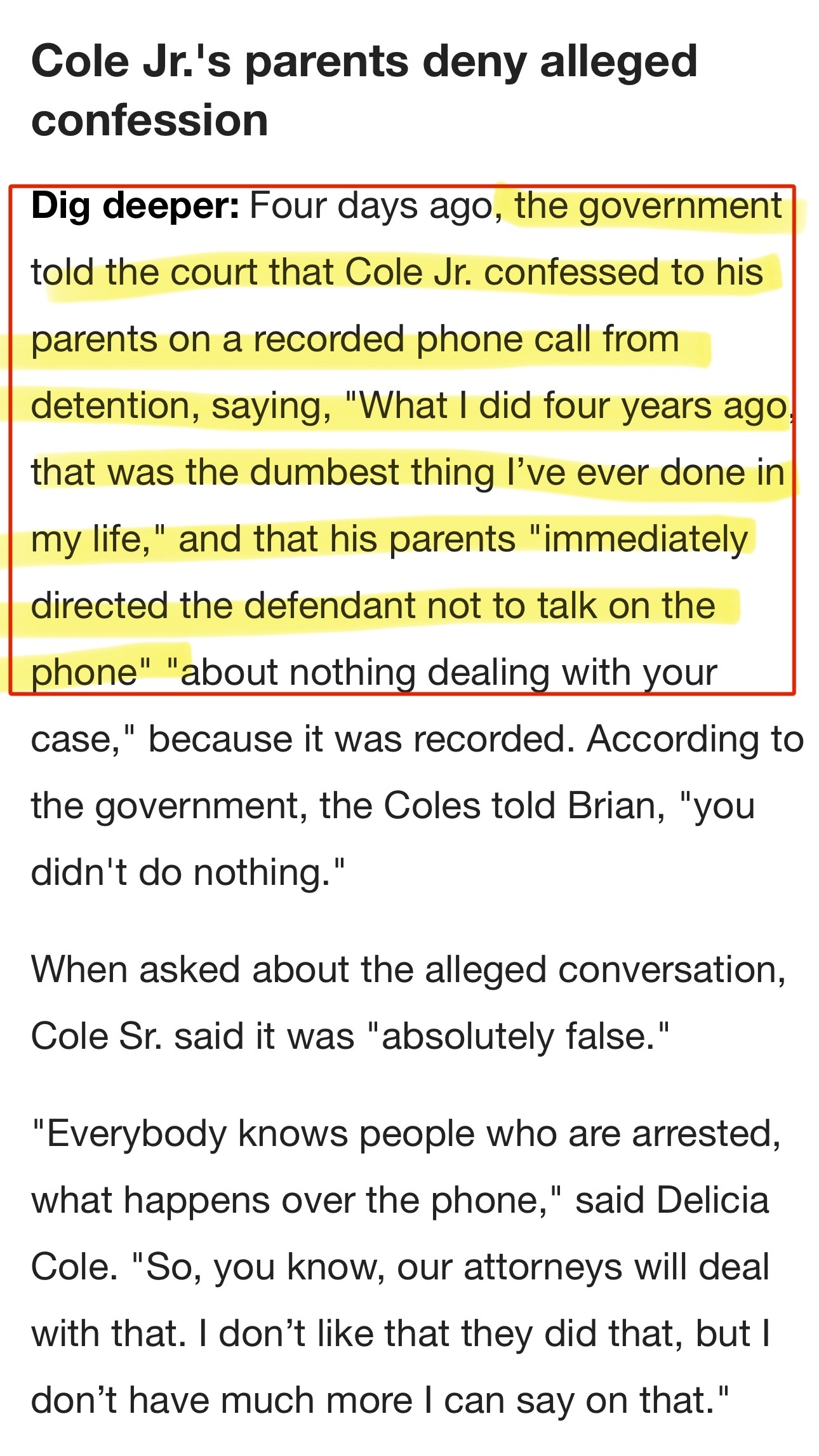
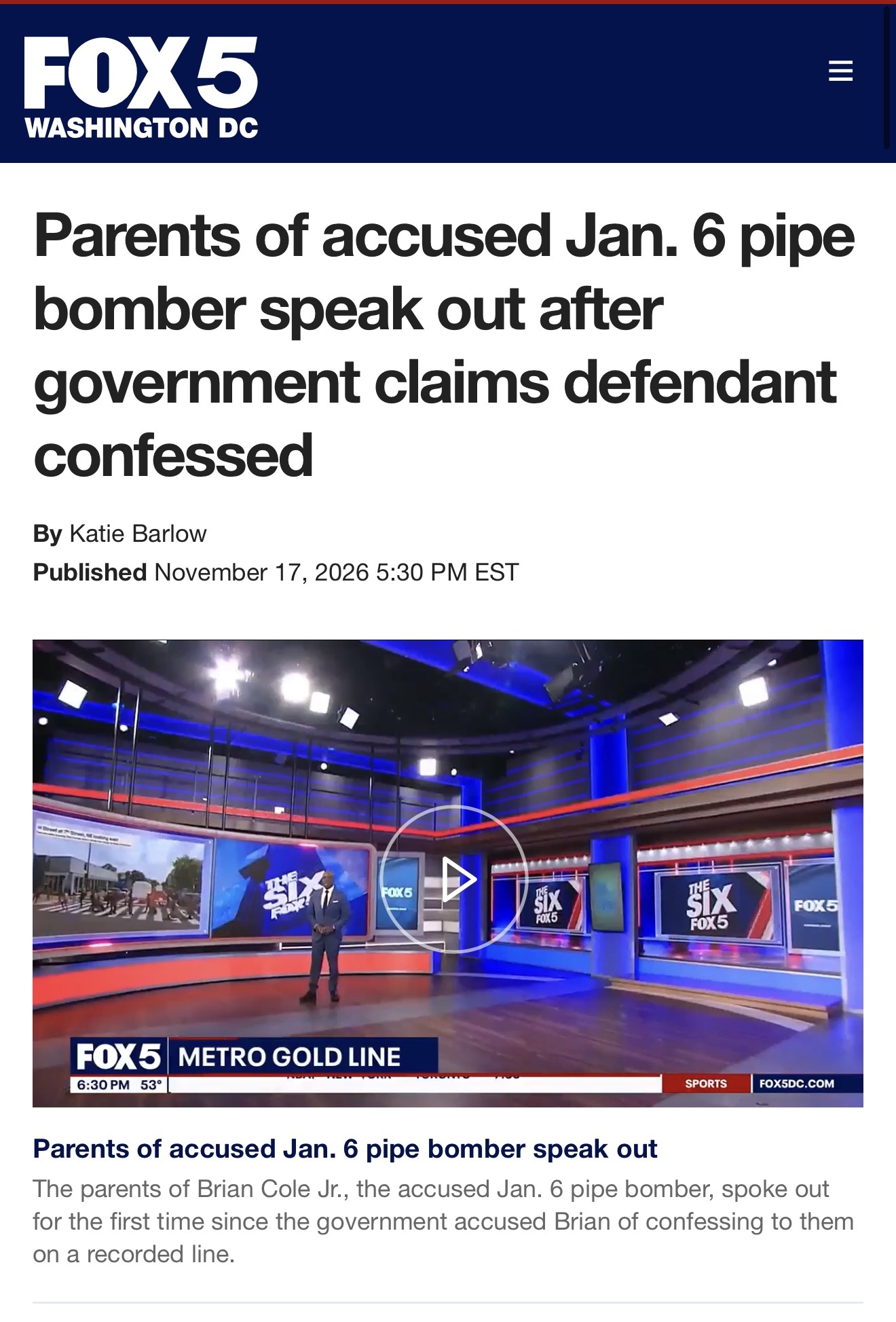
Brian Cole Jr. “confession” from jail

Apparently, Brian confessed to his parents on a recorded line from jail.

I appreciate the spy on recorded lines from jail. Most people know that.

Except perhaps an autistic man might not fully appreciate it.

These scumbags were so concerned about his ineffective counsel they wanted it to disqualify his attorneys… Now they are spying on private conversations between him and his parents in the absence of counsel.

Absolutely grotesque.

https://www.fox5dc.com/news/parents-accused-jan-6-pipe-bomber-speak-out-after-government-claims-defendant-confessed.amp

Questions for Bourbon with Barnes: Thursday, November 19, 2026

Ask in replies and answering Live at 9ish eastern tonight.

Memories from my last "boat therapy session."

post photo preview
The Barnes Brief: Friday, November 20, 2026
I. THE INTRODUCTION
 

Special Notices

 
A. Art of the Day 
  • My kind of private library, deep leather bound seats (hopefully hand constructed), dark wood floors, high ceilings, embredded bookshevles filles with old and new books alike, a softly lantern-lit, a lifesize open window to the outside, where the water flows into the mind’s eye, a marriage of the inner and outer worlds, like rivers of thoughts flowing inside the mind. 
 
B. Wisdom of the Day
 
  • “That serpent’s eye, that charms to destroy” describing military glory. Abraham Lincoln. 
 
C. Appearances & Publications
 
 
D. Daily Picks
 
E. *Bonus: Board Post of the Week
 
II. THE EVIDENCE: BARNES LIBRARY
 
A. Food & Medicine
 
B. Economics
 
C. Politics
 
D. Geopolitics
 
E. Culture, Law & History
 
III. HOMEWORK: Ten of the Top Cases for Sunday Show
  1. Brian Cole wins right to counsel.  https://x.com/thevivafrei/status/2123561915452465280?a=EZhRDvbreiFndmq05xg&s=20
  2. University held liable for metoo hoax. https://www.thecollegefix.com/jury-holds-u-maryland-liable-after-cleared-student-was-labeled-rapist-ousted-from-lacrosse-team/
  3. Genocide at ICC. https://israellegaldispatch.substack.com/p/preliminary-thoughts-on-icj-the-gambia
  4. Commie judges. https://storage.courtlistener.com/recap/gov.uscourts.mad.302017/gov.uscourts.mad.302017.91.0.pdf
  5. 2ndA win. https://www.ca5.uscourts.gov/opinions/pub/24/24-30241-CR0.pdf
  6. Attack on vaccine exemptions. https://x.com/AbigailIovine/status/2123220596460785911?a=VMpap3nE7GE-gD6fd4w&s=20
  7. EU sanctions. https://x.com/BowesChay/status/2123086142689984784?a=nRse5zI29bC4_eRamLg&s=20
  8. FOIA fight. https://x.com/TomFitton/status/2122774146354708898?a=5AjlqO0kOeA5dtAPcdo&s=20
  9. Horse carriages banned. https://www.nbcnewyork.com/news/local/nyc-officially-bans-horse-drawn-carriages-starting-in-june-2028/6574230/
  10. Surveillance state. https://media.ca7.uscourts.gov/cgi-bin/OpinionsWeb/processWebInputExternal.pl?Submit=Display&Path=Y2026/D11-18/C:25-2487:J:Kirsch:aut:T:fnOp:N:3644210:S:0
IV. CLOSING ARGUMENT: Classes in the Constitution — Congressional Power over Foreign Policy
  • The Constitution confers limited powers to the legislative branch — only those “legislative” powers “herein granted” expressly in the Constitution. Those legislative powers are not Constitutionally constricted to solely domestic affairs however.
  • The Constitution’s express powers granted Congress specifc and itemize under Section 8 of Article I encompass legislative powers over America’s foreign policy, including: the power to “law and collect imposts” (as long they are uniform),  to “provide for the common defense”, to borrow from anyone, to  “regulate commerce with foreign nations”, to control the “rule of naturalization” of foreigners into the nation, to regulate “foreign coin”, to “define and punish piracies and felonies commotted on the high seas”, to “define and punish offences against the law of nations”, “to declare war”, to “grant letters of marque and reprisal”, to “make rules concerning captures on land and water”, to raise and support armies” (at two-year limits), to “provide and maintan a navy”, to “make rules for the regulation of the land and naval forces”, to provide for calling for the militia,” to “repel invasions”, to provide for the governing of the militia including “organizing, arming and disciplining” as well as to “exercise authority” over all “forts, magazines, arsenals” as federal territory, and finally the implied powers “to make all laws which shall be necessary and proper for carrying into execution the forgoing powers.”
  • As to kinetic conflict, the powers give expressly and exclusively to Congress the power “to declare war” as well as the then establishmed means of using martial power, such as the power to “raise and support” Armies, to govern how to call up the militia, including power over the militia and the federal tirritory of forts.
  • By contrast, all “executive power” vested in the President encompassed enforcement of those decisions not the initiation of those decisions. Only after Congress “raised and supported” an Army could the President become the “Commander in Chief” of that Army, limiting even his power to make Treaties to whose that receive two-thirds Consent of the Senate. The duty of the President requires only that he faithfully execute the laws of the land, not that he write those laws himself.
  • Who agreed? President George Washington himself. In his correspondence to General Moultrie concerning the Creek conflict along the South Carolina borders, President Washington explained in plain english. Congressional approval “would be essential to an offensive expedition” of any military kind. Washington emphasized accurate information was essential, as was public debate and Congressional consent be informed by true and accurate facts. Military offensive means was only for “whenever Congress should decide that measure to be proper and necessary.” As Washington explicated: “The Constitution vests the power of declaraing War with Congress.” Washington further explained the meaning of war: any “offensive expedition of importance” using martial means. This required Congress obtain sufficient and true information as no military operations could be “undertaken” until and unless Congress “deliberated upon the subject and authorized such a measure.”
  • James Madison explained the same: “in no part of the constitution ios more wisdom to be found than in the clause which confides the question of war or peace to the legislatiure and not the executive department.” This is because the power of war “would be too great” a “temptation” for “any one man.” The “ambition, avarice, vanity, the venial love of fame are all in conspiracy against the desire and duty of peace.” As President in 1812, he followed that in requesting Congressional consent and assent to the War of 1812.
  • Alexander Hamilton contrasted America to imperial rule, highlighting the power to go to war, and even to raise an army, rightly remained only to the legislative branch of government, to avoid the dangers inherent in the power of and over starting war. Critically he did so to get public acceptance of the Constitution replacing the Articles of Confederation.
  • President Adams recognized the same in his correspondence to Congress noting he needed their authority merely to do more than defend the coastline during the conflict with France with any kind of initiation of offensive action.
  • Thomas Jefferson concurred, noting in his correspondence to Madison the critical and essential role the Constitituion providing “one effectual check to the Dog of war by transferring the power of letting him loose from the Executive to the Legislative body.” As President Jefferson would follow this principle in the conflict with the Barbary Pirates, noting the Navy could take no more action than defensive action against attacks without Congressional consent. Jefferson noted the incapacity of offensive operations without Congressional consent led to the disabling of vessels and surrendered adversaries freed. As Jefferson reiterated, offensive actions could only occur when authorized by the Constitution through the sanction of Congress.  Jefferson recommended Congressional authorization to “place our force on an equal footing with that of its adversaries.”
  • Our founders knew: never give the power to start war to a single man. 

Read full Article
post photo preview
The Barnes Brief: Sunday, November 15, 2026
I. THE INTRODUCTION
 

Special Notices

 
A. Art of the Day 
  • The way of life along the then American frontier, the reflections off the lazy river, the natural background fading into view, the foggy morning feel of the skyline, the black cat just sitting afoot monitoring, as Bingham’s portrait of early Americans beckons to a time of slow Sunday mornings amidst nature, hope and exploration around the corner of the waterway and the passing of the hour. 
 
B. Wisdom of the Day
 
  • Why should we take the bread out of the mouths of our own children and give it to strangers?” John Adams. 
 
C. Appearances & Publications
 
 
D. Daily Picks
 
E. *Bonus: Board Post of the Week
 
II. THE EVIDENCE: BARNES LIBRARY
 
A. Food & Medicine
 
B. Economics
 
C. Politics
 
D. Geopolitics
 
E. Culture, Law & History
 
III. HOMEWORK: Ten of the Top Cases for Sunday Show
  1. SCOTUS: Asylum power of the President. https://www.supremecourt.gov/DocketPDF/26/26-239/419860/20260824104858426_Mullin_v_RAICES_petition_final.pdf
  2. SCOTUS: SEC power. https://www.supremecourt.gov/DocketPDF/25/25-944/428786/20261007154234084_25-944_Robinhood_CVSG_final.pdf
  3. SCOTUS: Administrative state power. https://www.scotusblog.com/2026/11/justices-see-immigration-contract-dispute-as-raising-the-possibility-of-major-limits-on-administ/
  4. Court protects immigrant drivers. https://www.courthousenews.com/wp-content/uploads/2026/11/dot-cdl-ruling-immigration-circuit.pdf
  5. Cooper or fiber? https://www.courthousenews.com/wp-content/uploads/2026/11/att-v-comcast-complaint.pdf
  6. Feds vs State on Prediction Markets. https://courthousenews.com/wp-content/uploads/2026/11/cftc-vs-state-of-arkansas-complaint.pdf
  7. 2ndA win against New York. https://www.courthousenews.com/wp-content/uploads/2026/11/second-circuit-nyc-handgun-ruling-nov-2026.pdf
  8. Judge removed. https://www.courthousenews.com/wp-content/uploads/2026/11/robert-draper-decision-order.pdf
  9. Court orders illegal returned. https://www.courthousenews.com/wp-content/uploads/2026/11/no-stay-for-ice-in-deportee-retrieval.pdf
  10. ICE riot ruling. https://cdn.ca9.uscourts.gov/datastore/opinions/2026/11/10/26-1609.pdf
 
IV. CLOSING ARGUMENT: Classes in the Constitution — The Importance of Ties to America 
  • The Constitution rejects the idea that anyone nautralized as a citizen shares the same trustworthy commitment to the country’s well being as a native born American or a citizen residing in the nation for many years. The concept of extended committment to the country and maturation of experience as essential prerequisites for wielding power animates the Constitution.
  • Section 2 of Article I of the Constitution constricts who can wield legislative power in the House of Representatives to 1/ a certain minimum age of 25; 2/ citizens; 3/ citizens for at least 7 years; and 4/ an inhabitant of the representative state.
  • Section 3 of Article I of the Constitution constricts who can wield legislative power in the Senate to 1/ minimum age of 30 years; 2/ citizens; 3/ a citizen for at least 9 years; and 4/ an inhabitant of the state they represent.
  • Concern of foreign meddling led to Section 9 of Article I prohibiting any “title of nobility” to anyone, anywhere, with special concern that no office holder can, without the express Consent of Congress, “accept any present, emolument, office, or title, of any kind, whatever, from any King, Prince or foreign state.”  Equally, one of the few powers stripped of individual states in Section 10 of Article I constricted the power of a state to engage with foreign nations on trade, war, or any kind of agreement or compact with a foreign power.
  • Section 1 of Article II goes further, restricting the executive power to only “a natural born citizen” at least 35 years of agent and fourteen years a resident. The length of communal ties and life experience so deeply intertwined with Constitutional qualification for office reinforced the relevancy of birth and community committment that cannot be duplicated by foreign birth and recent presence.
  • Of note, an auspicious absence in Constitutional qualifications and conditions for holding federal power is for the unelected officialdom, such as the judiciary, military and bureaucracy, as the founders largely overlooked the potency of these positions over time.  
Read full Article
post photo preview
The Barnes Brief: November 6, 2026
I. THE INTRODUCTION
 

Special Notices

 
A. Art of the Day 
  • A common source of painting over the years: the Charles Bridge in Prague, it’s broad pathway bordered by statues of saints over the centuries blessing the passers by. In the eye’s view awaits towering buildings criss-crossing the ages of architecture, from the Romanesque to the Cubist, the Gothic sprites to Rennaisance palaces, from the Baroque glamor to the Art Nouveau throwbacks. Prague — the place where a local biker barking at you on Kafka street seems strangely in sync with the wild styles that speak to you across its skyline, where a visit to a local cafe invites you back into a 12th century cave where dissidents hid out and plotted revolutions.  All of it you can glimpse from the bridge that bridges time itself across its skyline. 
 
B. Wisdom of the Day
 
  • "No man is big enough to run this great Republic. There never has been one. Such domination was never intended. Tranquillity, stability, dependability—all are assured in party sponsorship. and we mean to renew the assurances which were rended in the cataclysmal war.” Warren Harding, July 1920. 

 
C. Appearances & Publications
 
 
D. Daily Picks
 
E. *Bonus: Board Post of the Day
 
II. THE EVIDENCE: BARNES LIBRARY
 
A. Food & Medicine
 
B. Economics
 
C. Politics
 
D. Geopolitics
 
E. Culture & History
 
III. HOMEWORK: Ten of the Top Cases for Sunday Show
  1. Dhillon out. https://www.nytimes.com/2026/11/05/us/politics/harmeet-dhillon-resigns-doj-civil-rights-unit.html
  2. Brennan potential prosecutor out. https://thehill.com/regulation/court-battles/6203924-reding-quinones-doj-resignation/
  3. Big Tech demands right to harm kids. https://www.courthousenews.com/wp-content/uploads/2026/11/meta-v-bonta-complaint.pdf
  4. Trump project blocked. https://www.courthousenews.com/wp-content/uploads/2026/11/chutkan-trump-memorial-arch-blocked-opinion.pdf
  5. Ukraine abuse exposed. https://courthousenews.com/wp-content/uploads/2026/11/gandzyuk-and-others-v-ukraine-echr-judgment.pdf
  6. Immunity at SCOTUS. https://www.courthousenews.com/wp-content/uploads/2026/11/nielsen-scotus-cato-amicus.pdf
  7. Brand convicted. https://www.reuters.com/world/comedian-russell-brand-found-guilty-rape-2026-11-05/
  8. Business reviews and libel law. https://courthousenews.com/minnesota-high-court-urged-to-shield-negative-google-reviews-from-defamation-suits/
  9. Panhandling ban held unconstitutional. https://media.ca11.uscourts.gov/opinions/unpub/files/202311163.pdf
  10. European censorship laws expand. https://rmx.news/article/prison-time-for-discussing-the-great-replacement-french-left-wing-lawmakers-push-for-new-draconian-law/
 
IV. CLOSING ARGUMENT: Classes in the Constitution — Presidential Impeachment
  • The Constitution confers the power of removal of the President through impeachment to Congress, and Congress alone.
  • First, Section 2 of Article I governing the legislative powers of the federal government provide the House “shall have the sole Power of Impeachment” acting as the grand jury function in the impeachment process. The Senate has no role in initiating impeachment, and can only act if the House acts first. The absence of super-majority requirements provide the House to allow impeachment by a mere majority of it’s members present, like any other legislative act.
  • Second, section 4 of Article II cabins what can constitute grounds for impeachment can result in removal, conditioning it upon three substantive claims — treason, bribery or other high crimes and misdemeanors, No specific definition is given of what constitutes “high crimes” but its analogy to treason and bribery provide some direction, as does the historical understanding of the term at the time of ratification — the kind of criminal act that endangers the Constitutional republic and cannot be answered by awaiting a Presidential election.  Treason itself is Constitutionally constricted definitionally in section 3 of Article 3 to “consist only in leving war, or in adhering to their Enemeies, giving them aid and comfort.”
  • Third, Section 3 of Article I imposes further substantive constraints on Impeachment by limiting the legal consequences of impeachment “shall not extend further than to removal from Office, and disqualification to hold and enjoy any Office of honor, Trust or Profit under the United States” while coequally providing that conviction in impeachment does not act as double jeopardy against subsequent criminal prosecution.
  • Fourth, Section 2 of Article 3 removes jury trials from “cases of impeachment” and removes the judicial branch from the Presidential impeachment process except for one limited role: the Chief Justice presiding over the trial.  Under Clause 6 of Section 4 of Article I, the Constitution confers the “sole power to try all impeachments” to the Senate, requiring a “concurrence of two thirds of the members present” to convict.
  • Fifth, the judgment of conviction is not appealable to any other body, and the Senate’s declaration according to its own roles immedietly effects “removal from office.” It has no retroactive or retrospective effect on the legality or validity of any prior Presidential act, even if that act is the grounds for impeachment and conviction itself. Other than Chief Judge setting the rule for evidence admission, the interpretation of the impeachment clause and its impact is left to the judgment of the House and Senate alike. Theoretically, a Chief Justice could impose a different intepretation on the substantive meaning of the conditions of conviction, given its power to “preside over” the trial, but has generally not been interpreted or applied in that manner. 
Read full Article
See More
Available on mobile and TV devices
google store google store app store app store
google store google store app tv store app tv store amazon store amazon store roku store roku store
Powered by Locals